
On March 11, 2021, a digital artist named Mike Winkelmann, known online as Beeple, sold a collage of 5,000 images at Christie's for $69.3 million. He had made one image per day for over thirteen years and posted them online for free. The buyer received no physical object, no print, no canvas. They received an NFT: a unique digital certificate recorded on a blockchain confirming they owned the work. The sale made Beeple the third most expensive living artist in the world, behind only Jeff Koons and David Hockney.
Within two years, the NFT art market had contracted by over 90 percent. By mid-2026, according to data from CoinGecko, total NFT market capitalization sat near $1.42 billion, down from a peak of roughly $26 billion in 2022. Digital art specifically fell from $2.9 billion in trading volume in 2021 to $23.8 million in the first quarter of 2025. The speculative wave crashed. What remained is a much smaller, more serious market, and the questions that NFTs raised about digital ownership, artist compensation, and the value of intangible creative work are still unanswered.
In this guide, you will learn what NFTs actually are, what the boom-and-bust cycle looked like in practice, which parts of the NFT ecosystem survived, and what the digital art market looks like in mid-2026.
What Is an NFT?
NFT stands for non-fungible token. "Fungible" means interchangeable: any dollar bill equals any other dollar bill, and any Bitcoin equals any other Bitcoin. A non-fungible token is a unique digital certificate that cannot be swapped for another. Each NFT has a distinct identity recorded on a blockchain, a decentralized digital ledger that records transactions across thousands of computers simultaneously. The blockchain makes the NFT's ownership history transparent and tamper-resistant.
When you buy an NFT, you are buying the token, not the digital file itself. The image, video, or audio associated with the NFT can still be copied, downloaded, and shared by anyone. What you own is the verified record that says you are the official owner. Think of it like buying an original painting while anyone can download a photograph of it. The distinction between original and copy is real in the physical world because paintings are unique physical objects. An NFT attempts to create that same distinction for digital works by making the certificate of ownership scarce even when the file is not.
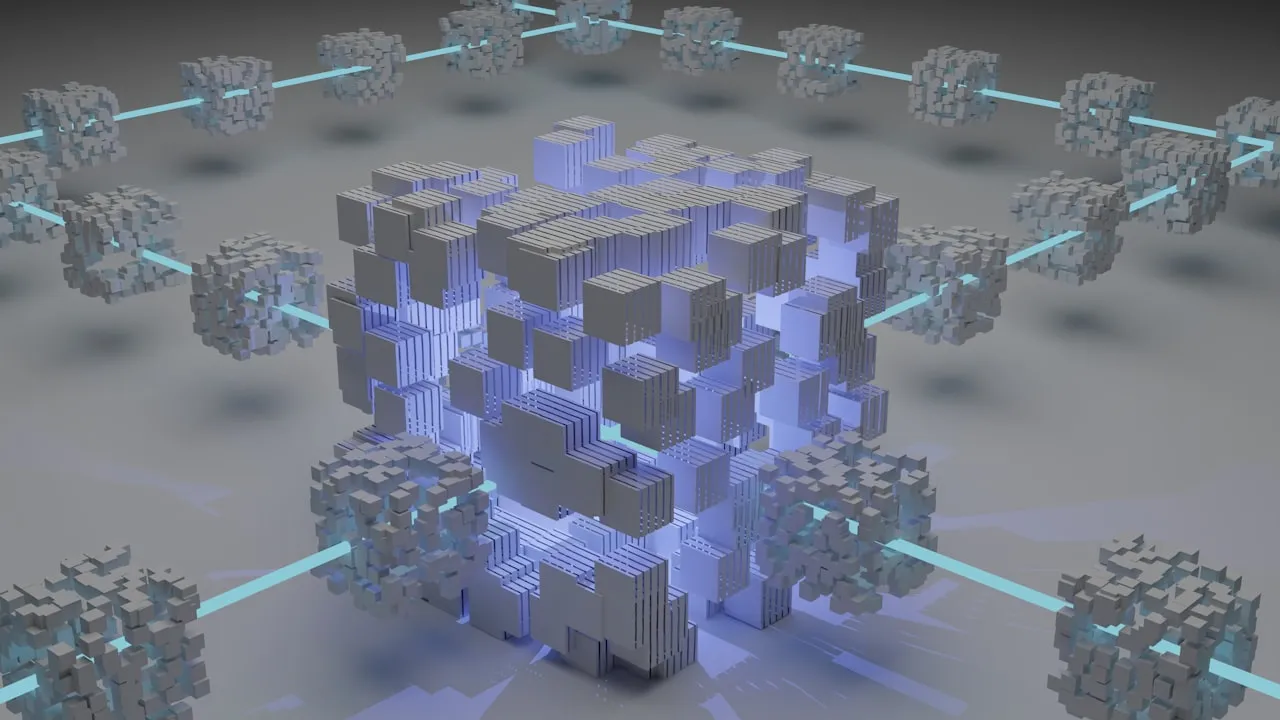
Blockchain technology creates a decentralized ledger that records ownership and transaction history transparently. Photo by Shubham Dhage on Unsplash
What NFTs Changed for Artists
A Market Where None Existed
Before NFTs, digital artists faced a structural problem: digital files can be copied at zero cost. There was no concept of an original digital artwork, which meant no scarcity, which meant no traditional market. A painter can sell one physical canvas. A digital artist could sell a file that the buyer could immediately duplicate and distribute freely. NFTs addressed this by attaching a unique, verifiable ownership record to a specific instance of a digital file. The file is not scarce, but the token is.
For artists who had spent years building audiences online without any way to monetize their actual digital work, this mattered. NFT marketplaces like OpenSea, Foundation, and SuperRare allowed direct artist-to-collector sales with no gallery intermediary. The first time many digital artists received meaningful money for their work, it came through NFT sales.
Programmable Royalties
NFT smart contracts allowed artists to embed a royalty percentage, typically 5 to 10 percent, that would pay them automatically every time the work was resold. In the traditional art market, artists receive nothing on secondary sales. A painting that sells for $1,000 and later resells for $1 million generates zero additional income for the person who made it. The royalty mechanism was one of the genuinely interesting structural innovations of the NFT era.
In practice, enforcing those royalties proved difficult. As competition between marketplaces intensified, many platforms stopped honoring creator royalties to attract buyers and sellers. The promise was real; the execution was uneven.
Generative Art Gets a Market
The most artistically significant development of the NFT period was the emergence of generative art as a serious collectible category. Art Blocks, launched in 2020 by Erick Calderon (Snowfro), gave artists a platform to deploy algorithms that would generate unique outputs at the moment of minting. Collectors did not know exactly what they were buying until the transaction confirmed. Tyler Hobbs' "Fidenza" series (2021) used flow-field algorithms to produce 999 unique compositions in bold color. Dmitri Cherniak's "Ringers" (2021) demonstrated that a single set of formal rules, wrapping a string around a series of pegs, could produce outputs ranging from simple geometric patterns to complex figurative forms. Art critics at Artforum and major institutions took these works seriously as contributions to the history of computational art.
The Boom, the Bust, and the Data
The 2021 explosion was real and was driven by a combination of factors that converged unusually: pandemic-era boredom and liquidity, cryptocurrency wealth looking for places to deploy, celebrity endorsements, and genuine excitement about a new structure for creative commerce. Bored Ape Yacht Club profile pictures became status symbols. CryptoPunks, simple pixel art avatars created in 2017 by Larva Labs, sold for millions. Monthly NFT trading volumes reached billions of dollars.
By 2022, the broader cryptocurrency crash, triggered by the collapse of the Terra/Luna stablecoin ecosystem and the implosion of the FTX exchange, wiped out the speculative capital that had been funding NFT purchases. The Bored Ape Yacht Club floor price dropped from over $400,000 to under $50,000. Trading volumes collapsed. MakersPlace shut down in January 2025. KnownOrigin closed in July 2024. About 96 percent of all NFT collections, and 98 percent of collections launched in 2024, are now effectively inactive according to DappRadar.
The environmental criticism that accompanied the boom was partially addressed. Ethereum's switch from proof-of-work to proof-of-stake in September 2022 reduced the network's energy consumption by over 99 percent. The reputational damage had already been done, but the underlying concern about energy use no longer applies to most NFT transactions.
What the Market Looks Like in Mid-2026
The NFT art market in 2026 is not dead, but it is fundamentally different from what it was in 2021. Three durable categories have survived the contraction. First, generative art from platforms like Art Blocks and fxhash (a Tezos-based platform), where the most respected collections continue to hold value even as their prices have declined significantly from 2021 peaks. Second, 1/1 (one-of-one) works from established artists sold through platforms like SuperRare and Foundation. Third, works by traditional artists who use on-chain platforms as a complement to their existing gallery practice.
The institutional recognition that generative art in particular has received is now genuine and documented. MoMA acquired a full set of CryptoPunks and a set of Art Blocks' Chromie Squiggle series in late 2025, making one of the world's most important art museums a direct holder of on-chain digital art. Art Basel Hong Kong in March 2026 debuted Zero 10, a global initiative for digital art from the Art Basel organization, with exhibitors including Art Blocks and the bitforms gallery. Works by AI art pioneer Claire Silver sold at $50,000 in that context. The institutional infrastructure that takes these works seriously as art is now in place in a way it was not in 2021.
OpenSea, which once dominated NFT trading, now generates over 90 percent of its volume from fungible token trading rather than NFTs. The major NFT marketplaces have substantially pivoted away from art. The collectors and artists who remain in the space are more serious and more selective than the 2021 participants.
NFTs in the Longer Art History
Photography was dismissed as "not art" for decades after its invention. Video art was ignored by galleries until the 1990s. AI-generated art is still at the center of heated debates about authorship and value. NFTs follow the same pattern: initial hype, genuine skepticism, eventual integration on more considered terms. The excesses of 2021 do not invalidate the underlying questions the technology raised.
The structural problem that NFTs attempted to solve, how do you assign value and ownership to digital creative work that can be copied infinitely, is not going away. As more of contemporary culture is created and consumed digitally, the need for mechanisms to support digital creators will only become more pressing. NFTs were the first serious attempt to address this at scale. Whether they remain the primary solution or get replaced by something else, the conversation they started matters.
How to Think About NFT Art Now
If you want to engage with digital art in this space, the framework is not different from any other area of art collecting. Ask whether the work is visually or conceptually interesting. Ask whether the artist has a track record and a genuine practice. Approach generative art platforms like Art Blocks and fxhash as the most artistically serious areas of the market. Visit digital art exhibitions: MoMA, the Centre Pompidou, and dedicated digital spaces have all acquired and shown on-chain work. And apply the same skepticism you would to any speculative market, because the speculative dynamics have not disappeared entirely, they have just contracted around a smaller set of projects.
Final Thoughts
The NFT boom was the art world's most dramatic collision with financial speculation since the 1980s market bubble. The crash was real, the losses were real, and many of the projects from that period have no lasting significance. But the artists who used the technology to create genuinely compelling work, Tyler Hobbs, Dmitri Cherniak, Snowfro, and others, have work that is now in permanent museum collections. That is not nothing.
The questions NFTs raised about how we value digital creativity, how artists are compensated for work that can be copied freely, and how digital culture is preserved, are now standard institutional concerns rather than fringe arguments. That shift happened because the NFT market forced them into the open. Want to explore more about the history of digital art? Read about digital art as a creative frontier, or get into the debate about whether AI art is still art. What do you think of where NFT art has landed? Share in the comments.


