In November 2017, Leonardo da Vinci's Salvator Mundi sold at Christie's New York for $450.3 million. The same painting had sold at auction in 1958 for forty-five pounds. That story, which circulates constantly in conversations about art and money, implies a pattern. It does not reflect one. The Salvator Mundi is an extreme outlier, and treating it as a model for thinking about art as an investment is like treating the 1986 Honus Wagner baseball card as evidence that baseball cards are a reliable wealth-building asset.
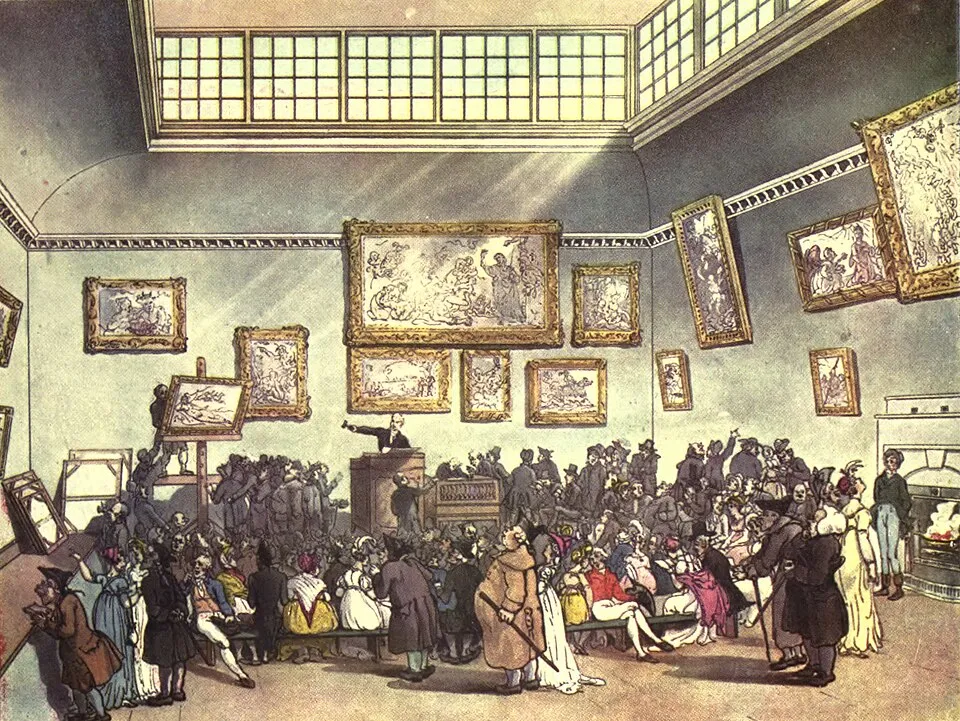
Christie's auction room, London, 1808 engraving from "The Microcosm of London." Auction houses have been central to the art market for over two centuries, setting the prices that define what art is "worth." Image: Public domain, via Wikimedia Commons
This guide does not argue that art is a bad investment. It argues that art is a complicated one, that most people who buy primarily for financial return are disappointed, and that understanding what the data actually shows, before you spend money, is considerably more useful than inspirational stories about paintings that appreciated 10,000-fold over 60 years.
What the Market Actually Looked Like in 2025
The Art Basel and UBS Global Art Market Report 2026, the most comprehensive annual survey of art market performance, documents a market that returned to growth in 2025 after two consecutive years of decline. Global art sales rose 4% year-on-year to an estimated $59.6 billion. Public auction sales increased 9% to $20.7 billion. Dealer sales grew 2% to $34.8 billion.
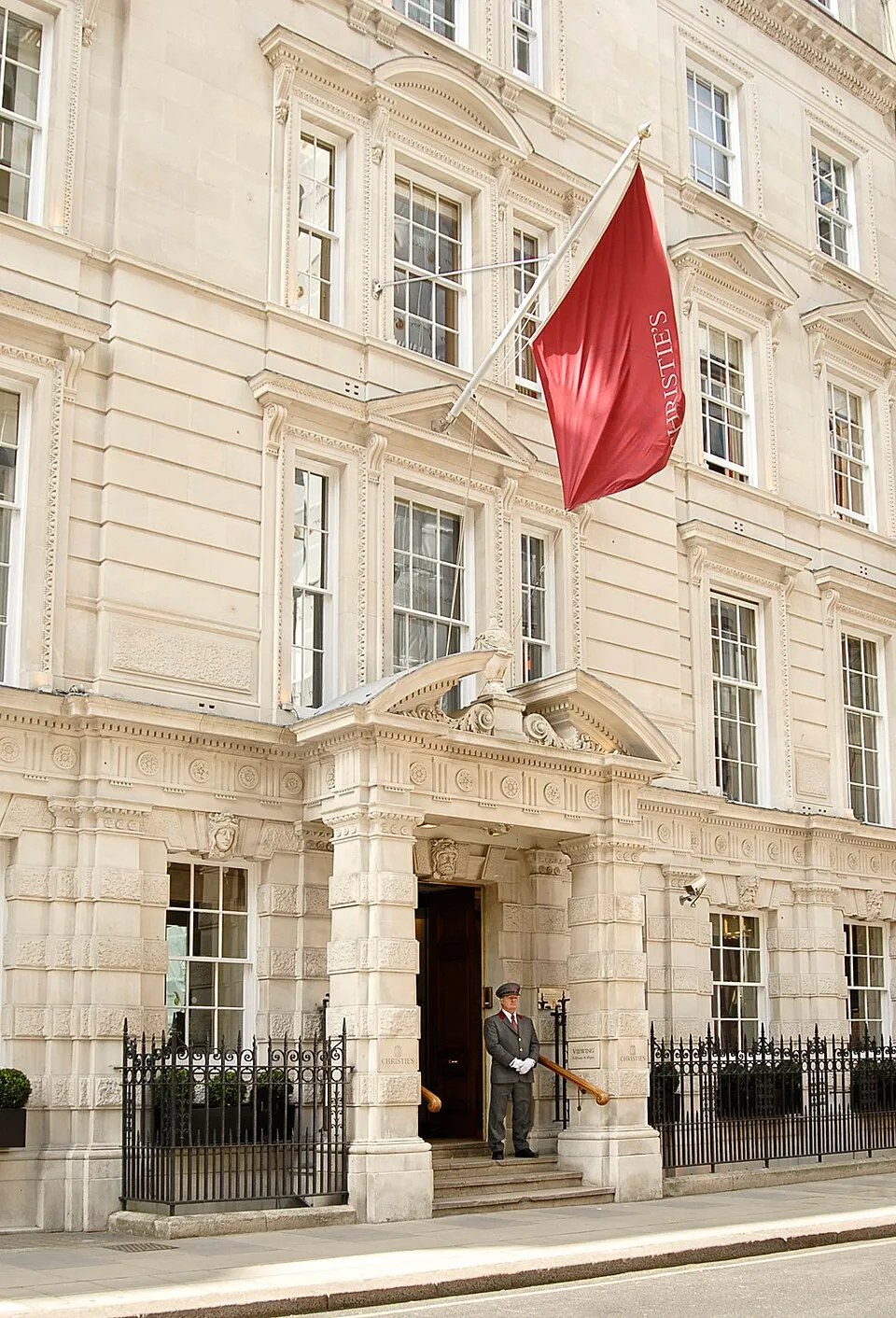
Christie's headquarters, King Street, London. Founded in 1766, Christie's is one of the two dominant auction houses that set global art market prices. Photo by Christies1766, 2016. Image: CC BY-SA 4.0, via Wikimedia Commons
Those headline figures are more encouraging than the underlying detail. The growth was concentrated at the high end: the combined value of fine art works sold at auction for more than $10 million increased by nearly 40% in the US. All 10 of the most expensive lots sold globally in 2025 were auctioned in New York City. The middle market was harder. Dealers with annual turnovers between $250,000 and $1 million reported lower profitability than the previous year even as their top-line sales improved. Operating costs rose an estimated 5% on average, above both the rate of inflation and above aggregate sales growth. The recovery, as the full report describes, was real but uneven. The market in 2025 was still below its 2022 peak of $67.8 billion and its all-time peak of $68.2 billion in 2014.
What the Long-Run Data Shows
Average Returns
The Mei Moses Art Index, which tracks repeat-sale auction records over more than a century, found a historical average annual real return for art of approximately 4 to 5 percent before transaction costs. This is broadly comparable to bonds and significantly below the long-run real return of global equities, which has historically been around 7 percent. Art, on average, is not a particularly good financial asset relative to stocks.
That average conceals enormous variation. Blue-chip works by artists with established international museum profiles, Picasso, Basquiat, Cindy Sherman, have performed considerably better than average over the long run. The vast middle of the market, works by artists who were commercially active but never achieved top-tier critical recognition, has often lost value in real terms over decades. The artists who looked like they were going to become important and did not are invisible in published return data, because their works are rarely resold at auction. That invisible graveyard of failed reputations is part of what makes art investment statistics misleadingly optimistic.
Survivorship Bias
Published art investment data records only works that were resold at public auction. Works that were never resold because the artist fell out of fashion, works resold privately at a loss, works held indefinitely because no buyer could be found at an acceptable price: none of these appear in the data. The actual distribution of returns, if it were fully visible, would look considerably worse than the published figures suggest. This is survivorship bias in its most severe form, and it affects every return estimate you will see for art as an asset class.
Transaction Costs
When you buy at auction, you pay a buyer's premium of roughly 26 to 28 percent on top of the hammer price. When you sell, the seller's commission is typically 10 to 15 percent, plus shipping, insurance, and any conservation work the work needs before sale. Round-trip transaction costs of 35 to 40 percent are common. A work needs to appreciate by at least that amount before you break even. That hurdle is high, and it takes time to clear.
When Art Investment Can Actually Work
Blue-Chip Artists with Museum Support
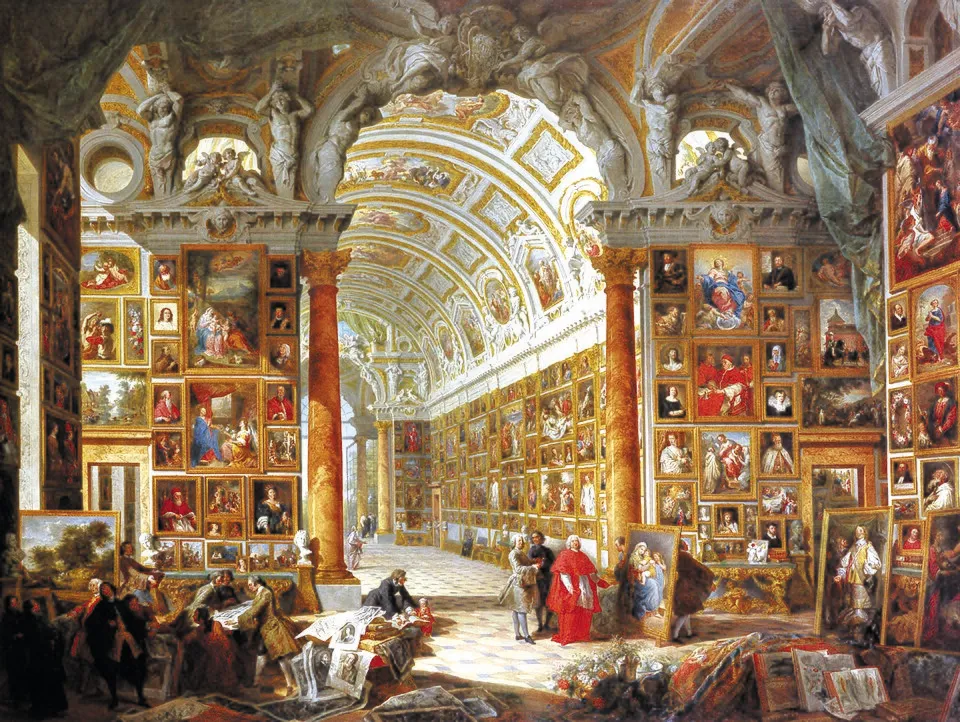
Giovanni Paolo Pannini, "Interior of a Picture Gallery with the Collection of Cardinal Silvio Valenti Gonzaga" (c. 1740). The painting depicts a cardinal's art collection, illustrating the centuries-old relationship between wealth, power, and art collecting that still shapes the market today. Image: Public domain, via Wikimedia Commons
Works by artists with established museum profiles, sustained critical attention, and active academic study have the most reliable long-run value. The Tate, MoMA, and Guggenheim do not deaccession artists from their collections casually. That institutional support provides a floor. It does not prevent declines during market contractions, but it provides durability that works by less institutionally supported artists do not have.
The practical problem is price. Works by these artists cost enough that buying even one represents concentrated risk for most collectors, and the transaction costs mean the investment thesis needs a long time horizon to work. This is a strategy for people with significant capital, not a route to returns for ordinary buyers.
Early Buying of Artists Who Become Major
The collectors who have made genuinely extraordinary returns from art bought works before artists became famous. Charles Saatchi buying Young British Artists in the late 1980s and early 1990s is the most cited example: works he bought for thousands of pounds by Damien Hirst, Tracey Emin, and Rachel Whiteread were later worth millions. This is the most compelling investment narrative in art because it combines financial return with the pleasure of discovery and the story of backing your own eye.
It is also the hardest to replicate. For every Damien Hirst, there are dozens of artists who showed identical early promise and never achieved breakout recognition. The skill required to identify which emerging artists will become important is essentially the skill of an expert curator, developed over years of sustained looking and thinking about art. If you have that skill, or are developing it with genuine rigor, early buying can be rewarding. If you are buying emerging work primarily because you have heard it can be lucrative, the odds are not in your favor. For a practical guide to finding artists worth watching early, see How to Find Emerging Artists Before They're Famous.
Fractional Ownership Platforms
Companies including Masterworks have offered fractional shares in works by blue-chip artists, allowing smaller investors to participate in the appreciation or depreciation of specific works without full ownership. As of 2026, the secondary market for fractional art shares remains limited and the platforms are relatively new. The fee structures also eat into returns in ways that require careful reading of the terms before committing capital.
The Practical Realities Most Buyers Underestimate
The Market Is Inefficient in Both Directions
The art market is not efficient in the financial sense: prices for comparable works vary enormously based on who was in the room, what else was in the sale, and factors unrelated to quality. This inefficiency creates genuine opportunities for knowledgeable buyers who can recognize when something is underpriced. It also creates significant risk of overpaying in ways that are hard to detect at the time of purchase.
Taste Changes and Does Not Come Back
Art market values depend on sustained enthusiasm from a small group of collectors, curators, and critics. That enthusiasm is not permanent. The Neo-Expressionist market of the 1980s produced artists who commanded very high prices and whose markets subsequently collapsed. The same pattern appeared in the Photorealism market of the 1970s and parts of the Young British Artists market in the 1990s. Buying at peak enthusiasm for a movement is one of the most reliable ways to lose money in art.
Carrying Costs Add Up
Art requires insurance at replacement value, storage or display in appropriate conditions, and occasional conservation. These costs are individually modest and collectively significant over a 10 or 20-year holding period. Any honest return calculation must subtract them.
The Framework That Actually Works for Most Collectors
Buy work you genuinely love, at prices you can comfortably afford, and treat financial appreciation as a pleasant possibility rather than the primary goal. This sounds like a compromise. It is actually what the evidence recommends.
Collectors who buy for genuine personal engagement consistently make better decisions than collectors who buy primarily for financial return. They look more carefully. They think more slowly. They develop real expertise in specific areas. They hold work long enough for the market to properly value it. These behaviors also happen to produce the best financial outcomes when they occur. The collector who buys quickly on the basis of tips or trends, without developed expertise, tends to produce both the worst collecting experience and the worst financial results. A collection built on other people's opinions about what is going to increase in value is a collection that feels like a bad stock portfolio.
For the practical mechanics of buying at all levels, see How to Buy Your First Piece of Original Art. For protecting whatever you acquire, the guide on how to store and preserve artwork at home covers the basics.