National Museum of India: A 200,000-Object Collection About to Move Into the World's Largest Museum
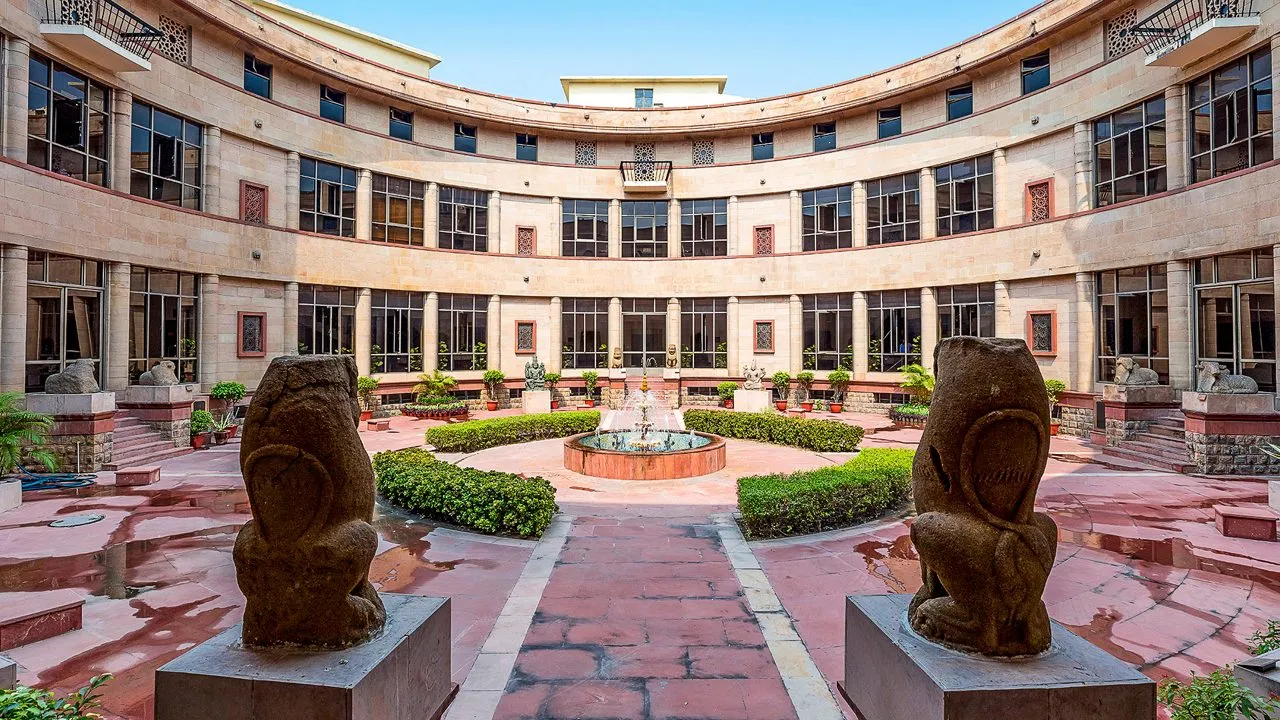
The National Museum of India on Janpath holds 200,000 artifacts spanning 5,000 years of subcontinental art, from Indus Valley seals to Mughal miniatures. At ₹20 for Indian citizens, it is one of the cheapest major museum visits on the planet. But here is the catch: three galleries (Arms and Armour, Textiles, and Jewellery) are currently closed for renovation, and the entire collection is slated to relocate to the Yuge Yugeen Bharat Museum in the former North and South Blocks of the Central Secretariat, a project the Modi government targets for partial opening by late 2026 and full completion by 2028. If built as planned, it will surpass the Louvre in size.
That makes now a strange but rewarding time to visit. The Janpath building is a 1960s concrete structure that has never won architectural awards, and the visitor facilities feel dated compared to what you would find at the British Museum or the Metropolitan Museum of Art. But the collection itself remains extraordinary, and the lower crowds during the renovation period mean you can spend unhurried time with objects that would be mobbed in any European capital.
What to See If You Only Have Two Hours
Start on the ground floor with the Harappan Gallery. The Dancing Girl of Mohenjo-daro, a 4,500-year-old bronze figurine barely four inches tall, is the museum's most famous single object. The confidence of her pose, hands on hips, suggests an artistic sophistication that still catches visitors off guard. The gallery also houses the Priest-King of Mohenjo-daro, a soapstone figure whose serene expression has become an icon of Indus Valley civilization.
Move directly to the Buddhist Art gallery on the first floor. The Gandhara sculptures are the highlight here: Buddha figures carved in the early centuries AD that fuse Hellenistic naturalism with Indian spiritual iconography. You can see the Greek influence in the drapery and facial structure, but the meditative calm is purely Indian. The Gupta-period Buddha (4th-6th century AD) represents the next evolutionary step, with its perfectly proportioned body and diaphanous robes that appear to float.
If time permits, head to the Miniature Paintings gallery. The Mughal miniatures from the 16th through 18th centuries are the equal of anything in the Louvre for sheer painterly precision, but at a fraction of the size. Look for the court scenes from the Akbar and Jahangir periods, where entire narratives unfold in paintings smaller than a sheet of paper.
The Collections You Cannot See Right Now
Be honest about the gaps. The Textiles, Arms and Armour, and Jewellery galleries are closed indefinitely due to renovation work, according to the museum's own website. The textile collection, when accessible, includes Mughal carpets, Kashmiri shawls, and Kalamkari painted textiles that represent some of the finest weaving traditions in the world. The jewellery gallery houses the Nizam's Jewellery Collection, one of the most valuable assortments of royal jewellery in India, including the Jacob Diamond, one of the largest cut diamonds in the world at 184.5 carats. If any of these are your primary interest, check the museum's official site before making the trip.
How It Compares
Against other major Asian museums, the National Museum sits in an awkward middle position. The Palace Museum in Beijing has a grander setting and more visitors (19 million versus 1.5 million), but its collection is narrower in scope, focused on Chinese imperial art. The Tokyo National Museum has better-curated galleries and more modern facilities, but a less ambitious chronological range.
The closest comparison is the National Museum of Kenya in Nairobi: both are post-colonial national institutions trying to present a civilizational narrative through material culture, both suffer from underfunding compared to their European peers, and both are more valuable for scholars than casual tourists might initially realize.
The Yuge Yugeen Bharat Museum: What Is Coming
The Indian government announced in 2023 that the National Museum's collection would move to the Yuge Yugeen Bharat Museum, housed in the vacated North and South Blocks of the Central Secretariat, the British-era buildings that flanked Rashtrapati Bhavan. The project is being developed with technical cooperation from France and is designed to cover 1.55 lakh square metres (roughly 155,000 square metres) with 950 rooms and 30 thematic galleries across eight zones.
Culture Minister Gajendra Singh Shekhawat stated in February 2026 that the design phase is still ongoing and the budget and timeline are "currently being determined." PM Modi has given the ministry a target of 2028 for the first phase. The first gallery is expected to open by the end of 2026. The museum is projected to draw 10 million visitors annually once fully operational.
Whether the project delivers on its ambitions remains to be seen. The current Janpath museum, for all its shortcomings, has one advantage that no new building can replicate: it has been accumulating and studying this collection since 1949.
Insider Tips
Visit on a weekday morning. The museum opens at 10 AM. Arrive by 10:15 and you will have the Harappan and sculpture galleries nearly to yourself. Weekend afternoons draw school groups and family crowds that fill the narrow corridors.
Saturday and Sunday have extended hours until 8 PM. This is a recent change and not widely advertised. The evening hours are quieter than the daytime, and the lighting in the sculpture galleries is actually more dramatic after sunset.
The free guided tours are worth taking. Tours depart Tuesday through Friday at 10:30 AM and 2:30 PM, and on weekends at 10:30 AM, 11:30 AM, 2:30 PM, and 3:00 PM. The guides are curatorial staff or trained volunteers who provide context you will not get from the minimal wall labels.
The museum hosted its first-ever night walkthrough in April 2026. On World Heritage Day (April 18), the museum opened from 8 to 9 PM for a special guided tour led by historians Kudrat Singh and Eric Chopra of Itihāsology. Over 500 people joined the waitlist. If the museum repeats this format, it is worth the effort to attend.
Getting there: The nearest metro station is Central Secretariat on the Yellow and Violet lines, a 5-minute walk. The museum is on Janpath, near India Gate and the Lutyens' Delhi government buildings.
Practical Information
Admission: ₹20 for Indian adults, ₹500 for foreign nationals, free for students up to Class 12 with ID. Payment is accepted at the ticket counter.
Hours: Tuesday through Sunday, 10 AM to 6 PM (weekdays) and 10 AM to 8 PM (weekends). Closed Mondays and national holidays.
Book tickets: nationalmuseumindia.gov.in
Final Verdict: Who Is This Actually For?
Anyone interested in Indian art, archaeology, or history. At ₹20 for Indian citizens, the value is unbeatable. For foreign visitors paying ₹500, it is still a fraction of what the Louvre or the Met charges, and the collection covers a longer chronological span than either. The closed galleries are a genuine drawback, and the building is showing its age, but the objects on display, from the Dancing Girl to the Gupta Buddha to the Mughal miniatures, are world-class. Visit now, before the collection moves and the museum enters its next chapter.