Museo Nacional de Bellas Artes Santiago: Record Crowds, Budget Cuts, and a Cancelled Exhibition
In June 2026, the Museo Nacional de Bellas Artes (MNBA) in Santiago cancelled a major retrospective of Argentine artist Leon Ferrari after nearly three years of preparation. The reason: budget cuts under the government of President Jose Antonio Kast, who took office in March 2026 and ordered a nearly 10 percent cut to the Ministry of Culture, Arts and Heritage. Around 160 works were expected to travel from Buenos Aires, including some of Ferrari's most famous pieces denouncing authoritarianism, state violence, and military regimes. Director Varinia Brodsky Zimmermann told local press: "The exhibition was suspended due to a lack of funding."
The cancellation made international news and exposed the tension between the MNBA's ambitions and its political context. But it also revealed how much the museum has accomplished under Brodsky's three-year tenure. In 2025, the MNBA had its highest visitor numbers ever: 567,000 people, 50,000 more than the previous year. The museum was accepted as a member of CIMAM, the International Committee for Museums and Collections of Modern Art, one of the most relevant international networks for modern and contemporary art institutions. And the permanent collection was rehung as 145 years: Historias de una Coleccion, a sweeping new installation of over 300 works by more than 250 artists.
Admission is free for everyone. The MNBA is a public institution belonging to the Servicio Nacional del Patrimonio Cultural, and Brodsky has insisted that "this is a museum that belongs to all people."
The Building: A Beaux-Arts Jewel
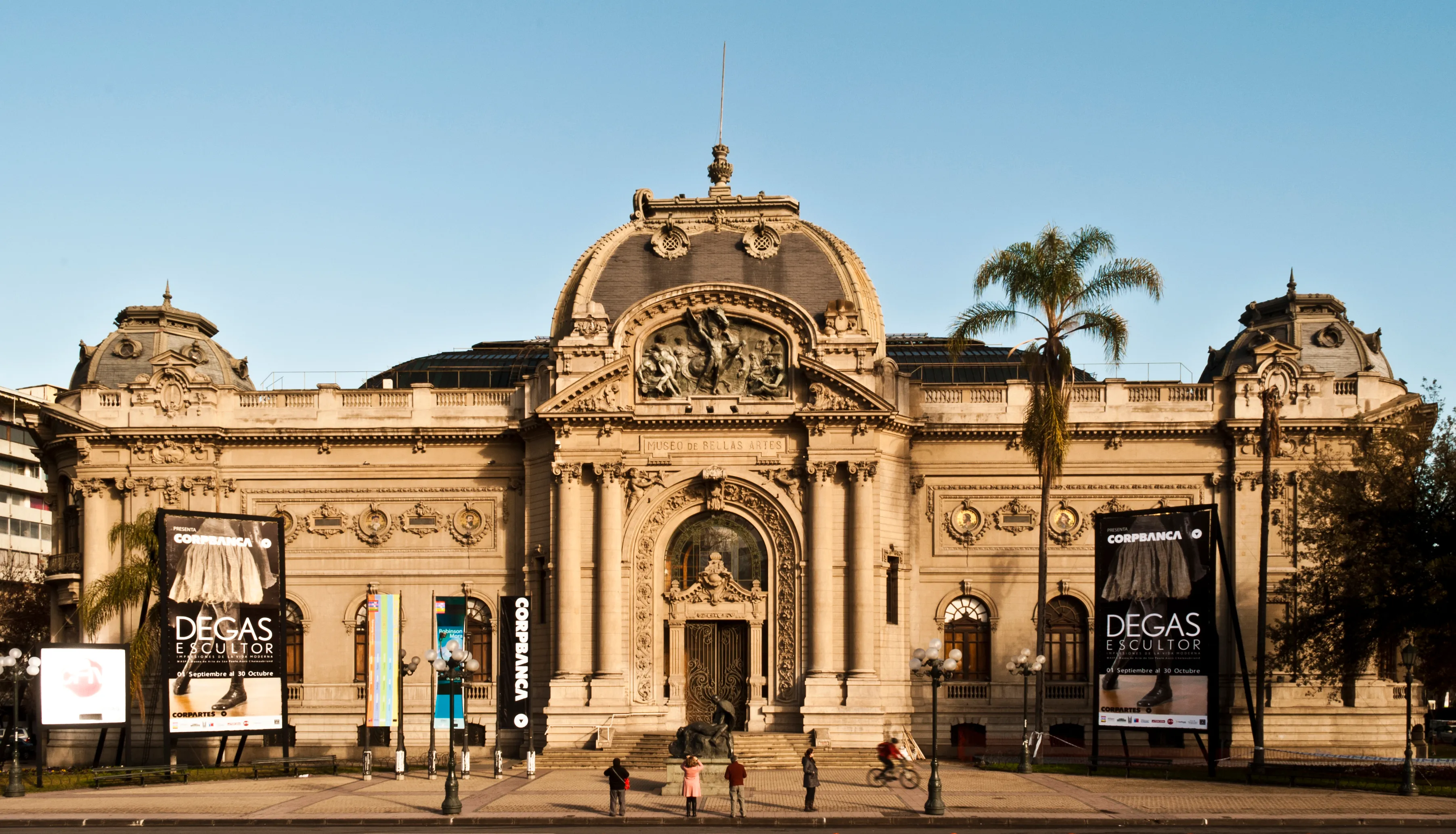
The MNBA's building, designed by Chilean-French architect Emile Jequier and inaugurated in 1910 for the centenary of Chilean independence, is one of Santiago's most beautiful structures. The grand entrance hall with its glass dome and marble staircase creates a ceremonial arrival that reflects the aspirations of a young nation establishing its cultural credentials. The building sits in Parque Forestal, the tree-lined park along the Mapocho River that is Santiago's most beloved urban green space.
The museum shares its building with the Museo de Arte Contemporaneo (MAC), which occupies the upper floors and focuses on contemporary Chilean and international art. This creates a complementary relationship: you can experience the full range of Chilean art, from colonial painting to cutting-edge contemporary practice, in a single visit.
145 Years: Historias de una Coleccion (through September 2027)
The museum's 145th anniversary in 2025 prompted a complete rehang of the permanent collection. 145 years: Historias de una Coleccion (running through September 26, 2027) proposes a tour through the histories of how works entered the collection, from the museum's origins to the present. Over 300 works by more than 250 artists are on view, the result of an unprecedented collaborative effort by the entire MNBA team.
The rehang is not a chronological march. It is organized around the stories of acquisition: how objects entered the collection, who donated them, what gaps they filled. This approach turns the museum into a narrative about institutional collecting itself, revealing the biases, priorities, and blind spots that shaped the collection over 145 years.
As part of the rehang, eight fundamental works by Roberto Matta are presented in a dedicated section, and the museum has incorporated new works by Mapuche artists Pablo Lincura and Seba Calfuqueo, part of Brodsky's effort to increase Indigenous representation in the collection.
Roberto Matta: Chile's Greatest Modern Artist
The MNBA's most internationally significant holdings are works by Roberto Matta (1911-2002), widely regarded as Chile's greatest artist and one of the most important figures in 20th century art. Matta's vast, cosmic canvases combine Surrealist automatism with architectural space, scientific imagery, and political consciousness. His work influenced the development of Abstract Expressionism in the United States and continues to inspire artists worldwide.
The dedicated Matta section in the new permanent installation, titled Roberto Matta: Abrir la mirada (through July 31, 2027), presents eight fundamental works that trace his career from early Surrealist biomorphic landscapes through the politically engaged paintings of the 1960s and 1970s to the monumental late works that synthesize his lifelong concerns with consciousness, space, and human destiny.
Current Exhibitions (2026)
- 145 years: Historias de una Coleccion (through September 26, 2027): The new permanent installation, over 300 works tracing the collection's history.
- Roberto Matta: Abrir la mirada (through July 31, 2027): Eight fundamental Matta works in a dedicated gallery.
- Valentina Cruz: De amor, humor y muerte (through September 6, 2026): The most extensive retrospective to date of the Chilean sculptor and draftswoman.
- Una coleccion en expansion (1900-1980): Nuevas adquisiciones (through August 16, 2026): 18 of the 55 works acquired in 2025, reflecting the museum's focus on filling historical gaps.
- Historias en femenino: Precursoras de la pintura chilena (1860-1930) (through July 26, 2026): At Museo Santa Rosa de Apoquindo, exploring women pioneers of Chilean painting.
The Gender Focus
Under Brodsky's leadership, the MNBA has made a deliberate effort to increase the representation of women in its collection. The museum went from 12 to 14 percent female presence in its collection in three years. More salas are now named after women artists. The Centro de Documentacion, opened to the public, is named Angelica Perez, in honor of the institution's staff member who died in the 2012 Juan Fernandez air accident.
In 2025, the museum had an unprecedented acquisition budget and focused more than 50 percent of purchases on women artists, adding 14 new names to the collection. As Brodsky noted: "When you have a body of more than 6,000 works, that 2 percent is tremendously significant."
The museum has also added representation of sexual diversity and Indigenous artists. Two new works by Mapuche artists, Pablo Lincura's Shiñura (2024) and Seba Calfuqueo's Nunca seras un weye / You Will Never Be a Weye (2015), were incorporated into the permanent installation.
How the MNBA Compares
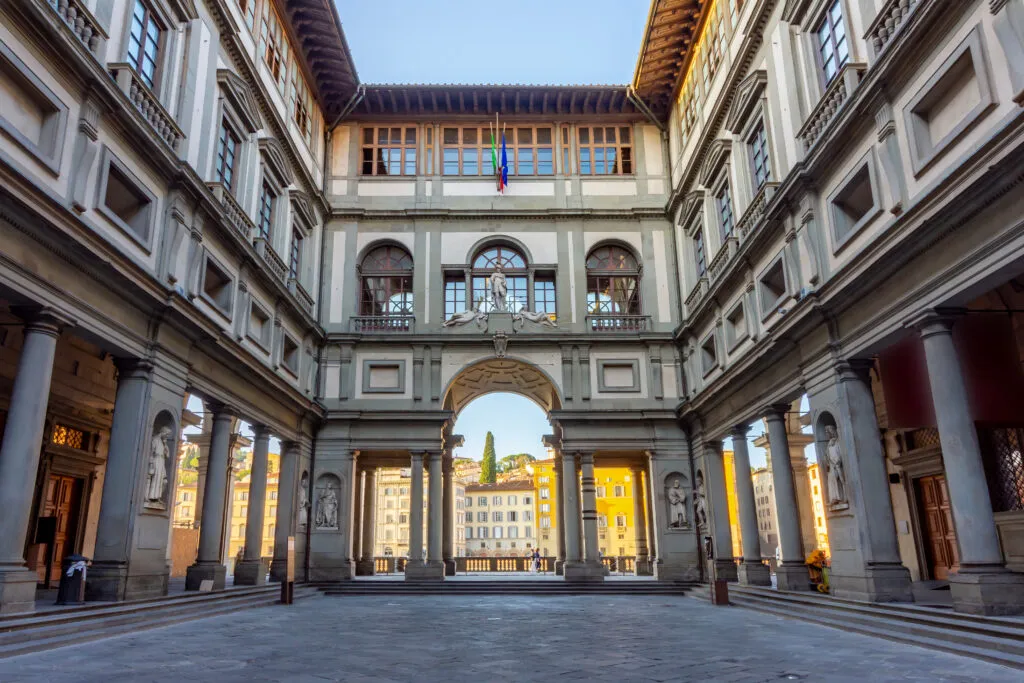
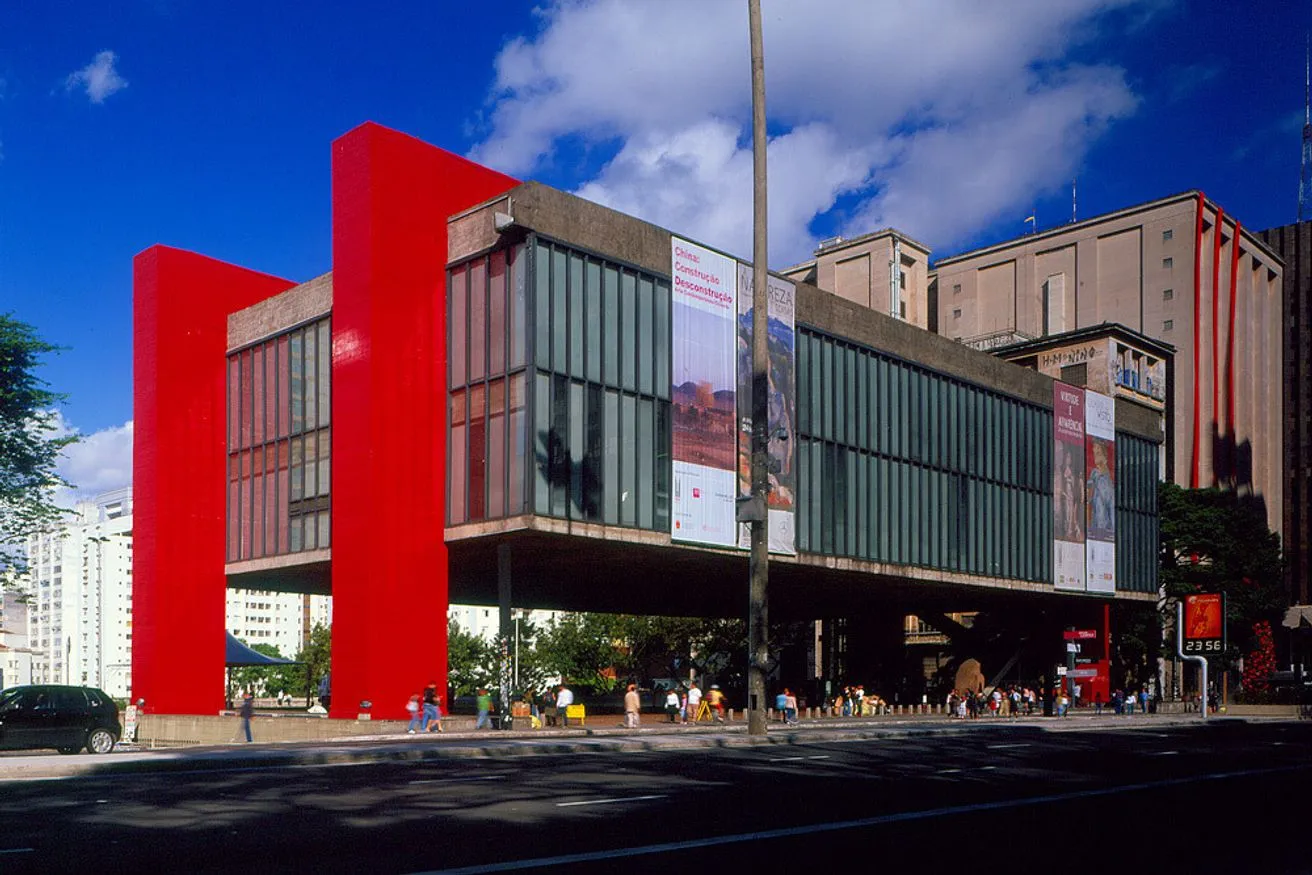
The MNBA is to Chile what MALI is to Peru or what MASP is to Brazil: the national art museum that tells the country's artistic story. But Chile's art history is shorter than Peru's (no pre-Columbian depth to match MALI's) and less internationally distributed than Brazil's (MASP's collection of European masters is far deeper). What the MNBA offers instead is a focused, coherent survey of Chilean art from the colonial period to the present, with Matta as its standout international figure.
Compared to the Museo de Bellas Artes in Buenos Aires, which has a larger collection and a more prominent international profile, the MNBA is smaller but more accessible (free admission versus Argentina's modest fees) and has a clearer curatorial vision under Brodsky's leadership.
The MNBA's free admission policy makes it one of the most accessible major art museums in South America. MALI charges S/ 30, MASP charges R$ 85. The MNBA charges nothing. This is a political choice, and Brodsky has defended it as a matter of principle: the museum belongs to the public.
The Budget Crisis and What It Means for Visitors
The Kast government's budget cuts have affected the MNBA directly. The Leon Ferrari cancellation is the most visible consequence, but it is not the only one. The museum's operating budget has been reduced, and future exhibitions may face similar funding challenges.
For visitors, this means two things. First, the temporary exhibition program may be less ambitious than in previous years. The Ferrari show was three years in the making, and its loss is significant. Second, the permanent collection rehang (145 years: Historias de una Coleccion) is the museum's strength right now, and it will remain on view through 2027. If you are visiting in 2026, prioritize the permanent collection and the Matta and Valentina Cruz shows.
Planning Your Visit
Admission: Free for all visitors. No tickets required.
Hours: Tuesday to Sunday, 10 AM to 6:30 PM. Last entry at 6:20 PM. Closed on January 1, Good Friday (April 3), May 1, September 18 and 19 (Fiestas Patrias), and December 25.
Getting there: The MNBA is at Jose Miguel de la Barra 650, in Parque Forestal. The nearest metro station is Bellas Artes on Line 5. The museum is a 10 minute walk from Plaza de Armas, Santiago's main square.
Nearby: The Lastarria and Bellas Artes neighborhood has become Santiago's most vibrant cultural district, with galleries, bookshops, cafes, and cultural venues. The Museo de Arte Contemporaneo (MAC) is in the same building. The Museo Chileno de Arte Precolombino, a short walk away, is an excellent complement for pre-Columbian art.
Accessibility: The museum has an elevator for visitors with reduced mobility, located on Ismael Valdes Vergara street. Note: the elevator service was temporarily suspended as of 2026, so check before visiting if you need this access.
Language: Interpretive materials are in Spanish. English translations are limited. The museum's website has some English content.
Final Verdict: Who Is This Museum For?
The MNBA is for anyone who wants to understand Chilean art and its relationship to the country's turbulent political history. The new permanent installation (145 years: Historias de una Coleccion) is the best presentation of the collection in years, and the Matta gallery alone is worth the visit. The free admission makes it an easy, low-commitment stop on any Santiago itinerary.
The budget crisis is real and the Ferrari cancellation is a legitimate cause for concern. A museum that cancels a major exhibition about an artist who denounced authoritarianism, under a government linked to Pinochet's legacy, is a museum in a politically fraught situation. But Brodsky's leadership has been effective: record visitors, new acquisitions, CIMAM membership, and a permanent collection rehang that addresses historical gaps with honesty.
Go for the Matta. Stay for the gender-focused rehang. And recognize that this museum is doing its job under circumstances that would defeat a less committed director.
Check exhibition dates at mnba.gob.cl.