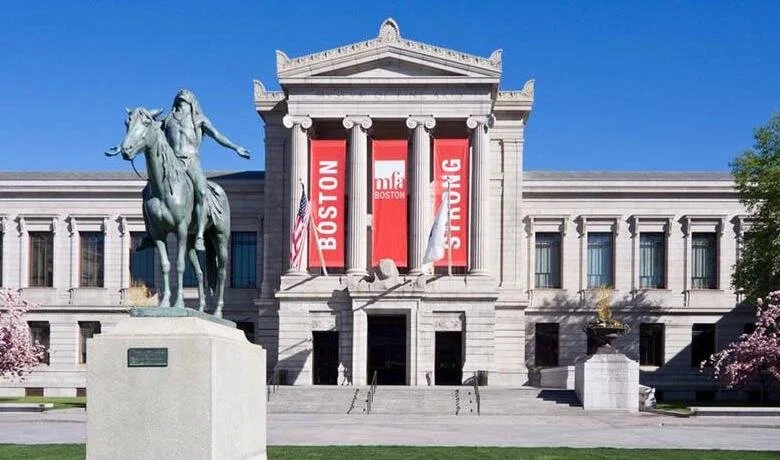

The Metropolitan Museum of Art: A Guide to Navigating 5,000 Years
The Met has 2 million works spanning 5,000 years. This guide tells you how to navigate it, what to see, what to skip, and how to avoid museum fatigue.
Your cart is empty
Browse the store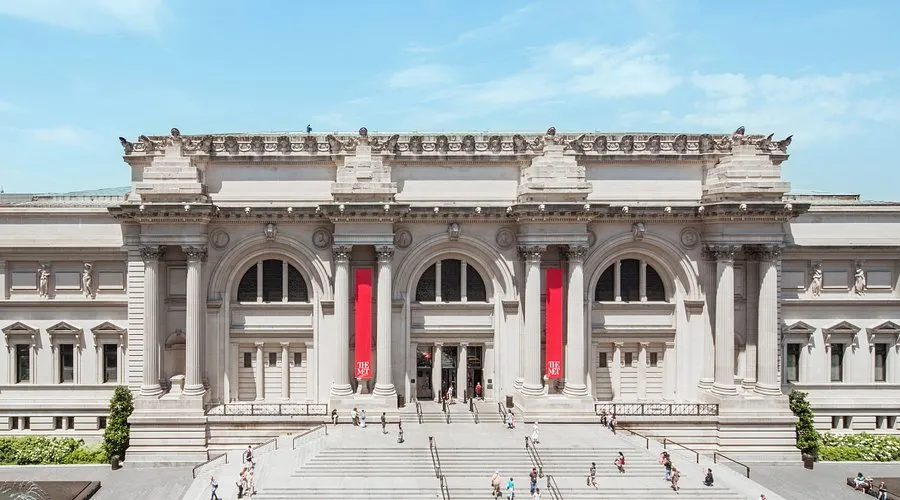
The Met is undergoing a $1.5 billion renovation, just opened new galleries in 2025-2026, and launched free membership for SNAP recipients. But the pay-what-you-wish policy now only applies to New York residents. Here is what visitors need to know.
Discover other museums and cultural institutions you might be interested in
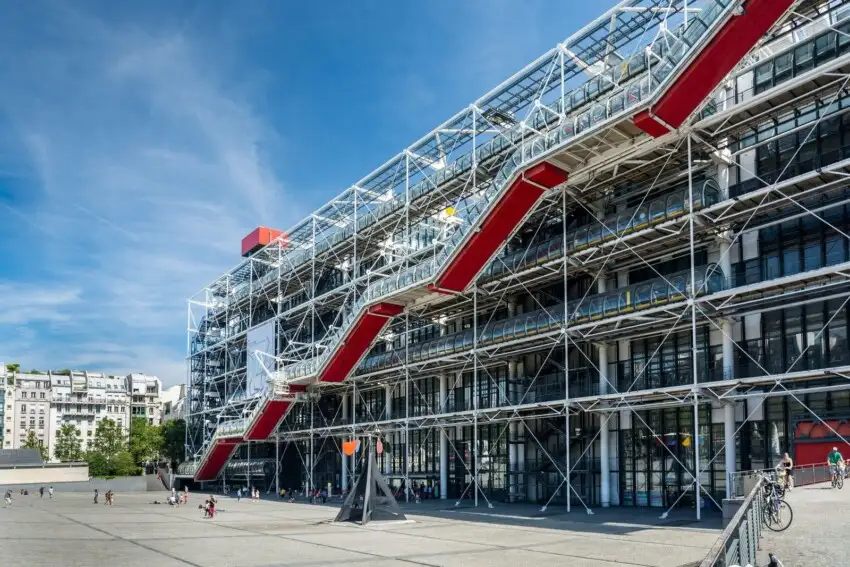
Paris's inside-out modern art museum, closed for renovation until 2030. Its collection tours globally via the Constellation program.
View details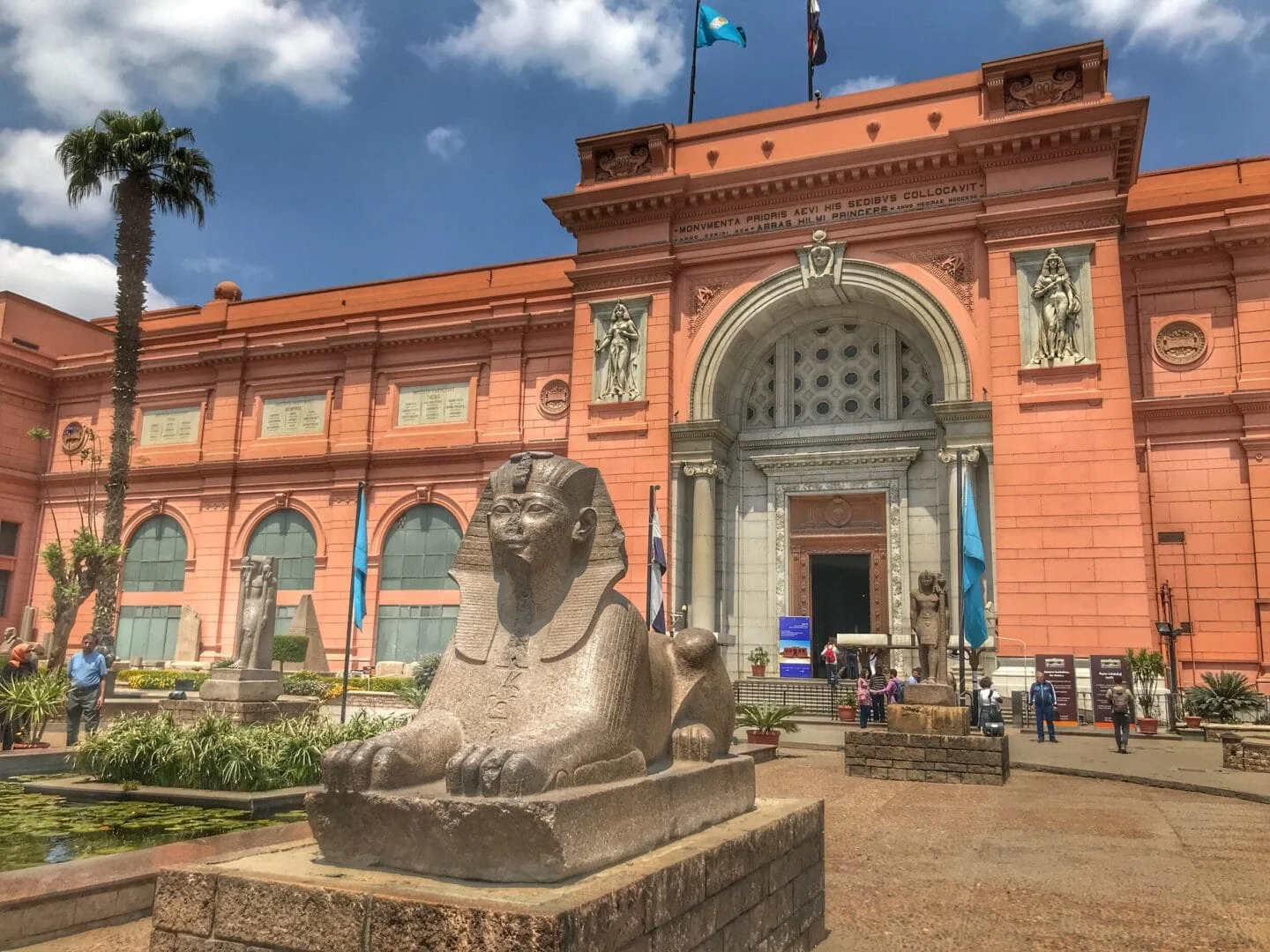
Cairo's 1902 museum, now overshadowed by the GEM. Still holds pre-dynastic artifacts and Old Kingdom statuary, but Tutankhamun has moved to Giza.
View detailsExplore definitions from our glossary that connect to this museum
Ancient Egyptian art spanned 3,000 years with remarkably stable rules of proportion and symbolism. Learn the canon, the function, and what to look for in Egyptian art.
Greek classical art gave the world the idealized nude, contrapposto, and mathematical proportions of the human body. Learn how Polykleitos, Phidias, and Praxiteles shaped Western art.
Read more about this topic on our blog
The Met has 2 million works spanning 5,000 years. This guide tells you how to navigate it, what to see, what to skip, and how to avoid museum fatigue.

New York replaced Paris as the art capital after World War II. The Ashcan School, Abstract Expressionism, Pop Art, and the gallery system of 57th Street and Chelsea made New York the center of the art world. Here is how it happened.

The Met opens "Infinite Artistry of Japanese Ceramics" (January 19, 13,000 years, 350 works). Louisiana Museum opens "Basquiat: Headstrong" (January 30). Louvre Abu Dhabi opens "Picasso, the Figure" (January 21). Here's January 2026.
The Met is in the middle of a $1.5 billion renovation. One quarter of its two-million-square-foot building on Fifth Avenue is being reimagined. The Michael C. Rockefeller Wing for the arts of Africa, Oceania, and the Ancient Americas reopened in summer 2025 to massive crowds (33,700 visitors on opening day, the highest single-day attendance since 2017). The new Conde Nast Galleries opened in May 2026 with the inaugural exhibition Costume Art. New galleries for Ancient West Asia and Ancient Cyprus are coming in 2027, and the transformative Tang Wing for Modern and Contemporary Art opens in 2030.
Director Max Hollein is steering the museum through the most ambitious physical transformation in its history. The Met welcomed 5.7 million visitors in fiscal year 2025, up 5 percent from the previous year. Local attendance from New York, Connecticut, and New Jersey residents now exceeds pre-pandemic figures, a 109 percent recovery compared to 2019. In June 2026, the Met launched a free Explorer Membership program for New Yorkers receiving SNAP benefits, granting free admission plus access to member preview days and community programs.
But here is the catch that catches tourists off guard: the pay-what-you-wish policy only applies to New York State residents and students from New York, New Jersey, and Connecticut. Everyone else pays $30. If you are visiting from out of state or internationally, you are paying full price. This is not a suggestion. It is mandatory.
The Met covers 5,000 years of art from every continent. That is the key distinction from European museums like the Louvre or the Kunsthistorisches Museum, which focus primarily on Western and Mediterranean civilizations. The Met has European painting, yes, but it also has Japanese screens, African sculpture, Mesoamerican gold, Islamic manuscripts, and one of the world's great collections of musical instruments.
With 17 curatorial departments and over 2 million objects, the Met functions like multiple museums under one roof. The Fifth Avenue building spans two city blocks. You could visit every weekend for a year and still find galleries you have never seen.
The American Wing is the Met's most distinctive holding. No other museum in the world tells the story of American art with this depth. You can walk through actual period rooms taken from historic American homes, complete with original wallpaper, furniture, and window treatments. The Frank Lloyd Wright living room from the Francis Little House is installed in its entirety. The wing includes works by John Singer Sargent, Winslow Homer, Thomas Eakins, and American folk art alongside decorative arts and furniture.
The recent exhibition Sargent and Paris (through August 2025) drew over 427,000 visitors and demonstrated the Met's ability to mount shows that combine scholarly rigor with popular appeal. It travels to the Musee d'Orsay in September 2025.
The European Paintings galleries were renovated and rehung in 2023, and the new installation is a vast improvement over the old chronological march. Paintings are now grouped thematically and geographically, allowing you to see how artists across Europe responded to similar ideas simultaneously.
Rembrandt's Aristotle with a Bust of Homer is a masterpiece of psychological portraiture. Vermeer's Young Woman with a Water Pitcher captures domestic intimacy with a precision of light that makes the ordinary feel sacred. Van Gogh's Wheat Field with Cypresses vibrates with the artist's emotional intensity. The Met has 16 Vermeers, by the way, which is nearly half of his known output.
The Costume Institute houses over 35,000 garments and accessories spanning seven centuries. The annual Met Gala exhibition is the one time fashion gets the full museum treatment, and the 2025 show Superfine: Tailoring Black Style (through October 2025) drew over 291,000 visitors. The 2024 exhibition Sleeping Beauties: Reawakening Fashion attracted 401,000.
Fashion exhibitions at the Met are not frivolous. They are serious art historical scholarship that happens to sell tickets. If you visit during a Costume Institute show, prioritize it. The installations are among the most creative in any museum.
The Arms and Armor gallery in the first-floor court is one of the most spectacular rooms in any museum. Medieval European plate armor, Japanese samurai armor, Islamic steelwork, and Renaissance tournament gear displayed in a vaulted space that feels like a cathedral. Kids love it. Adults love it. It is the gallery where people who claim to not care about art suddenly spend 45 minutes.
The newly reopened Rockefeller Wing (May 2025) displays the arts of Africa, Oceania, and the Ancient Americas in reimagined galleries that took years to design. The wing's reopening was the biggest museum event in New York in 2025, and the new installation addresses the colonial context of how these objects were acquired in ways the previous display did not.
The Met Cloisters in Fort Tryon Park in Upper Manhattan is a separate museum dedicated to medieval European art. Built from actual medieval architectural elements imported from Europe, the Cloisters creates an immersive medieval experience. The Unicorn Tapestries are the highlight, a series of seven tapestries from around 1495 that depict the hunt and capture of a unicorn with extraordinary detail and symbolic complexity.
The Cloisters is a 45 minute subway ride from the main building, but it is worth the trip. The setting overlooking the Hudson River is beautiful, and the museum is quiet in a way the Fifth Avenue building never is. Admission to the Cloisters is included in your Met ticket on the same day.
The Met is not perfect. The building is confusing to navigate, and the signage is inconsistent. You will get lost. Everyone does. The Great Hall is beautiful but offers no clear indication of where to start, and the museum's app is only moderately helpful.
The Met Breuer, the museum's contemporary art satellite on Madison Avenue, closed in 2020. The building was sold to the Frick Collection. This means the Met's modern and contemporary art program is squeezed into inadequate spaces on the main building's second floor. The Tang Wing renovation (opening 2030) is supposed to fix this, but for now, the Met's contemporary art galleries are its weakest area. If you want modern and contemporary art in New York, go to MoMA or the Guggenheim instead.
The food is also mediocre for the price. The Dining Room on the mezzanine offers fine dining with garden views, but at $80-plus per person for lunch, you are paying for the setting, not the cuisine. The Petrie Court Cafe is better value for a quick bite.
The Louvre has more famous individual objects (Mona Lisa, Venus de Milo, Winged Victory) but a narrower geographic scope. The British Museum has stronger antiquities but almost no painting. The Met is the only museum that attempts to cover the entire world and the entire span of human history, and it succeeds more often than it fails.
Compared to the Art Institute of Chicago, the Met is larger and more global, but the Art Institute has a stronger collection of Impressionist and Post-Impressionist painting in a more navigable space. Compared to the Getty in Los Angeles, the Met is older, messier, and more comprehensive, while the Getty is cleaner, more focused, and free.
Admission: $30 for adults, $22 for seniors, $17 for students. Children under 12 are free. New York State residents and NY/NJ/CT students pay what they wish (minimum $0.01). If you are a New York resident, you can now book pay-what-you-wish tickets online. If you receive SNAP benefits, sign up for the free Explorer Membership at the membership desk.
Hours: Tuesday through Sunday, 10 AM to 5 PM. Friday and Saturday until 9 PM. Closed Mondays. The Great Hall in morning light is worth arriving for opening.
Getting there: Take the 4, 5, or 6 train to 86th Street and walk west three blocks to Fifth Avenue. The M1, M2, M3, and M4 buses stop directly outside.
How long to spend: 3 to 5 hours minimum. Pick 3 to 4 departments and do them well. The American Wing, European Paintings, and one special exhibition is a solid half-day plan.
Best time to visit: Weekday mornings, especially Tuesday and Wednesday. The museum is significantly less crowded before noon. Friday and Saturday evenings after 5 PM are also quieter.
Digital access: The Met 360 project offers virtual tours of major galleries. Over 400,000 high-resolution images are available online. The Heilbrunn Timeline of Art History is a genuinely useful research tool that pairs objects with essays and chronological context.
The Met is for anyone who wants to understand the full scope of human artistic production in a single building. It is the best encyclopedic art museum in the Americas, and arguably the best in the world for sheer breadth. If you are a painter, the European galleries offer a lifetime of study. If you are interested in design, the American Wing and Costume Institute are essential. If you care about non-Western art, the Rockefeller Wing and Asian art galleries are world-class.
The renovation chaos is real but temporary. The contemporary art galleries are weak until the Tang Wing opens in 2030. The building is confusing. But the collection is extraordinary, the pay-what-you-wish policy for New Yorkers is the most generous admission policy of any major museum, and the new SNAP membership program sets a standard other institutions should follow.
Plan your visit and buy tickets at metmuseum.org.
Quiet Canvas is a space for artists and art lovers: essays, glossary terms, tools, and curated directories to support your creative practice.
Learn more →


