Museo Nacional de Colombia: A Prison Turned Museum, Now Under Major Renovation
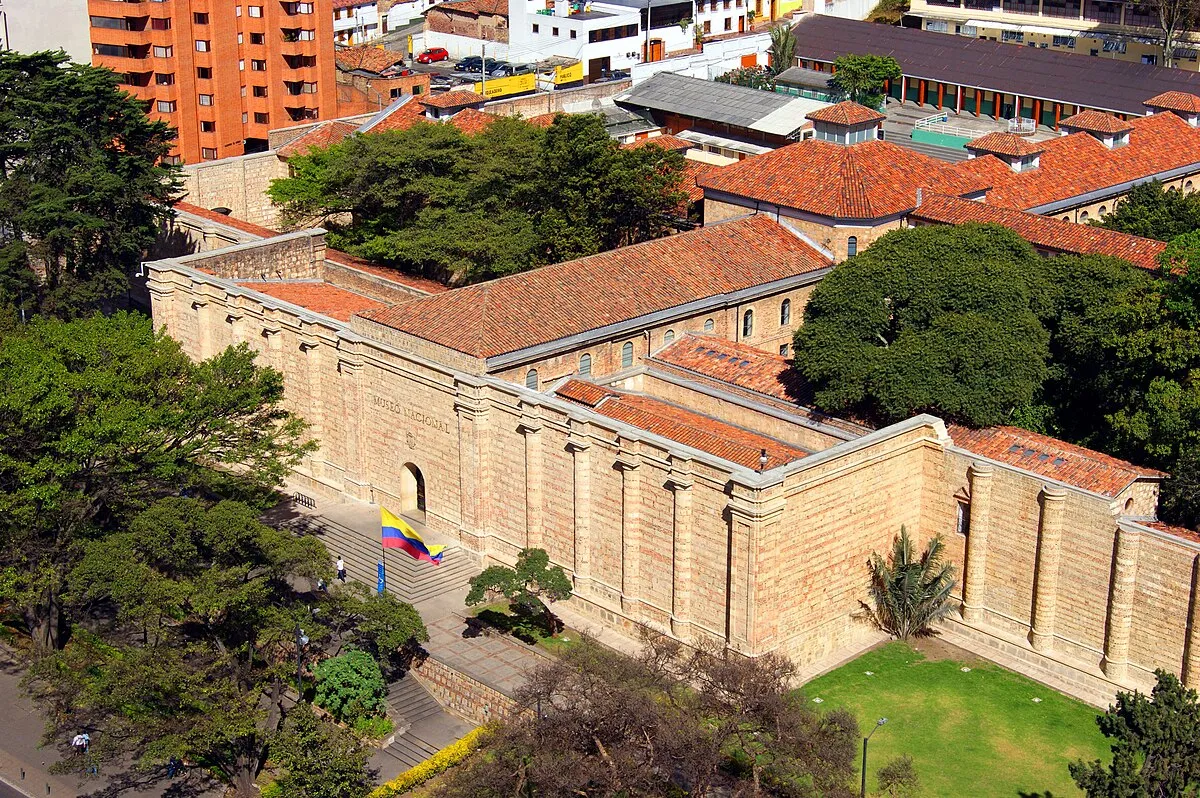
The Museo Nacional de Colombia sits in a building that was designed to keep people in. Danish architect Thomas Reed designed it in 1874 as a panopticon prison based on Jeremy Bentham's surveillance model, with radiating wings converging on a central rotunda where guards could watch all prisoners at once. The prison closed in 1946 and became a museum. Those thick stone walls and former cells now house 20,000 artworks and historical artifacts spanning pre-Columbian civilizations through contemporary Colombian art.
Founded in 1823 by Simón Bolívar, just four years after independence, this is the oldest museum in Colombia and one of the oldest in the Americas. But right now, visiting it requires patience. The museum is in the middle of a major renovation project that has closed several galleries, including the Rotonda on the third floor and the temporary exhibition space on the first floor. Two new galleries, Fuerza, fe y sustancia and Casa común, are scheduled to open during 2026. Until then, you are seeing a partial museum.
What You Can See Right Now
Despite the closures, the museum still displays over 2,500 pieces across its open galleries. The collection covers Colombian history and art from pre-Columbian cultures through the colonial period, independence, and the 20th century.
Pre-Columbian holdings include ceramics, stone sculptures, and textiles from the Muisca, Quimbaya, Tairona, Sinú, and Calima cultures. The goldwork here is secondary to what you will find at the Museo del Oro across town, which holds the world's largest collection of pre-Columbian gold. But the Museo Nacional places these objects in broader historical context, which the Gold Museum does not do as thoroughly.
Fernando Botero dominates the modern art galleries. His voluminous, inflated figures are instantly recognizable, but the Museo Nacional also shows his less familiar work, including the Abu Ghraib series. Beyond Botero, look for Alejandro Obregón's expressionistic landscapes, Edgar Negret's abstract metal sculptures, and Doris Salcedo's installations addressing violence and memory. Salcedo is one of the most important contemporary artists working today, and seeing her work in a Colombian national museum carries a specific weight that seeing it at Tate Modern or the Centre Pompidou does not.
The Big Exhibition: Pasados en Retorno
From June 26 through August 23, 2026, the museum is running a major exhibition called Pasados en retorno: Repatriación del patrimonio arqueológico. It displays 1,194 archaeological pieces repatriated to Colombia between 2022 and 2026, the largest repatriation effort in the country's history. The exhibition covers three themes: successful repatriation cases, the legal framework for protecting cultural heritage, and how the illicit trafficking of cultural goods operates. Two cases remain unresolved: the Quimbaya Collection and the San Agustín Lithic Collection.
This is the kind of exhibition that only a national museum can mount. It connects ancient artifacts to contemporary politics and makes the case that cultural patrimony is a living issue, not an academic one. If you are visiting Bogota during the run, prioritize it.
Admission: Complicated but Cheap
The pricing structure is tiered and confusing, so here is the breakdown as of 2026:
- Colombian citizens and residents: COP 2,000 to 6,000 depending on age, plus a voluntary donation of COP 4,000
- Tourists: COP 5,000 to 15,000 depending on age
- Free every Wednesday from 2:00 PM to 5:00 PM
- Free the last Sunday of every month
- Free always for children under 5, adults over 60, and people with disabilities
- Cash only. No cards accepted. Bring pesos.
At roughly USD 3.75 for a tourist adult ticket, this is one of the cheapest major museums you will visit anywhere. But the cash-only policy catches people off guard. There is no ATM inside.
The Building Itself
The panopticon layout creates a visitor experience unlike any other museum. The cruciform plan means you walk down long corridors that were once cell blocks, with galleries branching off from the central rotunda. The thick stone walls keep the interior cool year-round, which is welcome in Bogota's climate. But the layout also means navigation is confusing. The building was not designed for museum flow, and the renovation project is partly aimed at fixing this.
The transformation from prison to museum is not just symbolic. It is visible in the architecture. You can see where cells were, where the central surveillance point was, how the wings connect. This is one of the few museums in the world where the building tells a story as compelling as the collection.
How It Compares
The Museo Nacional is a history and art museum, not a pure art museum. That distinguishes it from the Museo Nacional de Bellas Artes in Buenos Aires, which is purely art-focused. If you want a deep dive into Colombian visual art specifically, the Museo Botero (housed in a colonial mansion donated by the artist) and the Museo de Arte del Banco de la República offer more focused art experiences. But neither covers the full historical sweep that the Museo Nacional does.
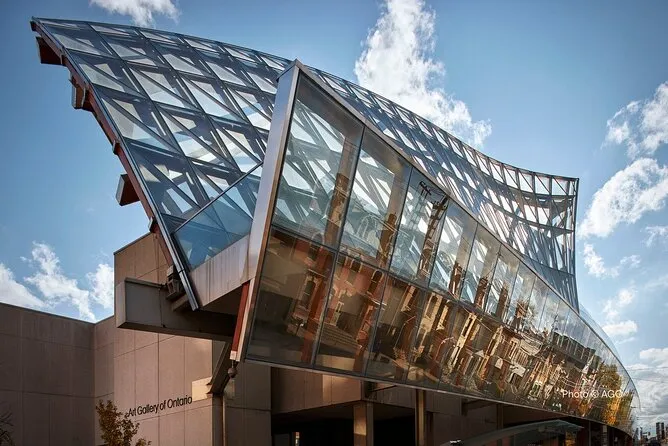
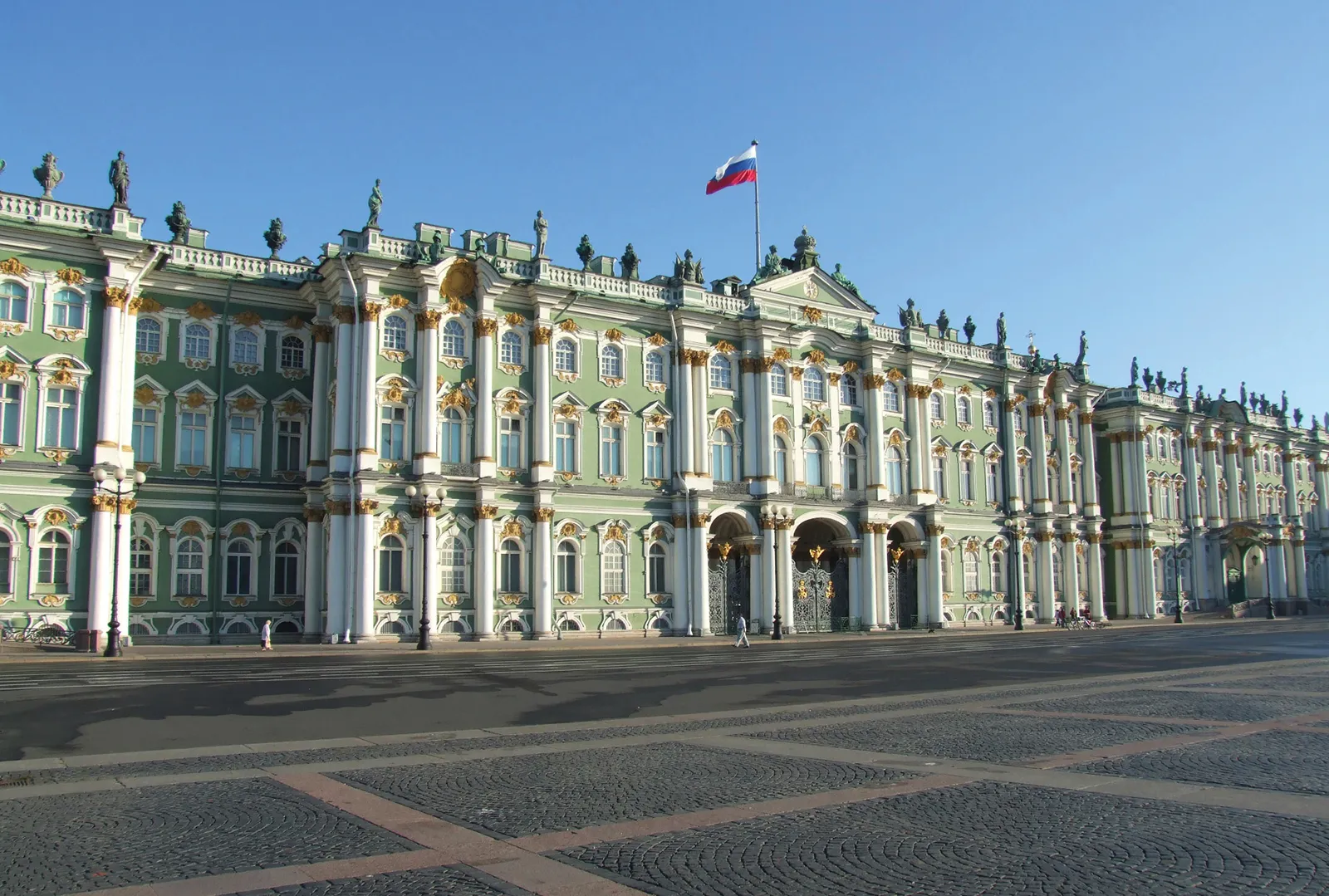
Against other former-prison museums, the comparison is interesting. the Kunsthistorisches Museum in Vienna occupies a purpose-built imperial palace. The National Gallery of Canada sits in a purpose-built Moshe Safdie building. The Museo Nacional's adaptive reuse of a prison is more analogous to what the Tate Modern did with Bankside Power Station, though on a smaller budget and with less architectural polish.
Insider Tips for Visiting
- Go on a Tuesday morning. Weekends are crowded with families. Wednesday afternoons are free but packed.
- Budget three hours. Even with some galleries closed, the open collections are dense and the building itself takes time to navigate.
- Bring cash. COP 15,000 for tourists. No cards, no dollars, no exceptions.
- Combine with Museo del Oro. The Gold Museum is a 15-minute walk away in La Candelaria. Do both in one day.
- Check the renovation status at museonacional.gov.co before visiting. Gallery closures change as the project progresses.
- Explore La Candelaria. The historic district surrounding the museum has street art, colonial architecture, and the Plaza Bolívar. It is the most walkable part of Bogota.
- Do not skip the Google Arts & Culture page. While galleries are closed, the museum has uploaded over 500 works to Google Arts & Culture, including pieces by Botero, Beatriz González, and Ricardo Acevedo Bernal that may not be on display.
Final Verdict: Who Is This Actually For?
The Museo Nacional is for travelers who want to understand Colombia as a country, not just see its art. The prison building, the pre-Columbian artifacts, the independence-era documents, and the contemporary installations by Doris Salcedo together tell a story that no other museum in Colombia can tell. The renovation closures are frustrating but temporary, and the Pasados en retorno repatriation exhibition alone justifies a visit in 2026.
It is not for someone looking for a polished, fully accessible museum experience. The cash-only policy, the confusing layout, and the closed galleries will test your patience. But at under USD 4 for admission, in a building that was literally a prison 80 years ago, seeing 1,194 repatriated archaeological artifacts displayed for the first time, this is one of the most rewarding museum visits in South America.
Plan your visit at museonacional.gov.co. For more on Colombian and Latin American art, explore our art schools directory or browse courses on Latin American art history.