Musee du Quai Branly: Paris Confronts Its Colonial Legacy Through Art
Africa Fashion is running at the Musee du Quai Branly through July 12, 2026, and it is the exhibition that defines this museum's current moment. The show traces the arc from pre-colonial African textile traditions to the runways of Lagos, Dakar, Nairobi, and Johannesburg, presenting fashion as a cultural and political act as much as an aesthetic one. It is vibrant, visually spectacular, and accessible to visitors with or without prior knowledge of African culture. If you visit the Quai Branly in 2026, this is the show to see.
But the museum's 2026 program goes deeper. 1913-1923: The Spirit of the Times (through September 20, 2026) examines how Paris celebrated African and Oceanic arts during the decade when European avant-garde artists were "discovering" non-Western art through colonial channels. The show is a critical self-examination: it asks how Paris's embrace of African and Oceanic aesthetics was simultaneously an act of appreciation and an act of appropriation, mediated by colonial power structures that the museum itself is built upon.
The Musee du Quai Branly - Jacques Chirac opened in 2006 under president Jacques Chirac, who wanted a museum that would present non-Western art with the same institutional seriousness that the Louvre gives Western art. The result is a building designed by Jean Nouvel on the banks of the Seine, in the shadow of the Eiffel Tower, holding over 300,000 objects from Africa, Asia, Oceania, and the Americas. Director Emmanuel Kasarherou, a Kanak from New Caledonia who took over in 2022, is the first Indigenous person to lead a major French national museum. His appointment was itself a statement about who gets to tell these stories.
The Architecture: A Building That Makes an Argument
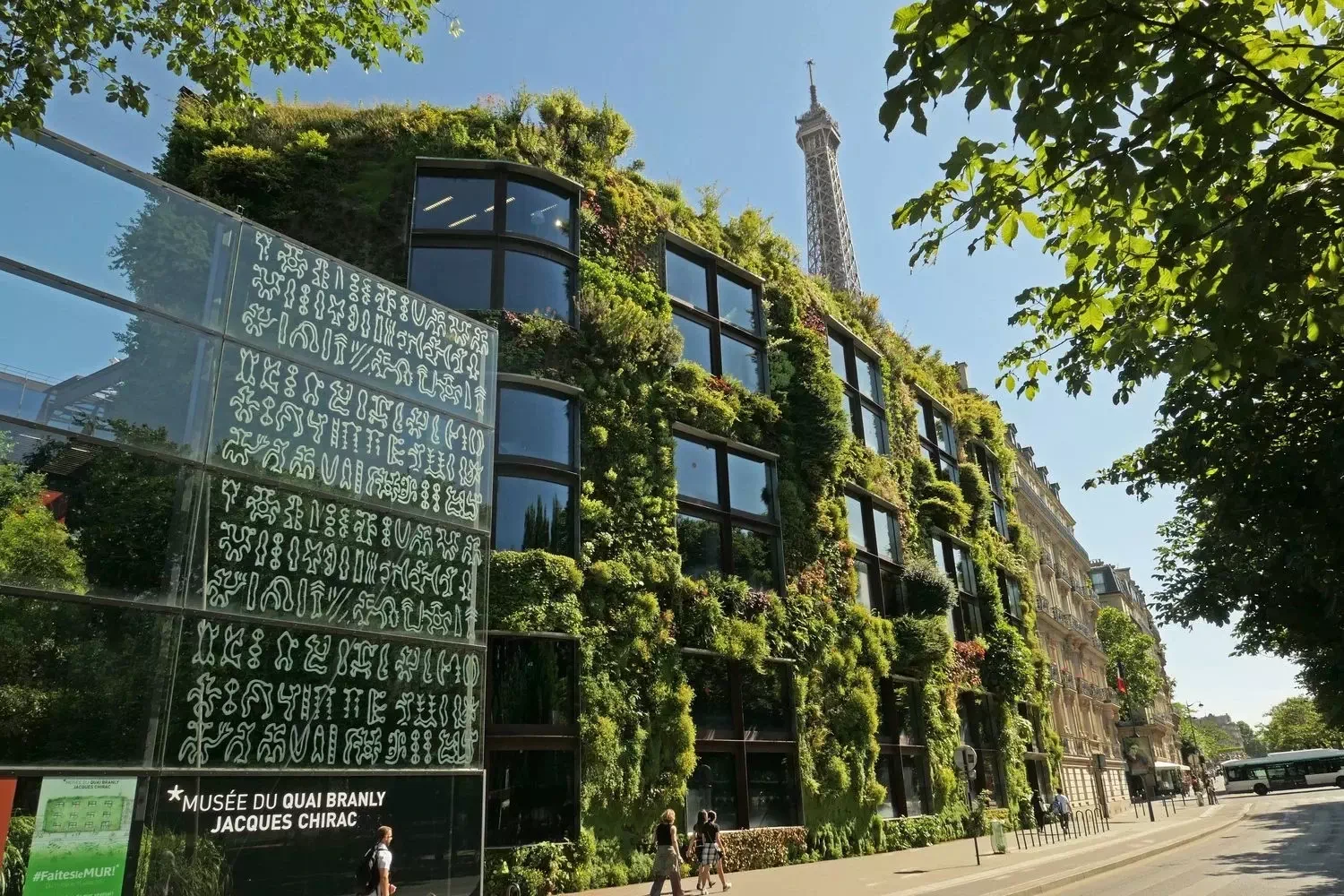
Jean Nouvel designed the museum to reject the classical European museum template. The building is elevated on pilotis, with a wild garden designed by Gilles Clement flowing beneath and around it. The garden is deliberately untamed, a tangle of plants and paths that feels like a jungle in the middle of formal Paris. The contrast with the Tuileries or the Luxembourg Gardens is intentional.
The exterior features a living wall (mur vegetal) by botanist Patrick Blanc: 15,000 plants from 150 species covering an entire facade. It is one of the most photographed building exteriors in Paris, and it blurs the line between architecture and nature in a way that complements the museum's mission.
Inside, Nouvel designed the galleries as a continuous, flowing space rather than compartmentalized rooms. You enter via a long ramp that winds upward through the garden, arriving at a dark, meandering gallery that leads you through the collections geographically. The design is immersive and sometimes disorienting. Some visitors find the lack of clear navigation frustrating. Others find it liberating. Either way, it is a deliberate departure from the white-box gallery format.
The African Collection: The Museum's Center of Gravity
The African galleries are the most extensive and remarkable in the museum. They range from ancient Egyptian and sub-Saharan metalwork to contemporary textile arts, covering the full geographic and temporal range of African artistic production.
Highlights include Benin bronze plaques (12th to 19th century), Dan masks from Cote d'Ivoire, Kuba royal textiles from the Democratic Republic of Congo, Ethiopian processional crosses, and extraordinary beadwork from southern Africa. The West African sculpture collection is a particular strength, with masterpieces from the Dogon, Bamana, Senufo, and Baule peoples whose sculptural traditions profoundly influenced 20th century Western artists from Picasso to Giacometti.
The Africa Fashion exhibition builds on this permanent collection by connecting historical textile traditions to contemporary design. It is the kind of show that makes the permanent collection feel more relevant, not less. After seeing the fashion show, the historical textiles in the permanent galleries take on new meaning.
Oceanic, American, and Asian Collections
Oceanic art is presented with works from Melanesia, Polynesia, Micronesia, and Australia. Melanesian masks, shields, and ceremonial objects from Papua New Guinea, the Solomon Islands, and Vanuatu display extraordinary formal inventiveness. Polynesian works include Maori carvings, tapa cloth, and Hawaiian featherwork. Australian Aboriginal art, representing the world's oldest continuous artistic tradition, is presented with both traditional and contemporary works.
The American collections span indigenous peoples from Alaska to Tierra del Fuego. Pre-Columbian art from Mesoamerica and South America includes Maya ceramics, Aztec stone sculptures, Inca metalwork, and Moche portrait vessels. North American indigenous art includes Northwest Coast carved and painted objects, Plains beadwork, and Southwestern pottery.
The Asian collection focuses on areas that complement rather than duplicate other Parisian museums, with particular strengths in textiles, costumes, and performance-related objects from South and Southeast Asia, Central Asia, and East Asia.
2026 Exhibitions
- Africa Fashion (through July 12, 2026): The headline show, tracing African fashion from pre-colonial textiles to contemporary runways.
- 1913-1923: The Spirit of the Times (through September 20, 2026): Paris celebrates the arts of Africa and Oceania, a critical examination of appropriation and appreciation.
- Kwame Akoto - Almighty God Art Works (through September 6, 2026): Ghanaian contemporary artist Kwame Akoto's paintings and signs.
- Plumes du Paradis (Paradise Feathers) (through November 8, 2026): The extraordinary birds of New Guinea and their cultural significance.
- Bernard Plossu, le voyage au Sahel, 1975-1976 (through June 28, 2026): Photography from the French photographer's Sahel journey.
- Echoes of the Tides (through February 21, 2027): A sound art residency project.
The Colonial Question
The Quai Branly cannot escape its own context. Many of these objects arrived in French collections through colonial channels, and the museum has been more transparent about this than most institutions of its generation. The 2018 report by Felwine Sarr and Benedicte Savoy on the restitution of African cultural objects recommended that France return works taken without consent, and the Quai Branly has been at the center of this debate.
Under Kasarherou's leadership, the museum has engaged more directly with questions of provenance and restitution than it did under his predecessor Stephane Martin. The 1913-1923 exhibition is part of this engagement: it examines the colonial context in which Paris "discovered" African and Oceanic art, rather than presenting that discovery as a simple story of artistic influence.
This is not virtue signaling. It is a museum grappling with the fact that its collection exists because of colonialism, and that the same objects can be simultaneously celebrated as art and questioned as loot. The Quai Branly handles this tension better than the British Museum, which still refuses to return the Parthenon Marbles, but the conversation is ongoing and unresolved.
How the Quai Branly Compares
The Quai Branly is the only major museum in Paris dedicated to non-Western art. The Louvre has Egyptian, Near Eastern, and Islamic departments, but its focus is Mediterranean and European. The Musee d'Orsay covers Western art from 1848 to 1914. The Quai Branly fills the gap by presenting the artistic traditions that those museums ignore.
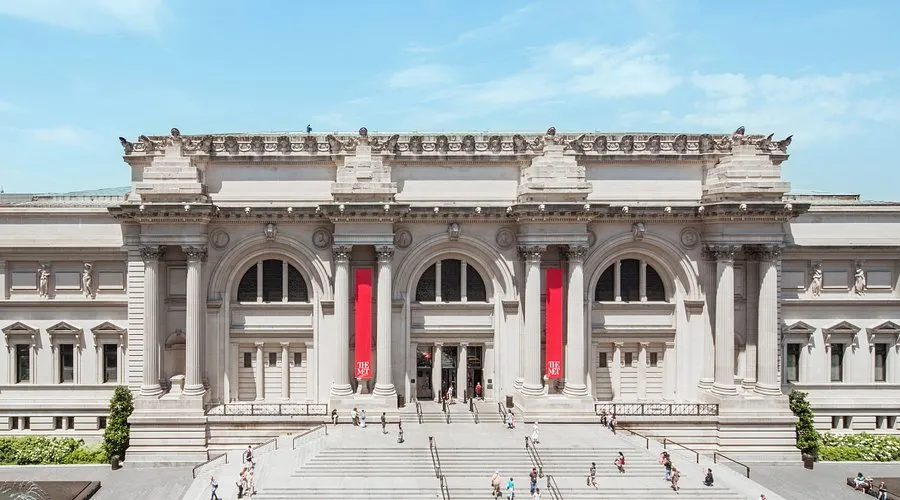
Compared to the Metropolitan Museum in New York, which has strong non-Western collections integrated into an encyclopedic framework, the Quai Branly is more focused and more ambitious in its presentation. The Met displays African and Oceanic art in the Rockefeller Wing alongside the arts of the Ancient Americas. The Quai Branly gives these traditions an entire museum.
The Pavillon des Sessions at the Louvre, which displays a selection of Quai Branly objects within the Louvre itself, is worth noting. It was created as a symbolic gesture to place non-Western art within France's most prestigious museum. The main collection, however, is at the Quai Branly.
Planning Your Visit
Admission: €12 for adults. Reduced rate €9. Annual pass €35 (unlimited entry plus dining discounts). Under 18, EU residents under 26, disabled visitors, French job-seekers, and RSA recipients enter free. First Sunday of each month is free for all, but timed-ticket reservation is required for all visitors including free-entry categories. The Paris Museum Pass is accepted.
Hours: Tuesday through Sunday, 10:30 AM to 7 PM. Thursday late opening until 10 PM. Closed Mondays, May 1, and December 25. The museum opens exceptionally on Mondays during French school holiday periods. Garden access is free Tuesday through Sunday from 9:15 AM to 7:30 PM (Thursday until 10:15 PM).
Best time to visit: 10:30 AM opening on a Tuesday or Wednesday. Fewest visitors, most space to absorb the collection. Thursday evenings from 7 PM are also quiet and particularly good if combined with dinner at Les Ombres, the museum's rooftop restaurant with a view of the Eiffel Tower.
Getting there: Alma-Marceau metro station (Line 9) is closest, across the Seine via the Pont de l'Alma. Bir-Hakeim station (Line 6) is also nearby. The RER C station Pont de l'Alma is a 5 minute walk.
Dining: Les Ombres is the museum's restaurant, offering upscale French cuisine with a panoramic view of the Eiffel Tower. It is expensive but the setting is spectacular, particularly at sunset. Reserve in advance. The cafe on the ground floor is more casual.
Final Verdict: Who Is This Museum For?
The Musee du Quai Branly is for anyone interested in art beyond the Western canon. It is the best museum in Paris for African, Oceanian, and indigenous American art, and its 2026 exhibition program is among the most intellectually ambitious of any major museum in the city.
The building is stunning, the collection is extraordinary, and the current leadership under Emmanuel Kasarherou is engaging seriously with the colonial legacy that built it. Africa Fashion is a must-see exhibition that connects historical traditions to contemporary culture in a way that makes both more meaningful.
The downside? The gallery layout can be disorienting, the lighting is deliberately dim (which protects the objects but makes some works hard to see), and the interpretive materials are sometimes thin. Go with patience, pick up a map, and plan to spend 2 to 3 hours. And do not skip the garden.
Book tickets and check exhibition dates at quaibranly.fr.