
The History of Digital Art: From Pixel to Prompt
Trace digital art from 1960s plotter drawings to AI image generation. This complete history covers every landmark moment in creative computing and digital making.
Your cart is empty
Browse the store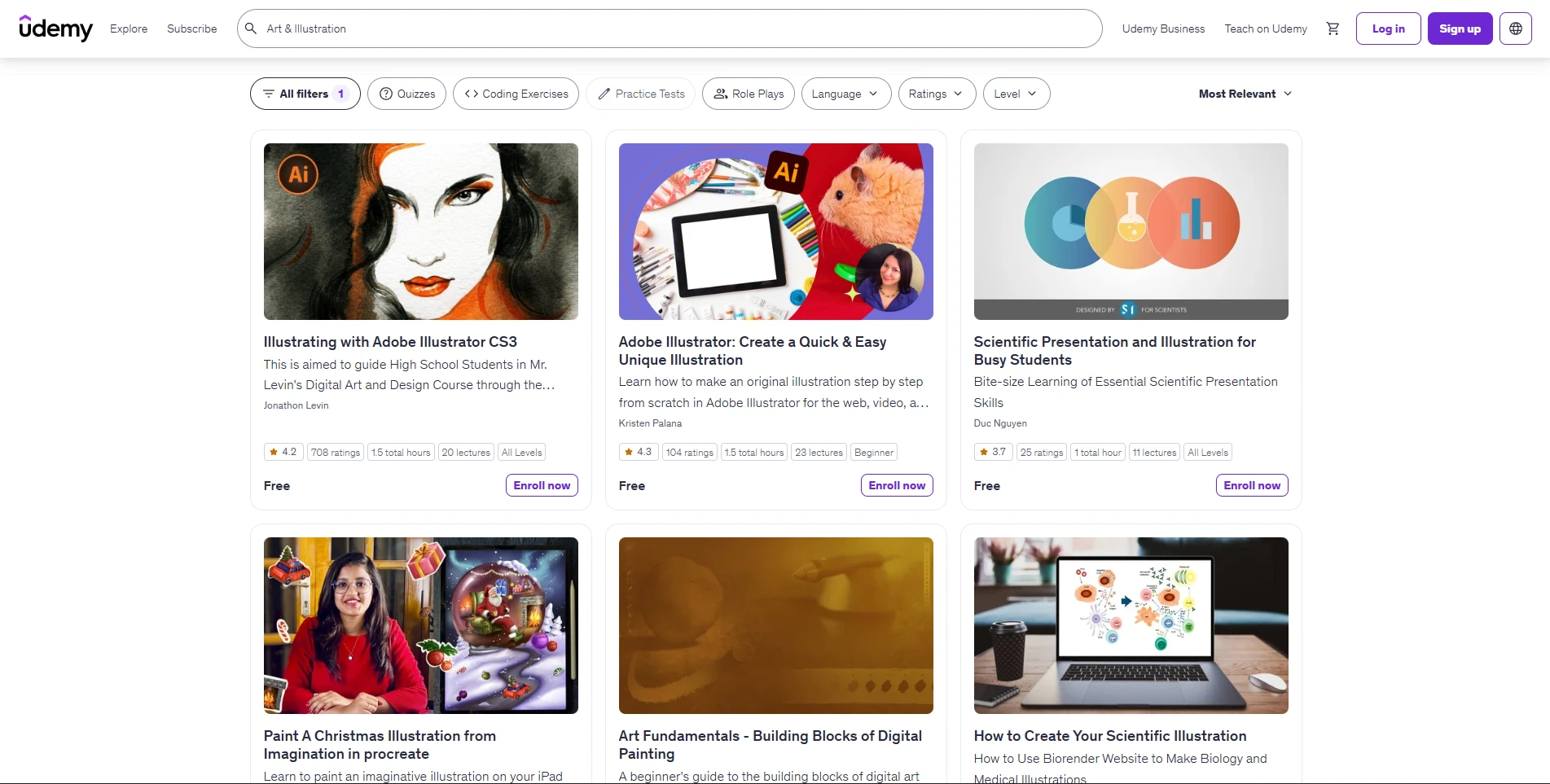
Udemy offers thousands of digital art courses at $13-20 during frequent sales. Lifetime access. Honest review of quality, value, and pitfalls.
Discover other art courses you might be interested in
Technique-focused digital painting courses with progressive curriculum designed to master professional digital art skills.
View details
CGMA offers 8-week concept art courses from working studio artists at $699 per course. Honest review of tracks, instructors, and career outcomes.
View detailsExplore definitions from our glossary that connect to this course
3D modeling is the process of creating three-dimensional objects in digital space. Learn its history from the 1975 Utah teapot to Meta's SAM 3D and Roblox's AI Build in 2026.
Browser art is art made with or for web browsers. Learn its history from early net art to WebGPU generative works commissioned by the Whitney Museum in 2026.
Read more about this topic on our blog
Trace digital art from 1960s plotter drawings to AI image generation. This complete history covers every landmark moment in creative computing and digital making.

A practical comparison of Procreate, Photoshop, and Illustrator for digital artists. Learn what each tool does best, the raster vs vector distinction, and how to choose the right one for your specific workflow.

Discover how visual artists use code as a creative tool. A practical guide to p5.js, Processing, and openFrameworks with real examples and first steps.
Udemy is to online art education what Amazon is to art supplies: the largest marketplace available, with an overwhelming breadth of options at prices that undercut traditional alternatives by enormous margins. During its near-constant sales, courses regularly drop to $12.99 to $19.99 regardless of their listed price of $84.99 or higher. You can build a comprehensive art education library for the cost of a single traditional workshop.
The catch is that Udemy's marketplace model lets anyone create and sell courses. This produces both its greatest strength (extraordinary breadth of content) and its greatest weakness (wildly variable quality). The key to using Udemy effectively is understanding how to separate the genuinely good courses from the thousands of mediocre ones.
The sale pricing makes it possible to assemble a customized art education for under $100. You could buy courses on digital painting fundamentals, Procreate techniques, character design, watercolor painting, and perspective drawing from different instructors, getting hundreds of hours of instruction for less than a single course costs on most other platforms.
Every Udemy purchase includes lifetime access to the course content, including future updates. You can return to lessons as your skills develop, review techniques you forgot, and benefit from new content the instructor adds over time. For complex topics like anatomy or color theory that require repeated study, this perpetual access is genuinely valuable. This is the main advantage over subscription platforms like Skillshare where you lose access when you stop paying.
Several Udemy art courses have achieved best-seller status with tens of thousands of students and consistently high ratings:
The marketplace model means quality varies enormously. Here is how to avoid wasting money:
Courses with thousands of recent reviews and ratings above 4.5 are generally safe choices. Look for reviews from students at your skill level who describe specific improvements in their work. A course with 17,000 reviews and a 4.4 rating is a safer bet than a course with 12 reviews and a 5.0 rating.
Udemy allows free preview of course content before buying. Watch the free preview lectures to evaluate the instructor's teaching style, production quality, and communication clarity. If the preview lectures are confusing or poorly produced, the full course will be worse.
Never pay full price for a Udemy course. Udemy runs sales almost constantly, and a sale is always within days. Most courses drop to $12.99 to $19.99 during promotions. If you see a course at $84.99, wait a few days and it will cost $15.
Art software changes rapidly. A Procreate course last updated in 2021 may not cover features added in recent versions. Look for courses updated within the last year, particularly for software-specific content.
Udemy's digital painting courses range from complete beginner introductions to advanced technique courses. Courses cover Photoshop painting, Procreate illustration, Clip Studio Paint techniques, and software-agnostic digital painting fundamentals. The best-rated options provide solid foundations, though they generally cannot match the instructor caliber of premium platforms like Schoolism or Brainstorm School.
Comprehensive courses on pencil drawing, charcoal, watercolor, oil painting, acrylic painting, and mixed media provide structured instruction for traditional artists. Many include extensive practice exercises, downloadable reference materials, and progressive skill-building curricula that simulate the structured learning of in-person classes.
Specialized courses on character design, creature design, environment concept art, and prop design serve aspiring entertainment artists. The quality here is mixed. For professional-level concept art training, CGMA and Brainstorm School are better options, but they cost $700 to $1,200 per term versus $15 on Udemy.
Multiple anatomy courses provide the structural understanding of the human body that underpins figure drawing, character design, and portraiture. Brent Eviston's courses are the standout here. For deeper anatomy study, Proko remains the gold standard.
Udemy's per-course pricing model is fundamentally different from subscription platforms, and the right choice depends on your learning pattern.
Compared to Skillshare at $168/year, Udemy is cheaper if you only want a few specific courses. You pay $15 to $20 per course and keep them forever. Skillshare is cheaper if you want to take many courses across different subjects and are comfortable with a subscription.
Compared to Domestika at $10 to $30 per course, the pricing is similar, but Domestika has higher production quality on average and more curated content. Udemy has more courses but more variability in quality.
For professional-level art education, Udemy cannot match Schoolism at $249/year or SVS Learn at $250/year. Those platforms offer instruction from working industry professionals with structured curricula. Udemy offers instruction from a wide range of creators with varying levels of expertise.
For accredited education, Coursera offers university-backed courses with certificates that carry weight with employers. Udemy's certificates of completion demonstrate commitment but are not accredited credentials.
If you need live feedback, structured critique, or mentorship from working professionals, Udemy's self-paced, pre-recorded format will not satisfy you. The Q&A forums are useful but are not a substitute for live critique. For live feedback, look at Watts Atelier Online, Brainstorm School, or CGMA.
If you want a structured curriculum that builds progressively from foundations to professional-level work, Udemy's marketplace model makes this difficult. You have to assemble your own curriculum from multiple courses, which requires more self-direction than a structured program like SVS Learn or Schoolism.
If you are looking for accredited credentials, Udemy's certificates of completion are not academic credentials. They demonstrate commitment to learning but do not carry the weight of a Coursera certificate from CalArts or MoMA.
Udemy is the best platform for self-directed art students on a budget who want to build a customized education from multiple instructors at minimal cost. The combination of massive course selection, lifetime access, frequent deep discounts, and a reliable review system makes it an essential resource for anyone learning digital or traditional art.
The key is treating Udemy as a marketplace to shop, not a school to attend. Research courses carefully, read reviews, preview content, and never pay full price. Start with one of the best-sellers during a sale, and if the teaching style works for you, build out your curriculum from there. For structured, professional-level training with feedback, pair Udemy courses with a more focused platform like Schoolism or SVS Learn.
Quiet Canvas is a space for artists and art lovers: essays, glossary terms, tools, and curated directories to support your creative practice.
Learn more →


