
3D Art and Sculpture: Blender, ZBrush, and Printing in Three Dimensions
Explore 3D art and digital sculpture using Blender and ZBrush. Learn how artists move from screen to physical object with 3D printing and the new forms it enables.
Your cart is empty
Browse the store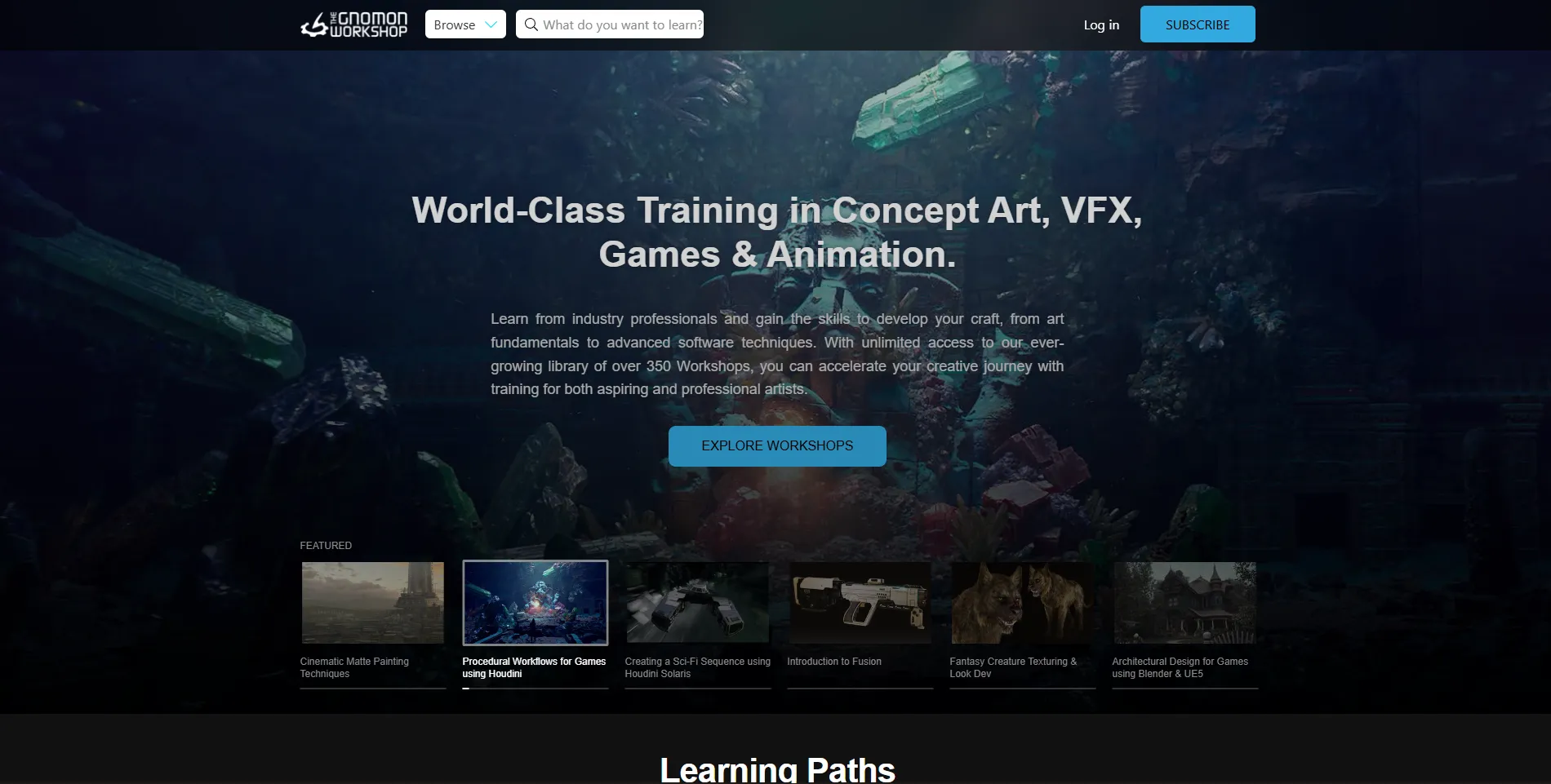
Professional training for entertainment industry featuring advanced techniques in VFX, 3D, and digital art by industry experts.
Discover other art courses you might be interested in
Premium painting courses from one of YouTube's most respected art educators, offering deep-dive instruction on color, light, rendering, and professional painting techniques.
View details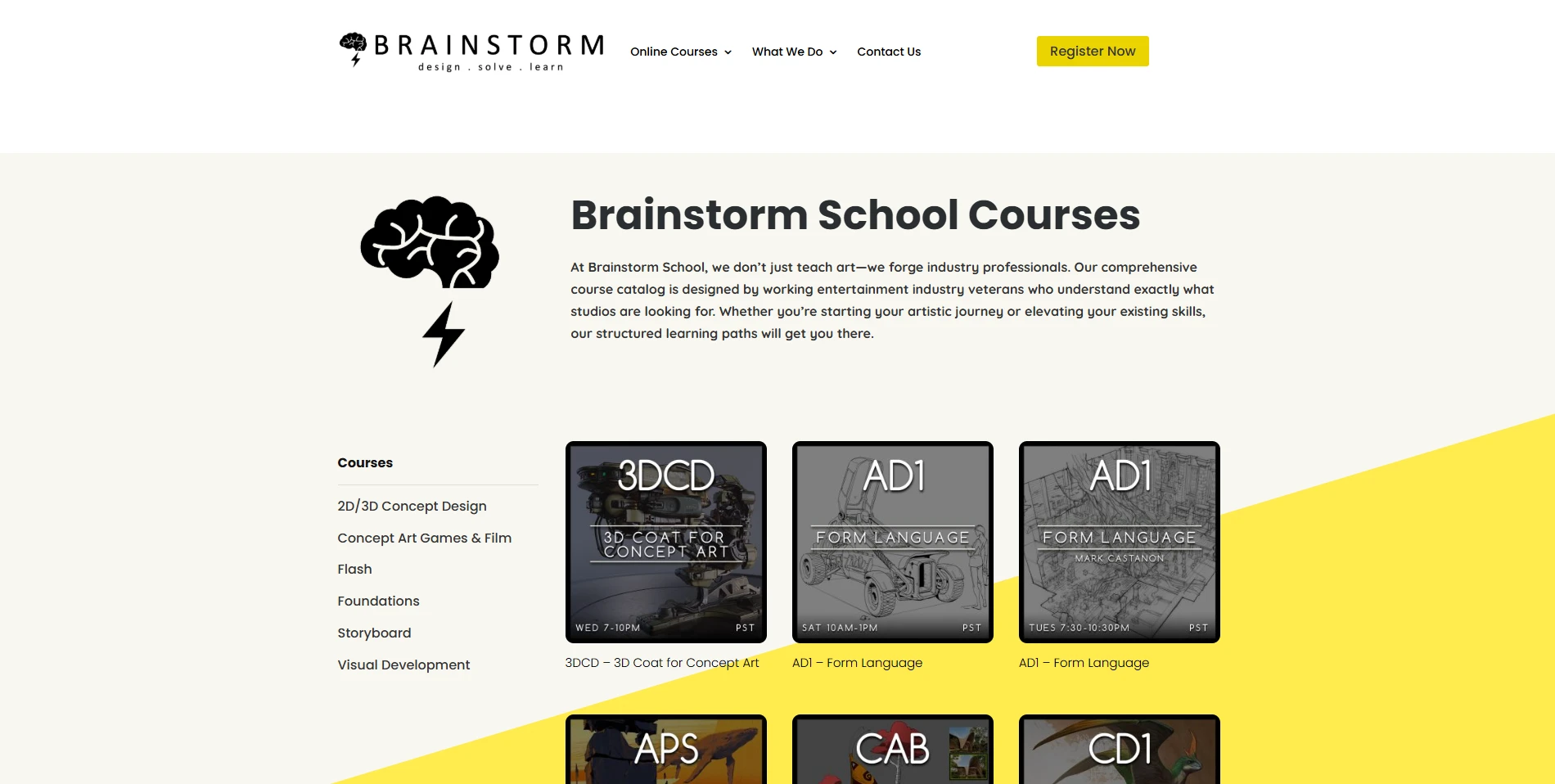
Brainstorm School teaches live online concept art courses from working studio artists. 10-week terms, $800-$1,200 per course. Honest review inside.
View detailsExplore definitions from our glossary that connect to this course
Read more about this topic on our blog
Explore 3D art and digital sculpture using Blender and ZBrush. Learn how artists move from screen to physical object with 3D printing and the new forms it enables.

From 1960s code art to 2026 AI museums, digital art has transformed what painting and creativity mean. Here is the full history and where it stands now.
The Gnomon Workshop is not for beginners. It is not for hobbyists. It is the platform where professional artists already working at studios like ILM, Weta Digital, Blizzard, and DreamWorks go to learn advanced techniques from their peers. If you are looking for an introduction to 3D modeling or a gentle on-ramp to VFX, you are in the wrong place. If you already know Maya or ZBrush and want to learn production workflows from a senior technical director who shipped a feature film last year, this is where you go.
Founded as an extension of the legendary Gnomon School of Visual Effects in Hollywood, the Workshop has evolved from selling individual course downloads to a subscription model that gives you unlimited access to its entire library. As of 2026, that library contains 350+ workshops and 1,000+ hours of training, with new content added monthly.
Gnomon Workshop now operates on an all-access subscription model:
Both plans include unlimited access to all 350+ workshops, downloadable project files for select titles, structured Learning Paths, playlist creation, and closed captions for all workshops. New subscribers can get 15% off, and student discounts are available for those in full-time education.
The old model of buying individual courses at $50-70 each is gone. The subscription approach is a better deal if you plan to watch multiple workshops, which most serious users will. If you only want one specific course, the monthly plan lets you subscribe, watch, and cancel.
You can preview before subscribing: the first 1-2 lessons of every workshop are available for free on the Gnomon Workshop website.
Technical depth. Gnomon courses do not skim surfaces. A workshop on Houdini pyro simulations will spend hours on solver settings, cache management, and render-time optimization, not just "here is how to make fire." The instructors explain why specific workflows exist, how they fit into studio pipelines, and how to adapt them when production requirements change.
Currency. Instructors are actively working in the industry. They teach the techniques they used on their most recent projects. This means the workflows reflect current studio practice, not methods that were standard five years ago but have since been replaced. In a field where software versions and pipeline standards shift annually, this matters.
Production authenticity. The exercises and project files mirror actual studio work. You are not painting a stylized character for fun. You are building a production-ready asset with correct topology, UVs, and texture resolution for a specific render pipeline. The gap between "beautiful but unusable" and "production-ready" is where most self-taught artists fail, and Gnomon addresses this directly.
VFX and compositing: Professional compositing in Nuke and After Effects, particle systems for explosions and environmental effects, dynamics and simulation for destruction and physics-based motion, and digital matte painting for environment extension.
3D modeling, sculpting, and texturing: Hard surface modeling for props, weapons, and vehicles. Organic sculpting in ZBrush for characters and creatures. Texturing in Substance Painter and Mari. Retopology and optimization for production pipelines.
Character, creature, and environment art: Complete character creation workflows from concept to final asset. Rigging, facial blend shapes, and animation-ready topology. Environment art including digital matte painting, terrain creation, architectural visualization, and world-building.
Learning Paths are a newer feature that structures workshops into sequenced curricula. Instead of browsing 350+ workshops and guessing what order to watch them in, you follow a path that builds skills progressively. This is particularly useful for artists transitioning between disciplines, like a modeler moving into look development.
Against CGMA (CG Master Academy), which also targets the entertainment industry with instructor-led courses, Gnomon is self-paced and subscription-based while CGMA runs scheduled cohorts with live feedback. CGMA gives you accountability and critique. Gnomon gives you a larger library and the freedom to binge.
Against Brainstorm School, which focuses on concept art and design, Gnomon covers a broader range of entertainment disciplines including VFX, 3D, and technical art. Brainstorm is more focused on 2D concept and illustration. Gnomon covers both 2D and 3D production.
Against Ctrl+Paint, which is aimed at beginners learning digital painting, Gnomon assumes you already have strong foundations. Ctrl+Paint teaches you the basics. Gnomon teaches you what professionals do after they have mastered the basics.
The Gnomon name carries real weight in the entertainment industry. Hiring managers at major studios recognize Gnomon coursework on a resume as a signal of serious professional development. Artists consistently report that specific Gnomon workshops provided skills that directly led to job opportunities, and that the portfolio work created during courses met professional standards.
This is not marketing copy. The entertainment industry is small, and the people teaching Gnomon workshops are often the same people reviewing portfolios at studios. Learning from them, even through pre-recorded video, gives you insight into what they look for.
Gnomon Workshop does not offer personalized feedback. There are no homework submissions, no instructor critiques, no community critique system. You watch the workshops, follow along with the project files, and assess your own work. For artists who need accountability and feedback, CGMA or CG Spectrum offer instructor-led alternatives at higher price points.
The subscription model means you lose access to all content if you cancel. Unlike platforms where you purchase individual courses with lifetime access, Gnomon requires an active subscription to view anything. Download the project files while your subscription is active if you want reference material after cancelling.
Gnomon Workshop is for intermediate to advanced artists who already have strong foundations and want to learn production-level techniques from working professionals. It is for artists targeting careers in VFX, 3D, or game art who need to understand studio workflows, not just software features. And it is for working professionals who need to learn a new tool or technique for an upcoming project.
It is not for beginners. It is not for hobbyists who want to paint for fun. And it is not for anyone who needs instructor feedback and structured accountability.
Start at thegnomonworkshop.com. Watch the free preview lessons from a workshop that matches your discipline. If the depth and pace feel right, subscribe for a month and see how far you get.
Quiet Canvas is a space for artists and art lovers: essays, glossary terms, tools, and curated directories to support your creative practice.
Learn more →


