
Top Reddit Communities for Artists and Art Enthusiasts
Explore the best Reddit art communities to grow your skills, find inspiration, and get feedback from fellow creative artists.
Your cart is empty
Browse the store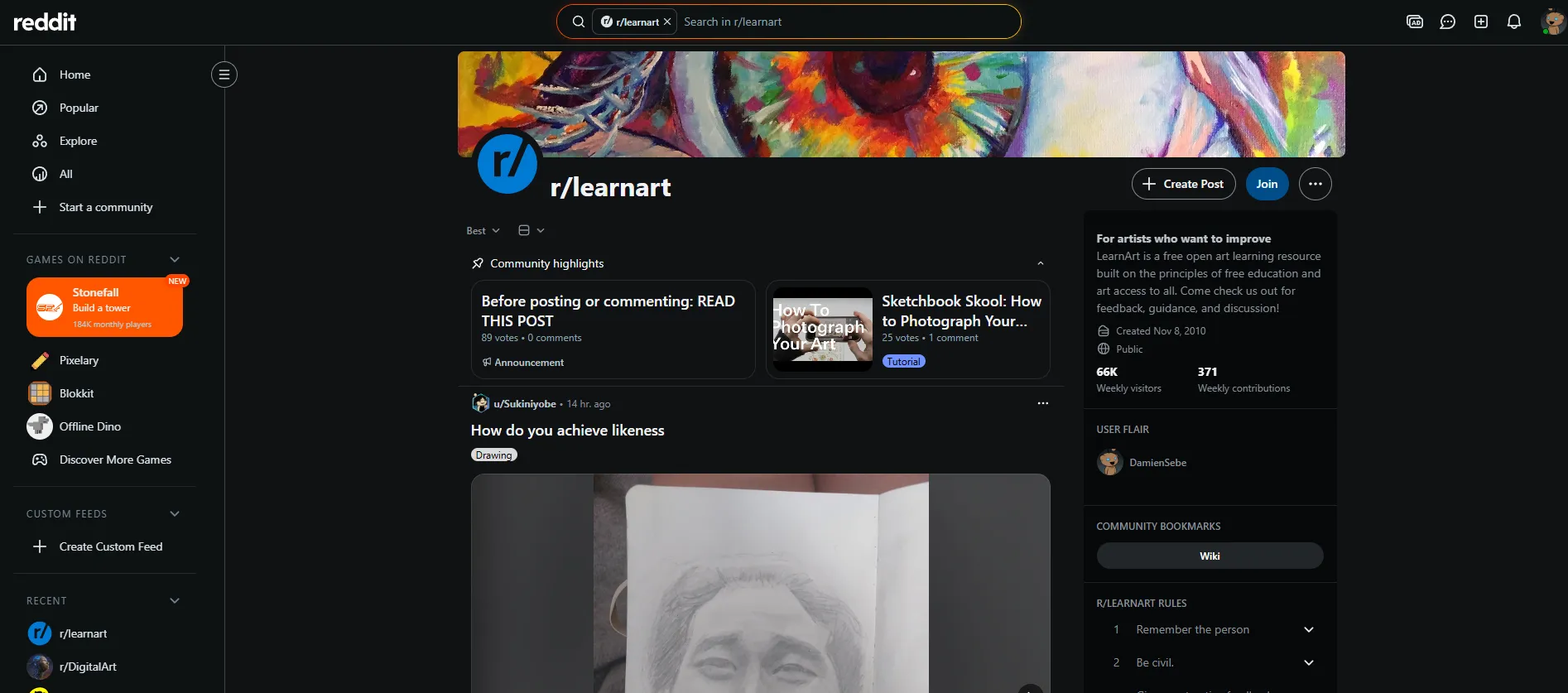
Reddit's largest art education community with 1.7 million members, offering honest feedback, free learning resources, and weekly accountability threads for beginners and intermediate artists.
Discover other art communities you might be interested in
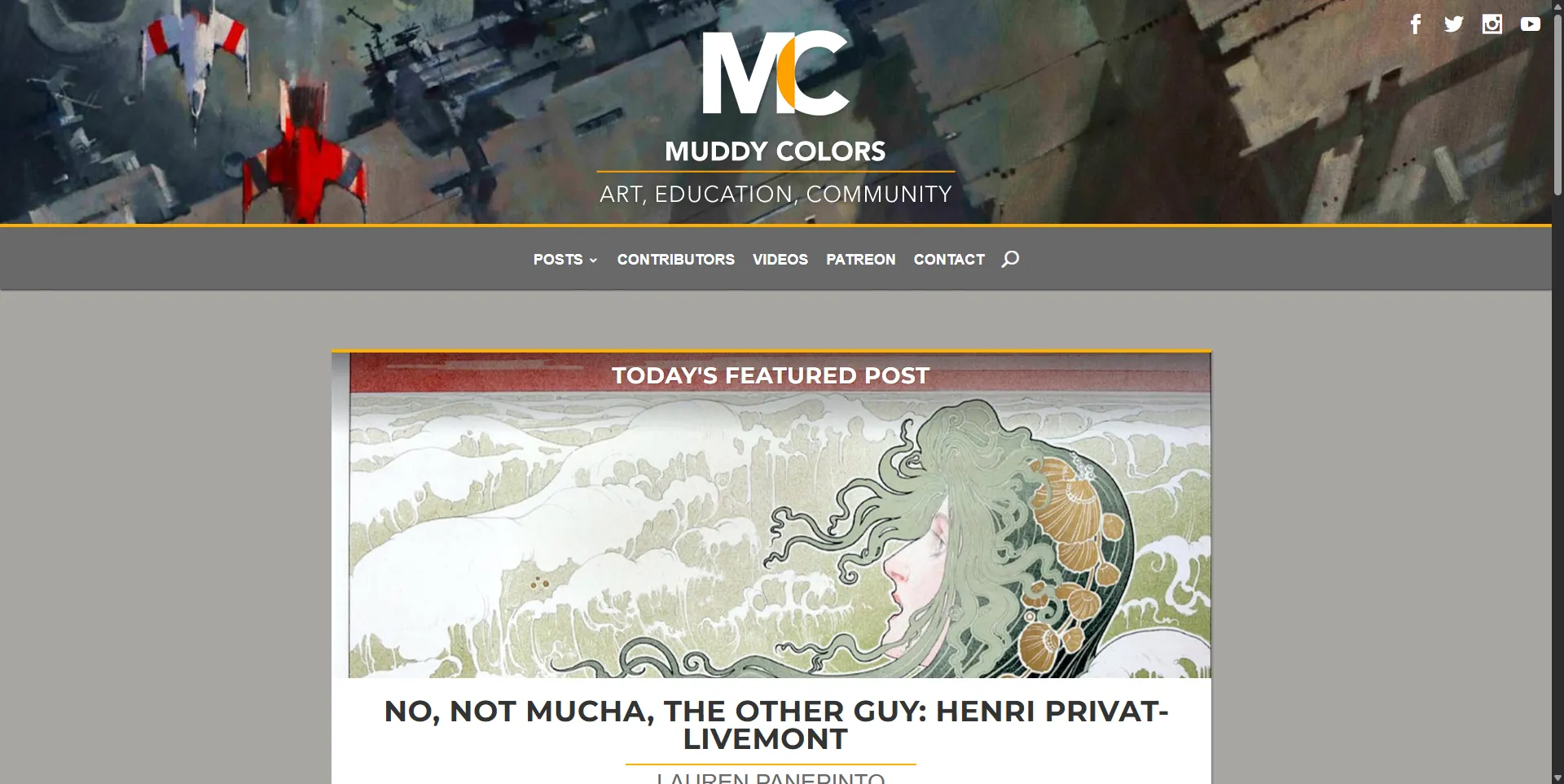
Muddy Colors is a group blog by leading fantasy and SF illustrators including Greg Manchess and Donato Giancola. Still active in 2026 with NASA patches and Grim Oak Press work.
View details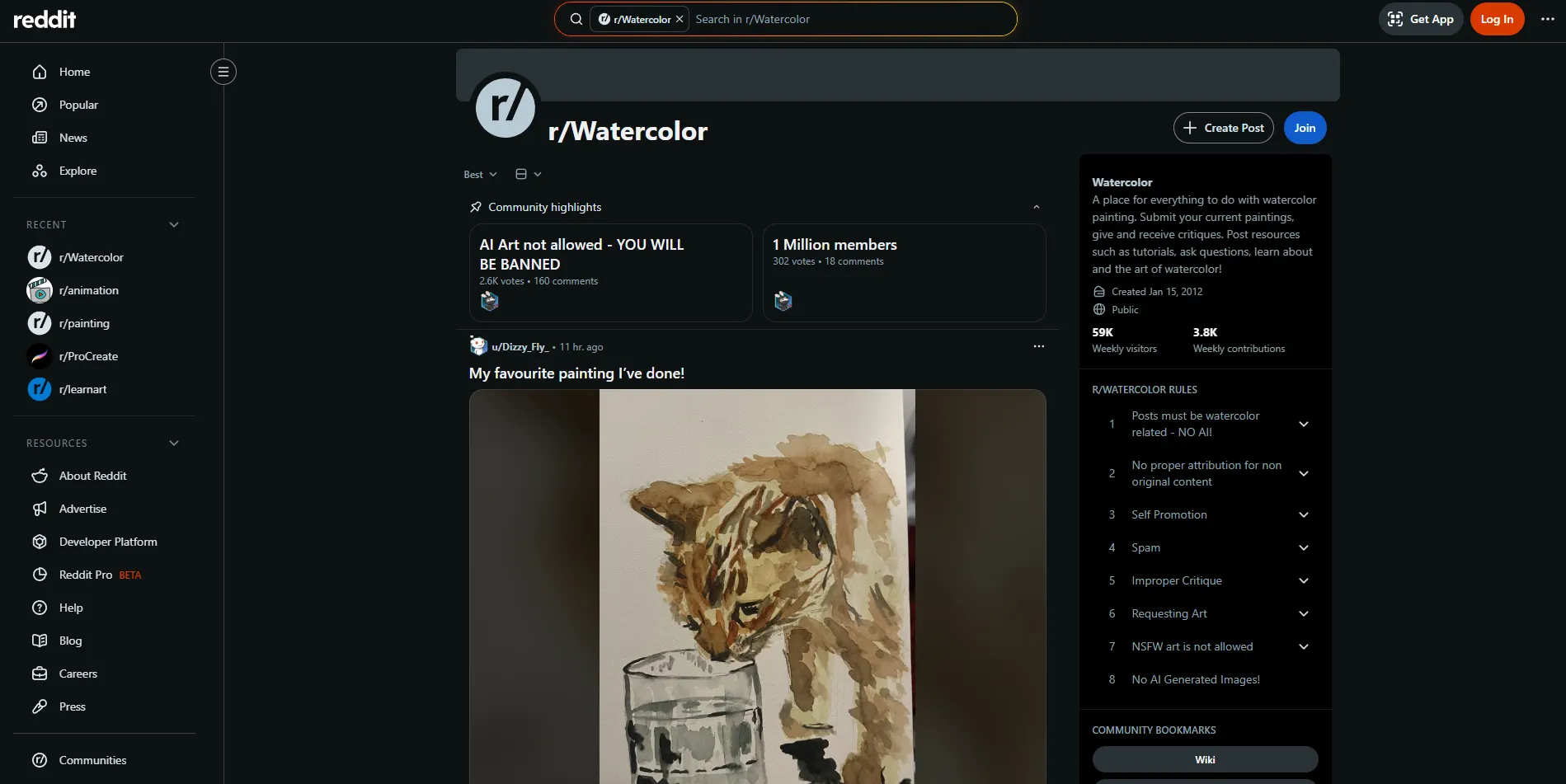
The largest online watercolor community with nearly one million members sharing paintings, troubleshooting techniques, debating supplies, and supporting each other through watercolor's steep learning curve.
View detailsRead more about this topic on our blog
With approximately 1.7 million members as of mid-2026, r/learnart is the largest art education community on Reddit and one of the few large online spaces where beginners can post their work and receive honest, constructive feedback without being drowned out by professional-level showcases or dismissed by elitists. Founded in 2010, the subreddit has grown by roughly 10,000 members in 2026 alone, reflecting sustained demand for community-based art learning.
The community's core principle, stated in its description, is "free education and art access to all." This is not a showcase community. It is a learning community. The difference matters: on r/learnart, posting a wobbly first attempt at a human figure is met with specific, actionable advice rather than silence or mockery. The community has developed a feedback culture that is honest without being cruel and supportive without being vacuous.
r/learnart explicitly prioritizes process over product. The community values the work of learning: studies, exercises, failed attempts, partial progress, and the unglamorous repetition of fundamentals that actually builds skill. This philosophy creates a fundamentally different environment from showcase communities like r/Art or r/DigitalArt, where only polished finished work tends to receive attention.
For beginners, this process-first culture is liberating. You do not need to wait until your work is "good enough" to share. You can post your first attempt at perspective drawing, your tenth attempt at drawing hands, or your hundredth attempt at understanding value, and the community will engage with your work as a learning step rather than judging it as a finished product.
The community also actively discourages the comparison anxiety that social media platforms generate. Members regularly remind each other that art skill is built through sustained practice over years, not weeks, and that comparing your beginner work to a professional's portfolio piece is both unproductive and demoralizing.
The community's discussions and resources cover the fundamental skill areas that underpin all visual art:
Drawing fundamentals include line quality, shape construction, form, spatial reasoning, and the basic motor skills of mark-making. The community frequently recommends structured curricula like Drawabox (free) and Proko's anatomy and figure drawing courses as starting points for artists who need guided practice rather than self-directed exploration.
Anatomy and figure drawing discussions address the specific challenges of drawing the human form: proportion, skeletal structure, muscle groups, gesture, and the relationship between anatomical knowledge and expressive figure drawing. Members share anatomy resources, critique figure studies, and discuss the balance between anatomical accuracy and artistic interpretation.
Perspective and spatial reasoning content covers one-point, two-point, and three-point perspective, atmospheric perspective, foreshortening, and the practical application of perspective principles to composition and environment drawing. This is one of the most commonly requested topics, as perspective is a fundamental skill that many self-taught artists neglect.
Color theory and light discussions address hue, value, saturation, color temperature, color harmonies, and the behavior of light on different surfaces. The community shares exercises for developing color mixing skills and discusses how color theory applies differently to traditional and digital media.
Digital art fundamentals cover the transition from traditional to digital media, including tablet setup, brush selection, layer management, and the specific challenges of drawing on a smooth digital surface versus paper. For many beginners, the transition to digital tools introduces motor control challenges that the community addresses with practical advice.
The quality of feedback on r/learnart is the community's defining feature. Critiques tend to be specific, identifying particular strengths and weaknesses rather than offering general impressions. A typical response to a beginner's figure drawing might address the proportions of the head relative to the body, the angle of the shoulders, the placement of the feet, and the line quality, with specific suggestions for what to practice next.
The community has developed norms around feedback that keep it constructive:
The community maintains a collective knowledge base of learning resources that members have tested and endorsed. These include free resources (Drawabox, Ctrl+Paint, Proko's free YouTube content, Line of Action, Creature Art Teachers) and paid options (Schoolism, SVSLearn, New Masters Academy, individual artist Gumroad tutorials). The community-sourced nature of these recommendations means you get real user experiences rather than marketing claims.
The community also frequently discusses and recommends specific books, including Drawing on the Right Side of the Brain by Betty Edwards, Figure Drawing: Design and Invention by Michael Hampton, Constructive Anatomy by George Bridgman, and Color and Light by James Gurney. These discussions help beginners prioritize their reading and avoid the overwhelming volume of art instruction books of varying quality.
The community runs a weekly accountability thread where members post before-and-after images of their work on a specific piece or exercise. This creates a structured opportunity for regular practice check-ins and helps combat the motivation loss that derails many self-directed learning attempts.
The accountability threads also serve as a progress tracker. Seeing your own improvement over weeks and months, documented in a public thread, is one of the most effective motivators for continuing practice. The community celebrates progress, not just achievement, which reinforces the process-over-product philosophy.
r/learnart's advantage is that it combines community feedback with free access. Its disadvantage is that the feedback quality varies depending on who happens to see your post, and the community cannot provide the structured, sequential curriculum that a dedicated course offers.
This is for you if: You are a beginner or intermediate artist who wants honest, constructive feedback on your work. You are looking for free learning resources and recommendations. You want a community that values process and practice over finished results. You are self-directed in your learning but want peer support and accountability.
This is not for you if: You want to showcase polished finished work (use r/Art or r/DigitalArt). You need a structured, sequential curriculum with graded assignments (use a paid course or school). You are an advanced or professional artist looking for high-level critique (use r/ConceptArt or r/ArtCritique). You want career or business advice (use r/ArtistLounge).
r/learnart is the best free, community-based art learning resource on Reddit. Its 1.7 million members and process-first culture create an environment where beginners can get honest feedback without intimidation and find learning resources without spending money. The community is not a replacement for structured education, but it is an exceptional supplement that provides what structured education cannot: peer feedback, accountability, and the collective wisdom of millions of artists at various stages of development.
For anyone starting their art journey or returning to art after a long break, r/learnart is the first community to join.
Next steps: Visit r/learnart and read the sidebar for recommended resources. Post a recent drawing or study with specific questions to get your first round of feedback. Check out Drawabox for a free structured curriculum, and explore our art courses directory for paid options. You can also browse our YouTube channels directory for free video tutorials from instructors like Proko and Ctrl+Paint.
Quiet Canvas is a space for artists and art lovers: essays, glossary terms, tools, and curated directories to support your creative practice.
Learn more →


