British Library Flickr Commons: One Million Public Domain Images (If You Can Find Them)
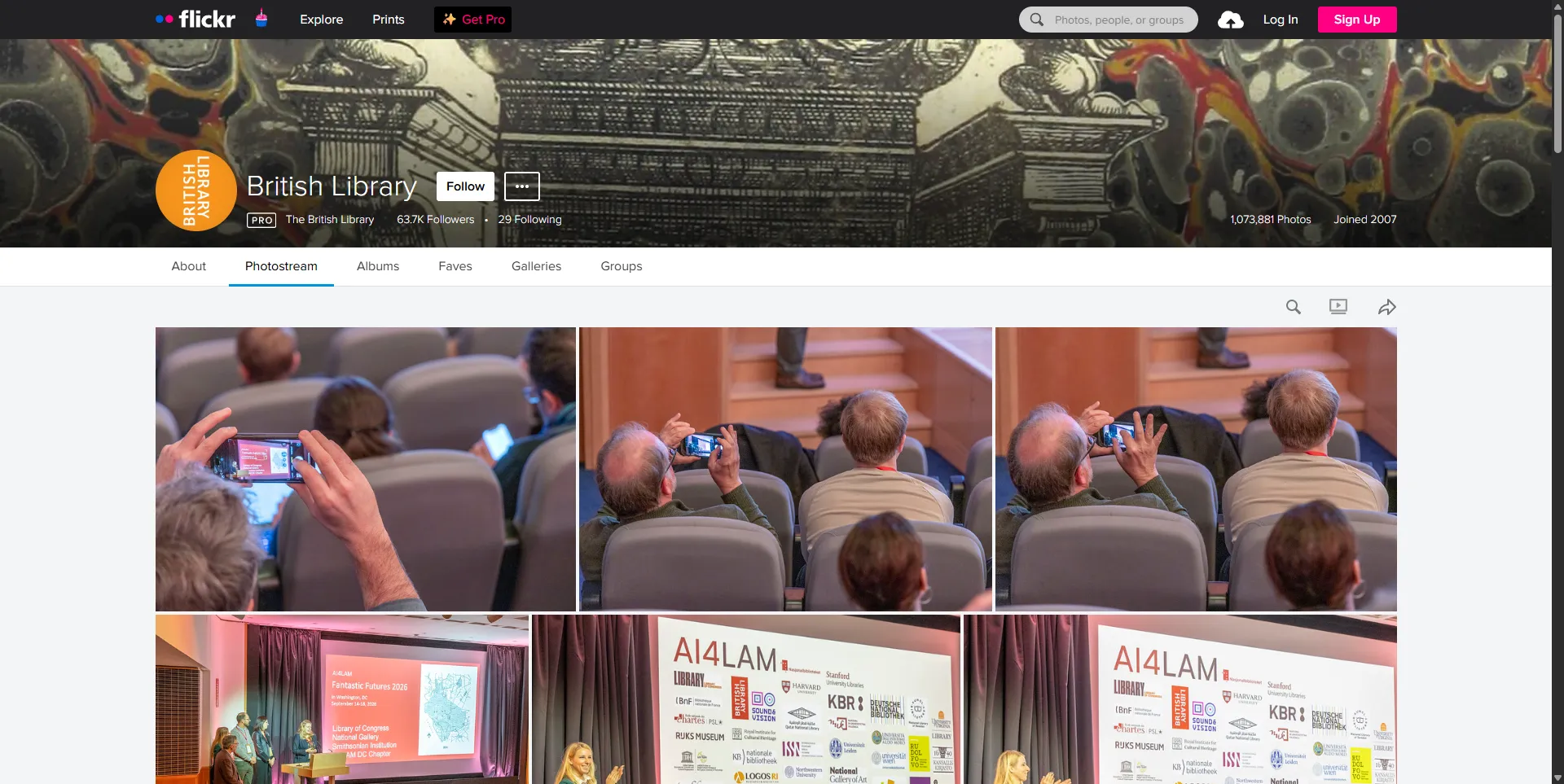
The British Library uploaded over one million public domain images to Flickr Commons in December 2013. The collection has since accumulated over 1.6 billion views and stands as the largest single contribution to Flickr Commons from any institution. The images were extracted from 65,000 digitized books from the 17th, 18th, and 19th centuries by an algorithm built by Ben O'Steen in British Library Labs.
Here is the catch: the images were uploaded with almost no metadata. Each image had only the title of the book and the page number it came from. No description of what the image actually depicts. The library relied on crowdsourced tagging to make the collection searchable, and over the past decade, volunteers and machine learning tools have tagged and described hundreds of thousands of images. But millions remain untagged.
This makes the British Library Flickr Commons a treasure chest that is genuinely difficult to open. The material is extraordinary. Finding it requires patience and the right search techniques.
The Search Problem (and How to Solve It)
In 2026, there is a specific wrinkle that trips people up. Flickr reclassified the British Library's images as "illustration/art" content type, not "photos." This means standard Flickr search will not surface them. You need to use Advanced Search and filter by content type "illustration/art" to find British Library images.
Once you know this, searching becomes more productive. The collection is organized into albums by subject and period, which is often more useful than keyword search. Albums cover maps, natural history, fashion, architecture, book illustrations, and other topics. Browsing albums is the most reliable way to discover material because keyword search depends on tags that may not exist.
Each image's Flickr page provides provenance information: the title of the source book, author, date, page number, and sometimes a link to the full digitized book. This is valuable for researchers who need to cite sources, and it provides context that makes the images more useful.
What Is in the Collection
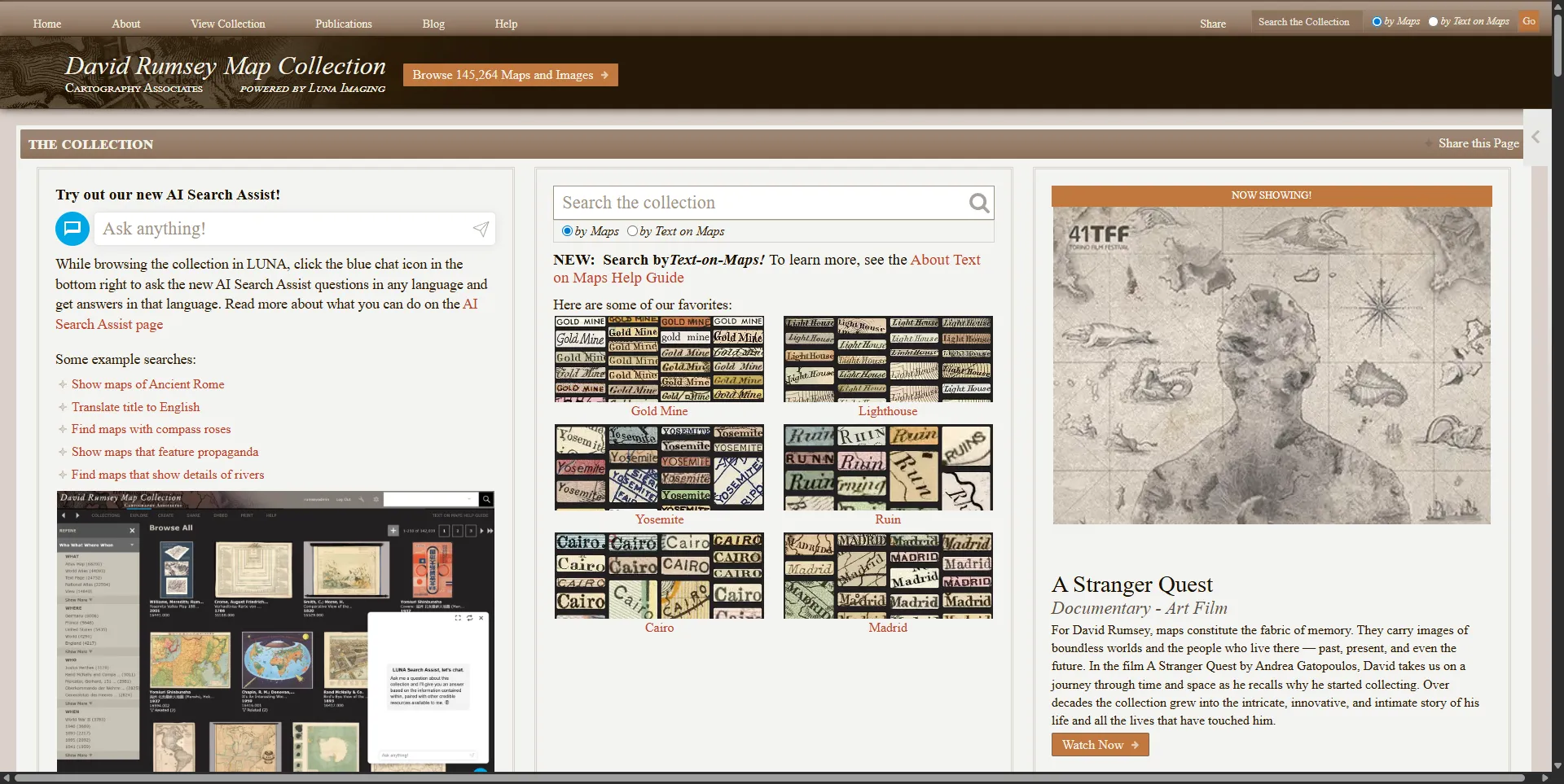
Maps are one of the most distinctive categories. Since 2015, volunteers have found and tagged over 50,000 maps within the collection. These maps have been georeferenced and are being added back into the British Library catalog as individual collection items. For historical cartography, this subcollection alone rivals dedicated map archives. For even more historical maps, see our review of the David Rumsey Map Collection.
Victorian book illustrations from the 19th century are the backbone of the collection. The explosion of illustrated publishing during the Victorian era produced an enormous range of visual material: natural history plates, travel narrative illustrations, novel illustrations, children's book art, and technical diagrams. The illustrators whose work appears include some of the most skilled draughtsmen and engravers of the period.
Manuscript illustrations from the medieval and early modern periods include illuminated initials, decorated borders, and full-page miniatures. These are among the most visually striking items in the collection.
Decorative elements: ornamental borders, typographic flourishes, printer's marks, and other decorative material from historical books. These are popular with designers working in vintage or historical styles.
Licensing: Genuinely Free
All images in the British Library Flickr Commons collection are marked as "no known copyright restrictions" under the Flickr Commons program. This means the British Library believes the images are in the public domain. You can use them for any purpose, including commercial use, without attribution or licensing fees.
This is cleaner than the varying licenses you encounter on the Biodiversity Heritage Library, where each item may have different license terms. It is comparable to the CC0 designation used by the Art Institute of Chicago and the Cleveland Museum of Art.
The Flickr Commons Ecosystem
The British Library is part of a broader Flickr Commons program that includes the Library of Congress, the Smithsonian Institution, the New York Public Library, and dozens of other cultural institutions. Together, these participants have made millions of public domain images available through a single platform.
However, the Flickr Foundation noted in 2026 that it is "making adjustments to programming and team" to weather challenges affecting nonprofits. The long-term stability of the Flickr Commons platform is worth monitoring if you rely on it as a primary resource. Consider downloading and archiving images you need rather than assuming they will always be available online.
How It Compares
Compared to the David Rumsey Map Collection, the British Library has more maps (50,000+ vs. Rumsey's 149,000 total items across all categories) but less consistent metadata and no dedicated viewing tools. Rumsey offers georeferencing, high-resolution zoom, and catalog search. British Library maps on Flickr are tagged by volunteers but lack dedicated cartographic viewing tools.
Compared to Wikimedia Commons, the British Library collection is more historically focused and has clearer provenance (every image links to its source book). Wikimedia Commons has more content and better search, but mixed quality and less reliable provenance.
Compared to Openverse, the British Library Flickr Commons is a single source collection. Openverse indexes content from dozens of sources, including some British Library material, through a unified search interface.
Practical Uses for Artists and Designers
Illustrators working with historical subjects can find reference material for costume, architecture, technology, natural history, and everyday life across centuries. The Victorian illustration material is particularly rich.
Designers can source engravings, lithographs, decorative borders, and ornamental elements for commercial design work. Victorian decorative material is popular with designers working in vintage or historical styles.
Map enthusiasts and fantasy illustrators can study historical cartographic conventions, decorative cartouches, and compass roses. The 50,000 georeferenced maps are a resource that rivals dedicated map collections.
Educators can use the images freely in teaching materials about the history of illustration, printing, and visual culture.
Insider Tips
- Use Flickr Advanced Search and set content type to "illustration/art" to find British Library images. Standard search will not surface them.
- Browse by albums rather than relying on keyword search. Albums are curated by subject and are the most reliable way to discover specific types of material.
- Each image links back to the source book in the British Library's digitized collection. You can access the full book as a PDF through the British Library's digital storage system using the BL_DLS_ID identifier.
- The manifest files on GitHub (BL-Labs/imagedirectory) contain TSV files with metadata for all images, split by year and image size. This is useful for bulk analysis or filtering by dimensions.
- Download the original resolution file from each image's Flickr page for the highest quality version.
Final Verdict: Who Is This Actually For?
The British Library Flickr Commons is for patient researchers, illustrators, and designers who are willing to dig through a massive, imperfectly tagged collection to find extraordinary historical imagery. The one million plus images contain material that is not available anywhere else online, and the public domain licensing makes it all usable for commercial work without restriction.
It is not for someone who needs a quick, clean search experience. The Flickr interface, the reclassification as "illustration/art," and the incomplete metadata make finding specific images a project rather than a query. If you want curated, easily searchable public domain art, start with Artvee or the Met's open access collection. Come to the British Library when you need depth and historical specificity that those platforms cannot provide.
Browse the collection at the British Library's Flickr photostream and check our review of Openverse for a search engine that indexes multiple open access sources.