
The Metropolitan Museum of Art in New York owns over 1.5 million objects. At any given time, roughly 26,000 of them, less than two percent, are on display. The Louvre holds over 380,000 works but shows only about 35,000. The Tate collection includes over 70,000 artworks; its four galleries can display only a fraction at once. Every museum in the world faces the same fundamental problem: there is far more art than there is wall space. Someone has to decide what gets shown and what stays in storage. That decision, which seems purely practical, is actually one of the most consequential acts of cultural power in the modern world.
What a museum chooses to display shapes what the public sees, values, and remembers. It determines which artists become famous and which are forgotten, which stories are told and which are silenced, which cultures are celebrated and which are marginalized. Curation is not a neutral, objective process. It is a series of choices made by individuals and institutions with their own biases, priorities, and pressures. Understanding how these decisions are made, and who makes them, is essential for anyone who wants to engage critically with art and the institutions that present it.
What Curators Actually Do
The word "curator" comes from the Latin curare, meaning "to take care of." Originally, curators were caretakers of collections: responsible for acquiring, cataloguing, preserving, and researching artworks. Today, the role has expanded to include exhibition planning, interpretation, public programming, and increasingly, advocacy for diverse and inclusive representation.
In large museums, curatorial departments are organized by specialization: European Painting, Asian Art, Contemporary Art, Photography, and so on. Each department's curators propose exhibitions based on their research interests, the collection's strengths, and perceived audience demand. The curator's role involves both scholarly expertise and practical judgment. They must balance artistic merit, historical significance, visual coherence, physical logistics (size, conservation requirements, lending agreements), and audience accessibility. A great curator tells a story through the selection and arrangement of objects, guiding viewers through ideas they could not access on their own.
Beyond exhibitions, curators are responsible for acquisition, the process of deciding what to add to the permanent collection through purchase, gift, or bequest. They manage collection documentation, storage, and conservation. They write the wall labels and catalog essays that frame how the public understands what they are looking at. And they handle deaccessioning, the contested process of removing works from a collection, sometimes through sale, to refine focus or generate funds. Deaccessioning is particularly controversial because selling a work from a public collection often triggers debate about who owns cultural heritage and what obligations institutions have to the public.
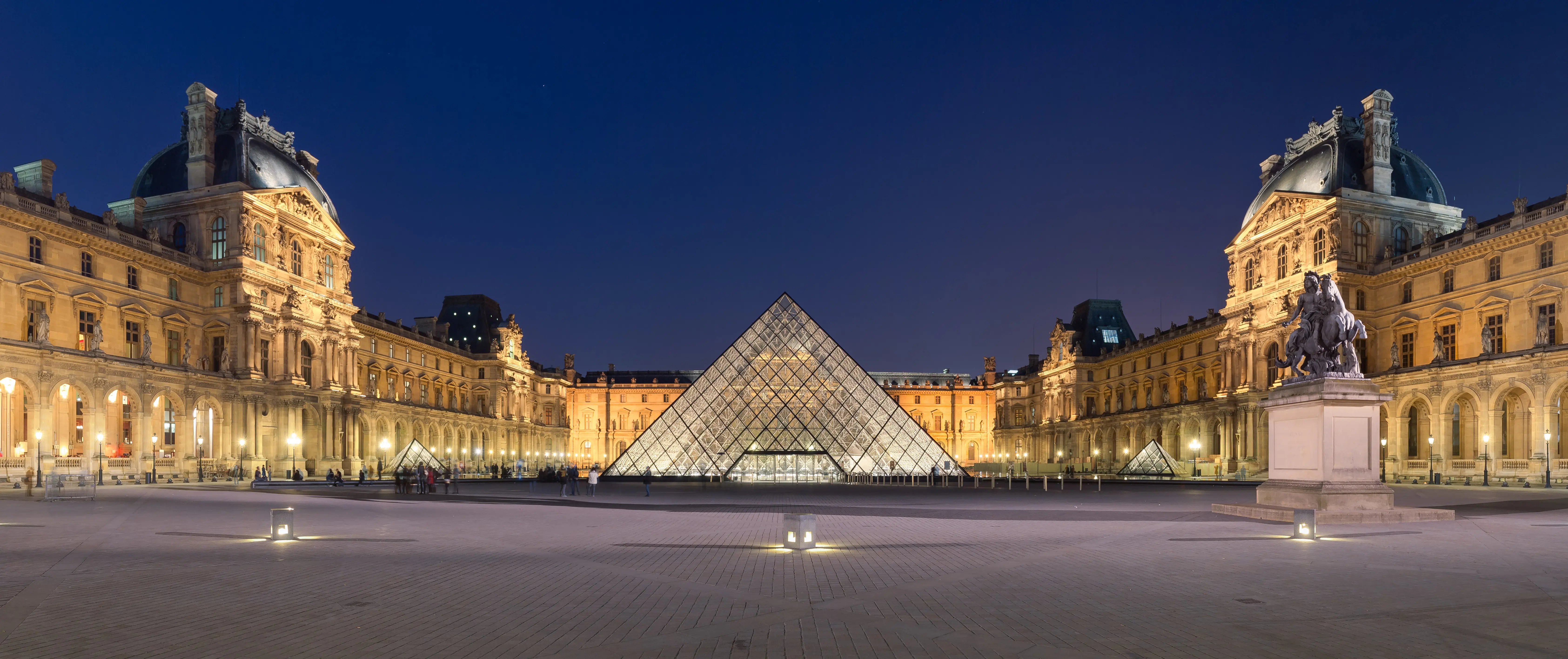
The Louvre Museum, Paris. With over 380,000 objects in its collection, the Louvre can display only a fraction at any time, making curatorial decisions about what to show both essential and consequential. Image: CC BY-SA 3.0, via Wikimedia Commons
Who Else Influences What Gets Shown
Curators are not the only decision-makers. Museum directors set institutional priorities and approve major exhibitions. Boards of trustees, typically composed of wealthy donors, civic leaders, and cultural figures, oversee the museum's finances, governance, and strategic direction. Board members sometimes influence exhibition programming directly: a trustee who collects a particular artist may advocate for a show of that artist's work, or a donor who funds a wing may expect certain types of programming in return. This governance structure means that museum programming is never driven purely by curatorial expertise. Financial considerations, donor relationships, political pressures, and institutional branding all play roles.
Corporate sponsors and individual donors fund many exhibitions, and their involvement sometimes comes with influence over content. A pharmaceutical company sponsoring a show about Renaissance medicine may expect positive framing of medical history. A collector who lends works for an exhibition may expect favorable placement and interpretation. Most museums maintain policies separating editorial control from funding, but the line can be unclear in practice.
Museum exhibitions affect the art market directly. When a museum mounts a major retrospective of an artist's work, that artist's market value typically increases. This creates potential conflicts of interest: collectors who sit on museum boards may benefit financially when their holdings are validated by institutional exhibitions. The relationship between museums and the commercial art market is one of the most debated topics in contemporary art ethics, and it is not a new problem. It was documented in detail in Hans Haacke's institutional critique work of the 1970s and remains unresolved.
The Politics of Display: Whose Stories Get Told
For most of their history, major Western museums told a particular story: the story of Western civilization, progressing from ancient Greece and Rome through the Renaissance to modern art, created primarily by white European and American men. This narrative was not conspiratorial. It reflected the biases of the scholars, collectors, and institutions that built the collections. But it systematically excluded women artists, artists of color, non-Western art traditions, and any work that did not fit the established canon.
In recent decades, museums have worked to correct these imbalances. The Tate Modern's rehang of its collection in 2016 organized art thematically rather than chronologically, placing works by women and non-Western artists alongside canonical male artists. MoMA's 2019 rehang made a similar argument about the global origins of modernism. The National Museum of African American History and Culture, opened in Washington D.C. in 2016, represents the most ambitious institutionalization of this corrective impulse in American museum history.
These efforts are genuine but incomplete. The permanent collections of major museums remain dominated by white male artists, and changing this requires not just curatorial will but sustained investment in acquiring and displaying diverse work over decades. Acquisition funds for underrepresented artists have grown at many institutions, but the collection imbalances of a century cannot be corrected quickly.
Repatriation: The Most Contested Question
One of the most pressing issues in museum ethics today is the repatriation of objects acquired during colonial periods. The British Museum holds the Parthenon Sculptures, removed from Athens by Lord Elgin in the early 19th century. The Musee du Quai Branly in Paris holds thousands of African artworks taken during French colonial rule. The Metropolitan Museum, the Berlin Museums, and virtually every major European and American institution contain objects whose acquisition involved coercion, theft, or exploitation of power imbalances.
The pace of returns has accelerated significantly since 2021. France returned 26 Benin Bronzes to Benin Republic in 2021, and Germany returned over 1,000 Benin Bronzes to Nigeria in 2022. The Smithsonian Institution returned sacred objects to Native American communities under updated interpretations of the Native American Graves Protection and Repatriation Act. Harvard and Yale both announced significant repatriation agreements in 2023. As of 2025, the British Museum remains the most prominent holdout among major institutions on the question of the Parthenon Sculptures, maintaining its position under a 1963 Act of Parliament that prohibits deaccessioning from the collection, though legal and political pressure from Greece and the broader international community continues to grow.
These debates are not just about historical justice. They are also about the living meaning of objects in their original cultural contexts, a question directly connected to how context shapes meaning in art more broadly. For more on that relationship, our guide to how context changes meaning explores the theoretical dimension in detail.
Preservation: The Work the Public Rarely Sees
Behind every exhibition is an enormous infrastructure of preservation. Conservation laboratories, climate-controlled storage facilities, pest management programs, and security systems represent the largest operational costs most museums face. Conservation is the aspect of museum work that the public rarely sees but that determines whether art survives for future generations.
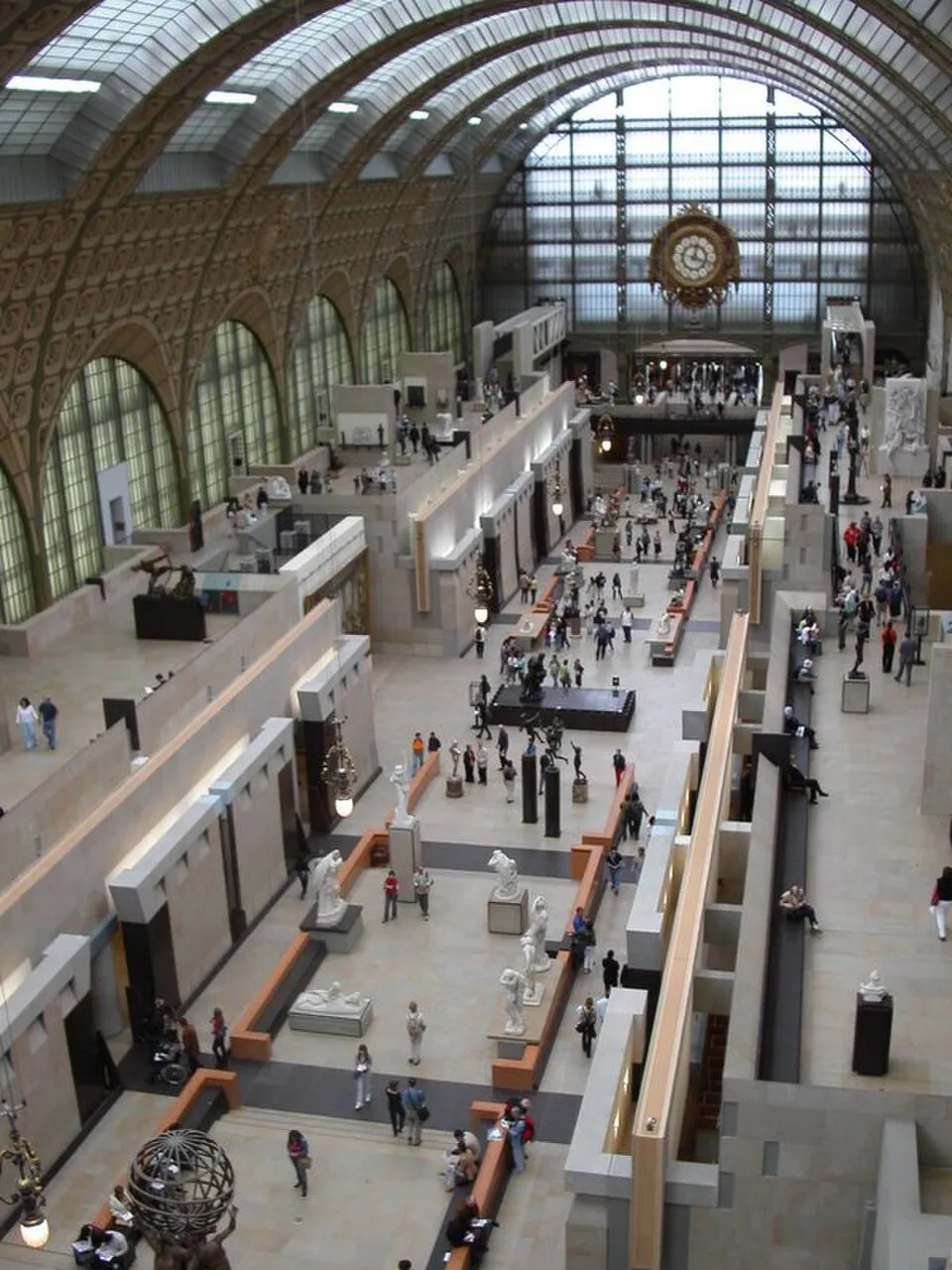
The Musee d'Orsay, Paris. The museum's architecture, a converted railway station, influences how art is experienced, demonstrating that the physical context of display is as important as the art itself. Image: CC BY-SA 4.0, via Wikimedia Commons
Conservation decisions involve their own ethical complexities. How much should a damaged painting be restored? Should signs of age and damage be preserved as part of the object's history, or should conservators restore it to its original appearance as closely as possible? The answer depends on the museum's philosophy and the nature of the damage, and reasonable conservators disagree. The cleaning of the Sistine Chapel ceiling, completed in 1994, remains controversial among art historians who believe the restoration altered Michelangelo's original color palette, while others argue it revealed it.
Light exposure is a constant preservation challenge. Many works on paper, textiles, and photographs are damaged by any light. Museums must balance public access against preservation, which is why some galleries are kept quite dim and why some works are shown only periodically. Climate control is the other major cost. Temperature and humidity fluctuations damage art; maintaining stable conditions in large stone or glass buildings across seasons is expensive and energy-intensive. This is one of the reasons museum admission fees are often higher than visitors expect and why many institutions operate at a financial deficit even when attendance is strong.
How to Think Critically About Museum Displays
The next time you visit a museum, treat the exhibition itself as an object worth examining, not just a transparent window onto the art it contains. Look at what is being shown and consider what might be missing. Notice which artists, periods, and cultures are represented and which are absent. Pay attention to the language of wall labels: "acquired 1897" tells a different story than "seized during the British punitive expedition against Benin, 1897." Check the acknowledgments panel and consider whether knowing the sponsors provides any context for the exhibition's framing.
Notice the physical conditions of display: the lighting, the wall color, the amount of space between works, the height at which pieces are hung. These are deliberate curatorial decisions, not neutral defaults. A painting hung at standing eye level invites a different relationship than the same painting hung slightly higher, at the level where you have to look up at it. The architecture of the room, whether intimate or monumental, whether carved from a historic building or purpose-built, is part of the experience the curator is designing.
Final Thoughts
Museums are among the most trusted cultural institutions in the world, and that trust carries enormous responsibility. Every exhibition, every label, every acquisition decision shapes what the public understands about art, history, and culture. The decisions are never purely aesthetic. They are shaped by money, politics, institutional history, and the personal perspectives of the people who make them.
This does not mean museums are untrustworthy. It means they are human institutions, doing their best to serve the public while navigating complex pressures. Understanding how they work, who makes the decisions and why, does not diminish the museum experience. It enriches it, because it helps you see the gallery not just as a passive container for art but as an active participant in the cultural conversation about what matters, who matters, and what we want to remember.
Want to learn more about art's role in society? Read about art censorship through history, explore what makes art good, or visit our guide on how to visit an art museum for practical strategies on getting the most from your next gallery trip.


