Walk through any museum and you will notice something: the framing is almost never the thing you notice. This is not an accident. Good framing does its work invisibly, creating conditions in which the art can be fully experienced without the frame becoming part of the experience. When framing is wrong, you know it immediately. The mat is too narrow, the frame molding too ornate, the glass too reflective, the proportions slightly off. The painting looks smaller than it is, or constrained, or in the wrong room. The art and its housing are at odds rather than at peace.
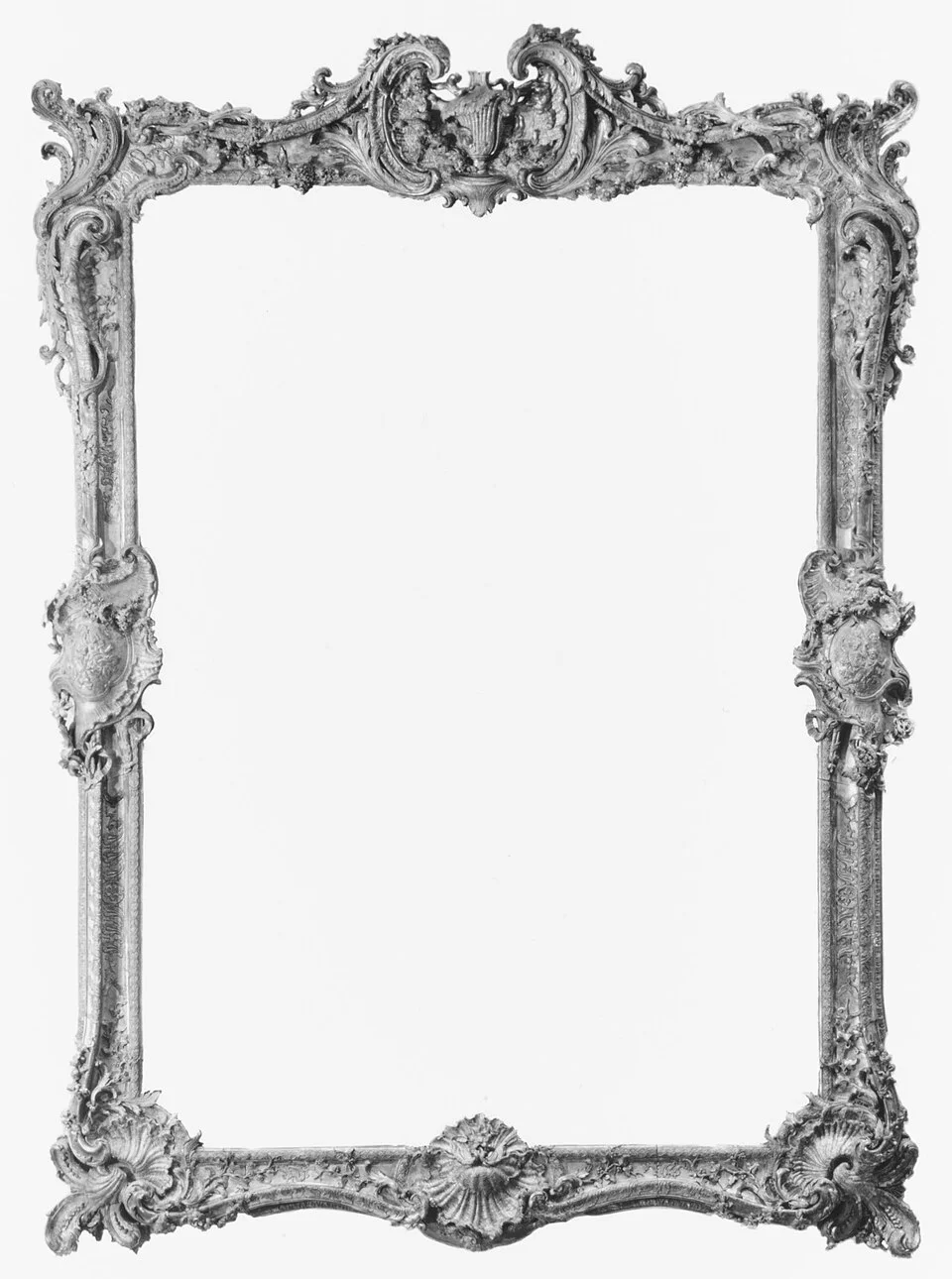
An ornate gilded picture frame from the Metropolitan Museum of Art's collection. The relationship between frame and artwork is as old as framed painting itself. Image: CC0, via Wikimedia Commons
Framing is taken seriously by every museum, every major gallery, and every experienced conservator, and treated as an afterthought by most collectors until they see what a properly framed work looks like. The difference is not subtle. A significant work in the wrong frame loses a meaningful portion of its visual and emotional impact. The same work in the right frame is enhanced, protected, and presented in a way that honors what it is.
This guide covers what you need to know to make good framing decisions: the options in glazing, matting, and frame design, and when to invest in professional conservation framing versus when simpler solutions are appropriate.
Why Framing Matters Beyond Aesthetics
The case for careful framing is not only visual. The materials used in a frame have direct implications for the longevity of the work inside it.
Works on paper framed with standard mat board, regular glass, and non-archival backing materials will begin to show damage within years. The acidic mat board stains the paper along the window edge, producing the brown line known as "mat burn" visible in many older frames. Standard glass transmits approximately 45 to 55 percent of incident ultraviolet radiation, which fades pigments and yellows paper. Non-archival backing boards off-gas acids that migrate into paper and photograph surfaces over time. None of this happens instantly. The damage accumulates slowly, invisibly, and irreversibly over decades.
Conservation framing, which uses acid-free materials and UV-filtering glazing throughout, costs more than standard framing but protects what it houses for the long term. For any work of value, whether financial, sentimental, or both, conservation framing is the appropriate standard. The guide to storing and preserving artwork at home covers the broader context of conservation materials and conditions.
Understanding Glass Options
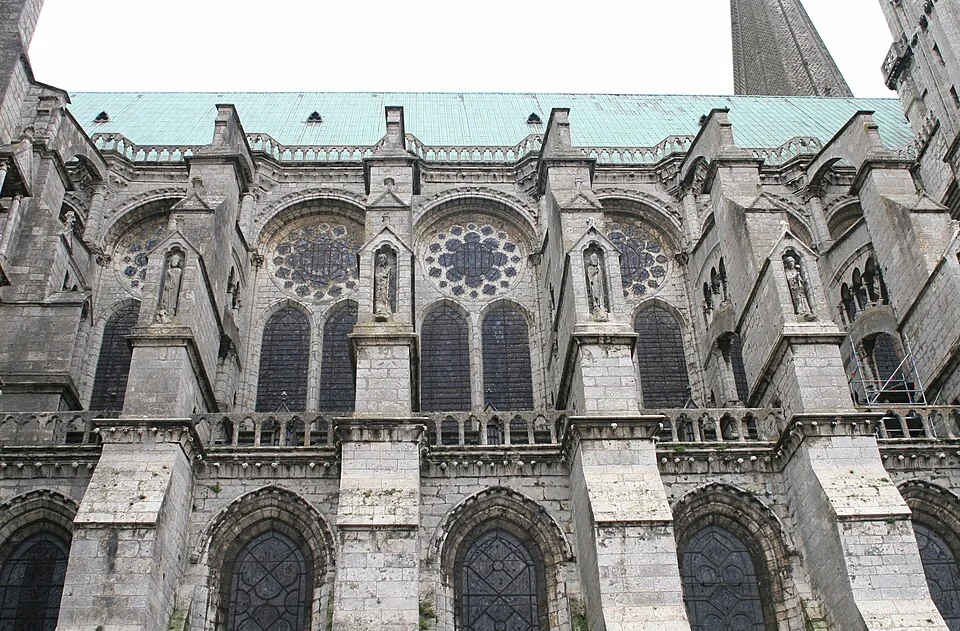
Flying buttresses at Chartres Cathedral. The structural principle that freed Gothic walls from their load-bearing role and allowed them to be opened for glass is analogous to what good framing does: it carries the structural load so the art can be fully seen. Image: CC BY-SA 3.0, via Wikimedia Commons
The glazing choice (glass or acrylic, and what type of either) is the most conservation-critical decision in the framing process.
Standard Glass
Standard float glass, also known as picture glass or regular glass, transmits approximately 45 to 55 percent of incident ultraviolet radiation. It is transparent and reflective, creating surface reflections that can obscure the work in certain lighting conditions. Standard glass is the default at most mass-market framing shops and is appropriate for decorative prints or reproductions where conservation is not a priority. It should not be used for original works of any significance.
Conservation Glass
Conservation glass contains iron oxide or other compounds that block UV radiation, filtering out 97 to 99 percent of UV. Products including Tru Vue Conservation Clear, Schott Mirogard, and Pilkington Optiwhite Conservation are standard options. Conservation glass is slightly more expensive than standard glass and has comparable clarity and reflectivity, but the protective benefit for anything with a long time horizon is substantial. This is the minimum standard for original works on paper, photographs, and works in pastel or watercolor.
Anti-Reflection Glass and Acrylic
Anti-reflection or non-glare glass uses an etched or coated surface to diffuse reflections. The older etched versions create a slight haziness that diffuses the image as well as the reflections and is generally not appropriate for detailed work. Modern multi-layer coated versions such as Tru Vue Museum Glass or Denglas are genuinely non-reflective and optically clear, but are expensive, around four to five times the cost of standard glass. For works in particularly bright or variable lighting conditions, Museum Glass makes a significant visible difference.
Acrylic glazing (marketed as Plexiglass, Perspex, or Optium Acrylic) is lighter than glass and does not shatter, making it the standard choice for large works and for any work that will be transported regularly. High-quality conservation acrylic also blocks UV and, in its anti-reflection versions, achieves the closest thing to invisible glazing available. The disadvantage of acrylic is that it attracts static electricity and can pull pastels and charcoal away from the paper surface. It should never be used for works in these media.
Mat Boards: The Breathing Space Between Art and Frame
The mat (or mount, in British English) is the board with a cut window that sits between the glazing and the work. It serves two distinct purposes: it creates a visual border that separates the art from the frame and gives the eye a neutral space to transition between the work and its surroundings, and it physically separates the surface of the art from the glazing, preventing the two from coming into contact.
Why Contact with Glass Is Dangerous
A work on paper or photograph touching the glazing surface is vulnerable in several ways. In humid conditions, moisture can condense on the interior of the glass and wet the paper or photo surface. Pastels, charcoal, and unfixed drawings can adhere to the glass over time. And any photograph or print touching non-UV glass has no barrier between its surface and the transmitted radiation. The mat, whatever its width, ensures there is always an air gap between art and glazing.
Conservation Mat Board
Standard mat board is manufactured from wood pulp that contains naturally occurring acids. These acids migrate into paper and photograph surfaces in contact with the mat over time, causing the mat burn staining described above. Conservation mat board (also called acid-free or museum board) is manufactured from either alkaline-buffered wood pulp or 100 percent cotton rag, and is chemically stable. For any original work, conservation mat board is required throughout: window mat, fillet, and backing board.
Mat Width and Proportion
The visual proportions of a mat profoundly affect how a work reads. Too narrow a mat makes a work feel cramped and understated. Too wide a mat can overwhelm a small or intimate work. The traditional rule of thumb is that the bottom margin of the mat should be slightly wider than the top and sides (this compensates for the optical illusion by which equal-width mats appear bottom-heavy), but this is not absolute.
For a work in the range of 20 x 25 centimeters, mat widths between 4 and 8 centimeters are typically appropriate. For larger works, the mat can be proportionally wider. The best way to determine the right mat width for a specific work is to hold white or off-white mat board against the work at different widths before committing. Most professional framers will do this as part of their consultation.
Mat Color
The vast majority of original works on paper look best with an off-white or cream mat rather than a pure brilliant white. Pure white mat boards can make the natural paper tone of the work look dingy by comparison. The exception is very high-key, graphic work such as certain types of photography and printmaking where brilliant white is part of the visual language. When in doubt, hold samples against the work and let the work tell you which color creates the least visual interference.
Choosing the Right Frame
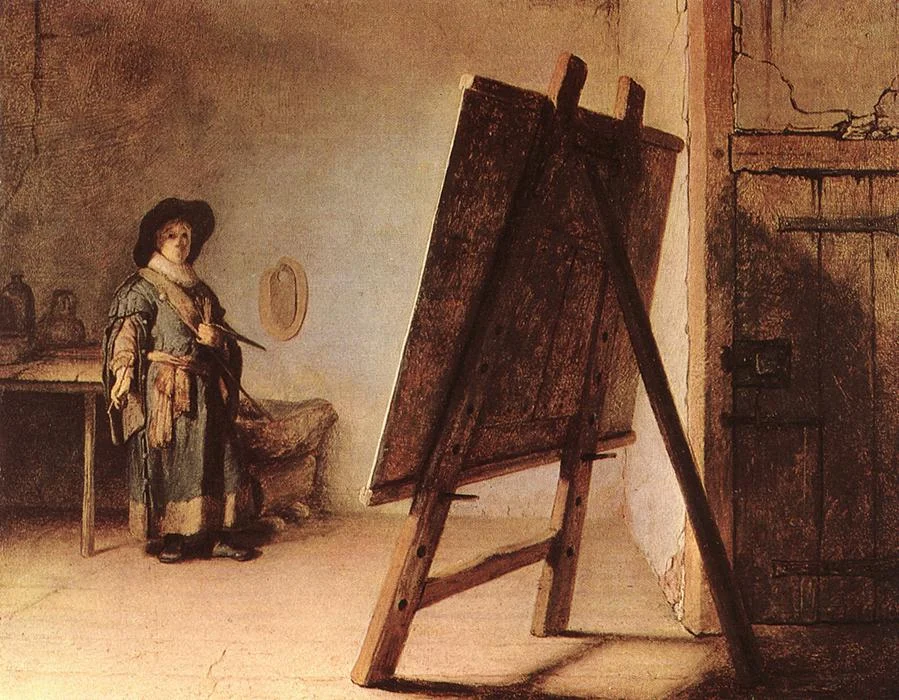
Rembrandt, The Artist in his Studio (c. 1626-1628). The painting within the painting, the frame within the frame. The relationship between artwork and its housing has been a subject of artistic inquiry for centuries. Image: public domain, via Wikimedia Commons
The frame's job is to complete the visual boundary of the work and transition it into the wall context without asserting its own presence inappropriately. The instinct that "a more ornate frame is more respectful of the work" produces some of the worst framing decisions in private collections.
Frame Style and Period
Works made in or referencing specific historical periods often benefit from frames that reference the same period: an early twentieth-century watercolor looks at home in a simple gilded or natural oak frame with period references. A contemporary work often looks best in a simple, clean-lined molding that does not compete with the work. Oil paintings, particularly those in traditional media, can support more substantial frame moldings than works on paper.
That said, the relationship between work and frame is not purely historical. Many conservators and framers note that modern works can look extraordinary in period frames and that historical works can sometimes be presented strikingly in modern frame designs. There are no absolute rules, only the visual test: does the frame help the work or compete with it?
Natural Wood, Gilded, and Metal Frames
Natural and stained wood frames work with most media and are the most versatile option. Gilded frames (gold or silver leaf, or composition frames that approximate the appearance) are traditional for oil paintings and can add presence to significant works, but should be used with restraint and an awareness of whether the context supports them. Metal frames (aluminum or steel, typically in silver, black, or gold finish) are the default for modern and contemporary photography and prints and are clean and unobtrusive.
When to Reframe and When Not to
Not every work needs reframing. An original antique frame that came with a work has historical and aesthetic value in its own right; replacing it with a modern frame can reduce the overall coherence and interest of the object. When in doubt, consult a professional framer or conservator rather than making an irreversible decision based on current taste.
The clearest cases for reframing are: works framed with non-conservation materials that are causing visible damage; works in frames that have deteriorated structurally (broken joints, failing backing boards, damaged gilding that is scattering onto the work); and works acquired in frames that were clearly chosen for temporary display purposes rather than long-term presentation.
Final Thoughts
Framing is the point where conservation, presentation, and design converge, and the decisions you make at this stage determine whether a work survives in good condition for the next fifty years or begins deteriorating within the next five. The materials matter: acid-free mat board, UV-filtering glazing, and archival backing are not optional upgrades for original work. They are the baseline. The visual decisions matter equally: a frame that competes with the work it houses diminishes that work every day it hangs on the wall, while a frame that serves the work disappears into the experience of looking at it.
If you are framing something you care about, find a framer who understands conservation materials and who will show you samples before committing. The Framing Industry Standards published by the Fine Art Care and Treatment Standards group provide detailed conservation specifications that professional framers should be able to reference. For the broader context of protecting your collection, see the full guide on how to store and preserve artwork at home. And for the complete picture of what original art ownership involves from the first gallery visit onward, How to Buy Your First Piece of Original Art covers the full scope of the commitment.