MacDowell, founded in Peterborough, New Hampshire in 1907, is one of the oldest artist residency programs in the United States. It receives approximately 4,000 applications each year. It accepts about 300 artists. That is roughly one in every twenty applicants, and the sole criterion for selection is artistic excellence: no career stage requirement, no credential requirement, no fee for the residency itself. What accepted artists get is exclusive use of a private studio, accommodation, and three meals a day delivered to the studio door for up to eight weeks, in the New Hampshire woods, surrounded by writers, composers, and visual artists doing the same thing in adjacent cabins.
That description sounds deceptively simple. The thing it produces is not simple at all. Artists who have attended MacDowell, and Yaddo, and Skowhegan, and the dozens of programs that have followed their model, consistently describe the experience in terms of before and after: work they could not do anywhere else, connections that shaped their practices for years, a clarity about their own direction that is very hard to find when ordinary life keeps interrupting.
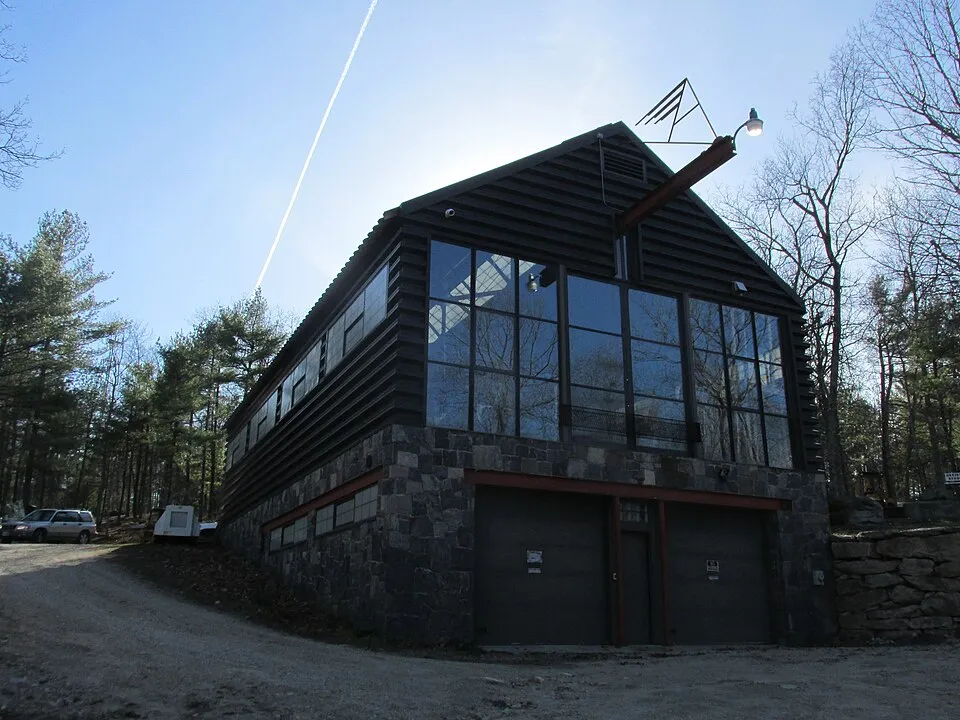
Artist studio at the Andres Institute of Art, Brookline, New Hampshire. Residency programs like this one provide the dedicated workspace and natural surroundings that enable focused creative practice. Photo by John Phelan, 2014. Image: CC BY-SA 3.0, via Wikimedia Commons
More than a hundred years after MacDowell's founding, the landscape of artist residencies has expanded to hundreds of programs worldwide, spanning every medium, duration, budget, and geographic context imaginable. This guide explains how residencies work, what the major program types provide, which ones are most relevant at different career stages, and how to write an application that has a real chance of success.
What Residencies Are and What They Provide
At the most basic level, a residency provides an artist with time and space to work. Beyond that, the specific offerings vary enormously. The most well-resourced programs provide:
Studio space. Either a dedicated private studio or access to shared facilities appropriate to the artist's medium. The quality ranges from basic rooms to purpose-built professional facilities with specialized equipment, foundries, printing presses, or digital production suites.
Accommodation. Most residential programs include housing, either on-site or nearby. This eliminates the daily distraction of managing domestic arrangements and puts you in physical proximity to other residents.
A stipend. Better-funded programs pay artists a weekly or monthly stipend to cover basic expenses. This is the difference between a residency that is genuinely accessible and one that is effectively only available to artists with other income sources.
Materials support. Some programs include a materials budget; others do not. Always check this before applying, particularly if your practice involves expensive materials.
Community. Residencies bring together artists from different backgrounds, disciplines, and career stages. The conversations that happen informally, over meals or in shared spaces, are often reported by artists as the most enduring benefit of the experience.
Types of Residencies
Retreat-Style Residencies
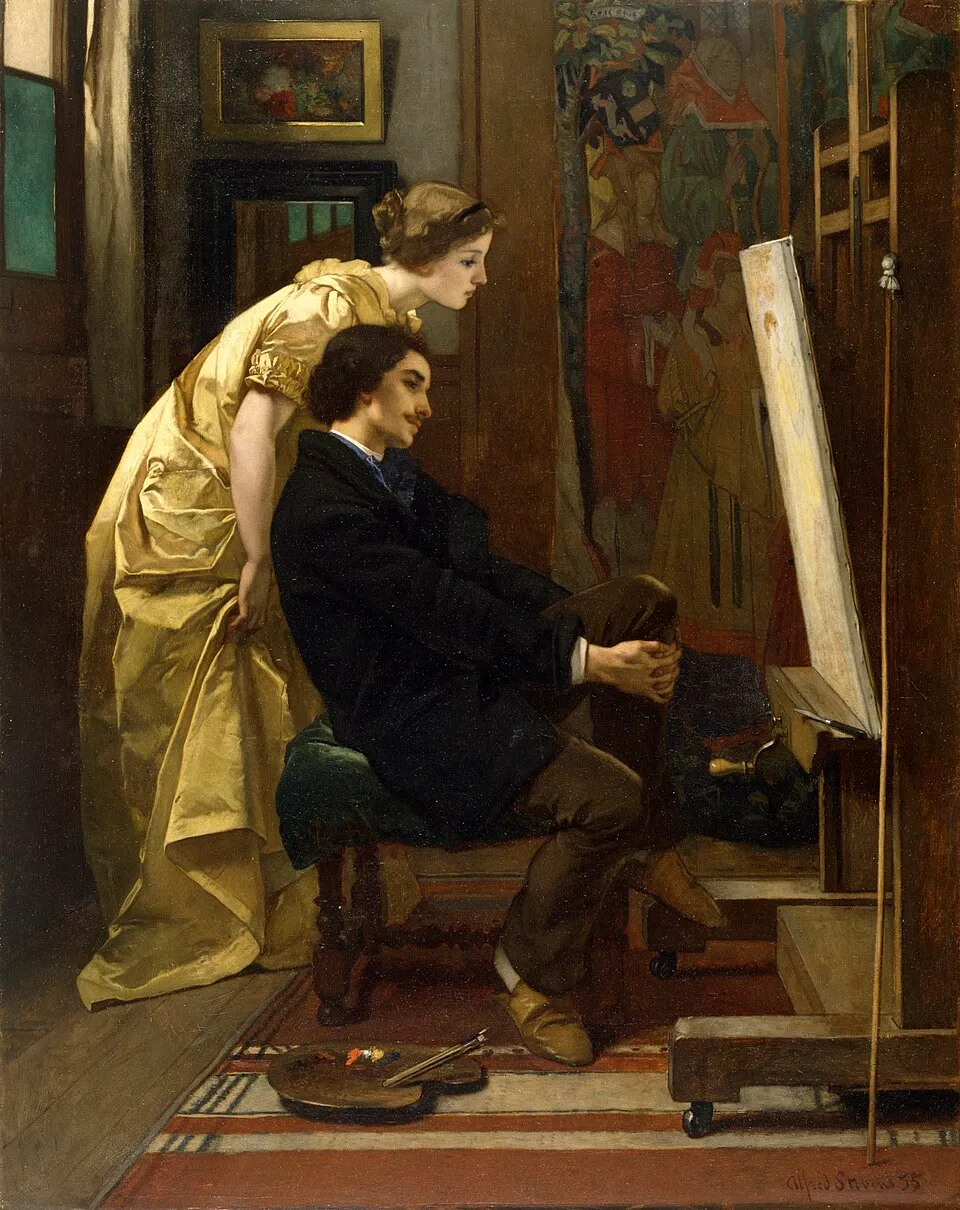
Alfred Stevens, "The Painter and His Model" (1855). The focused studio practice that residencies enable has a long tradition in art history. Residencies provide the time, space, and community that sustains this kind of work. Image: Public domain, via Wikimedia Commons
Retreat residencies, exemplified by MacDowell, Yaddo, and the Millay Colony in the United States, and by similar programs in Europe and elsewhere, prioritize uninterrupted time. Residents typically work alone during the day, meet for communal meals, and are not expected to produce public-facing work or engage in structured programming. These programs are most appropriate for artists at a stage where they have a practice they want to develop and need protected time to do it.
MacDowell (Peterborough, New Hampshire, founded 1907) and Yaddo (Saratoga Springs, New York, founded 1900) are the oldest and most prestigious programs of this type in the US. Admission is highly competitive, free of charge, and comes with a stipend and meals. Their alumni lists include a remarkable proportion of significant American artists, writers, and composers from the twentieth and twenty-first centuries.
Skill-Building and Production Residencies
Programs such as the Skowhegan School of Painting and Sculpture (Maine), the Slade Summer School (London), and the Vermont Studio Center have a more structured format that combines studio time with critiques, lectures, and engagement with visiting artists and critics. These are particularly valuable for artists at earlier career stages who benefit from intensive feedback and exposure to a wider range of practices.
Skowhegan is particularly significant: its nine-week summer program brings together approximately sixty emerging artists for a rigorous period of making, debate, and exchange. The program's alumni network is one of the most productive in contemporary American art, and the relationships formed at Skowhegan frequently persist throughout careers. It is fully funded for accepted artists.
International Residencies
Living and working in a different country is one of the most effective ways to shift your practice. International residencies range from the DAAD Artists-in-Berlin Program (which funds one-year stays in Berlin for mid-career and established artists from around the world) to much smaller programs in specific cities and contexts. The Rijksakademie in Amsterdam operates a two-year post-graduate program that functions more like a graduate school than a traditional residency. The ISCP (International Studio and Curatorial Program) in New York hosts artists from dozens of countries annually.
If international travel is financially difficult, look for programs that provide travel grants alongside residency support. Many of the most significant international programs offer full funding for travel, accommodation, and a stipend.
Institution-Based Residencies
Many museums, universities, and public institutions run residency programs that come with access to specific resources: collections, archives, labs, or fabrication facilities. Museum residencies often include a public program component, where the artist gives talks, leads workshops, or creates a visible presence in the institution. These residencies are particularly valuable for artists whose practice benefits from contact with specific collections or historical materials.
How to Find the Right Residency
The most useful databases for finding residencies include ResArtis (a global network of programs), the Alliance of Artists Communities (US-focused), and Trans Artists (Netherlands-based but internationally comprehensive). Deadlines vary enormously: some programs have rolling applications, others have annual deadlines six months in advance.
Research each program carefully before applying. MacDowell's two annual deadlines are February 10 and September 10, and it accepts applications in architecture, film/video, interdisciplinary arts, literature, music composition, theatre, and visual arts. Yaddo accepts applications twice yearly with deadlines in July and December. Skowhegan has a single annual deadline, typically in January. Each program's website lists current deadlines and application requirements, and these change from year to year.
The most important questions to answer before applying to any program: Is this program appropriate for your current career stage and practice? What does it actually provide in terms of stipend, materials, and equipment? Are there output expectations such as exhibitions, public programming, or open studios? Does the community include artists from disciplines that would genuinely enrich your practice? A residency in a context that does not fit your work is not just an opportunity missed. It can be a disruptive waste of time during a period when you might have been working.
How to Write a Strong Residency Application
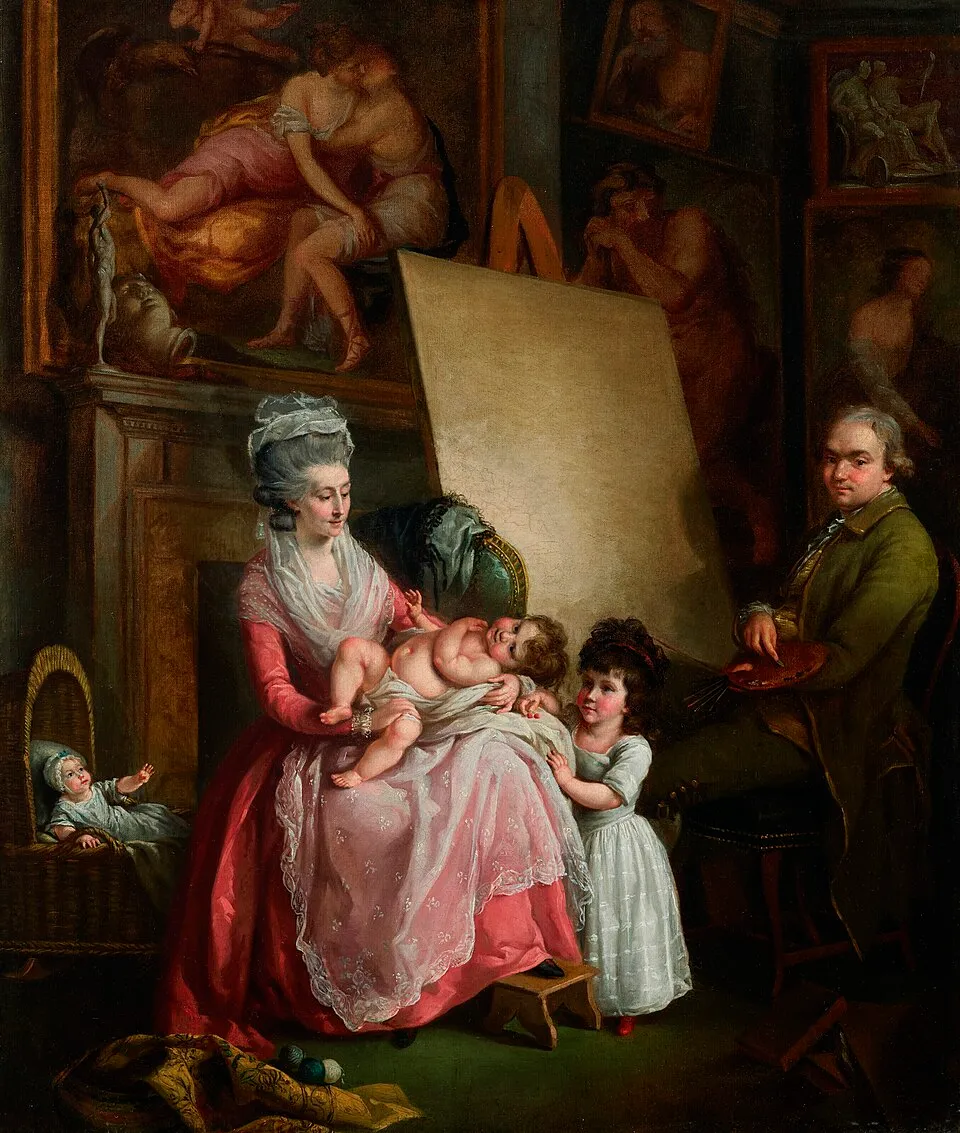
John Francis Rigaud, "Portrait of the Artist with His Wife and Children, in His Studio" (late 18th century). The artist's studio as a dedicated space for practice is a centuries-old tradition that modern residency programs continue to support. Image: Public domain, via Wikimedia Commons
The standard residency application asks for three things: a portfolio of recent work, an artist statement or project proposal, and sometimes references. Each element is assessed differently by different programs, but certain principles apply across most.
The Portfolio
Submit only work that reflects where your practice currently is, not the strongest work from your entire career. Programs are selecting for artists whose practice will benefit from and contribute to their specific context. A portfolio of older, different-type work, even if technically stronger, is less useful to a selection committee than recent work that shows where you are now.
Image quality matters. Poorly photographed work is judged more harshly than well-photographed work that is no stronger. Invest in good documentation, and caption images with accurate titles, media, dimensions, and dates.
The Project Proposal
The proposal is where most applications succeed or fail. What the committee wants to see is not a finished plan, but an artist who knows where they are in their practice, has a genuine question or direction they want to pursue, and can articulate why this particular residency at this particular time would be generative for that pursuit.
Avoid vague aspirational language ("I hope to explore the relationship between memory and materiality"). Be specific: "I am currently developing a series of large-scale works on paper using archival materials from my family's history of migration from Southeast Asia to California. Access to the archive facilities at [this program] would allow me to work with primary documents alongside the paintings in a way that my current studio setup does not permit." Specific, concrete, and tied to what the program actually offers.
The ability to articulate your practice clearly in writing is the same skill that powers an effective artist bio and a successful grant application. Read the guides to writing an artist bio and to applying for art grants alongside this one. All three applications draw on the same core capacity: describing what you make, why you make it, and what you need next, with precision and honesty rather than generic aspiration.
For artists thinking about whether a residency is the right next step or whether other forms of professional development might serve better first, the guide to art school vs. self-taught practice covers how residencies sit alongside other options. And for building the portfolio that any strong residency application will need to demonstrate, the guide to building an art portfolio from scratch addresses the documentation and selection process that underlies every serious application you will ever make.