
In 2025, the National Endowment for the Arts awarded $36.8 million in grants to arts organizations across all 50 states. That money flowed through to individual artists via state arts councils, fellowships, and project grants. The Pollock-Krasner Foundation has now distributed over $90 million to individual visual artists since 1985. The Joan Mitchell Foundation continues to support painters and sculptors with grants that are among the most respected in the field. These are not small numbers, and they are not reserved for artists you have heard of. They go to working artists who applied, many of them on their second or third attempt.
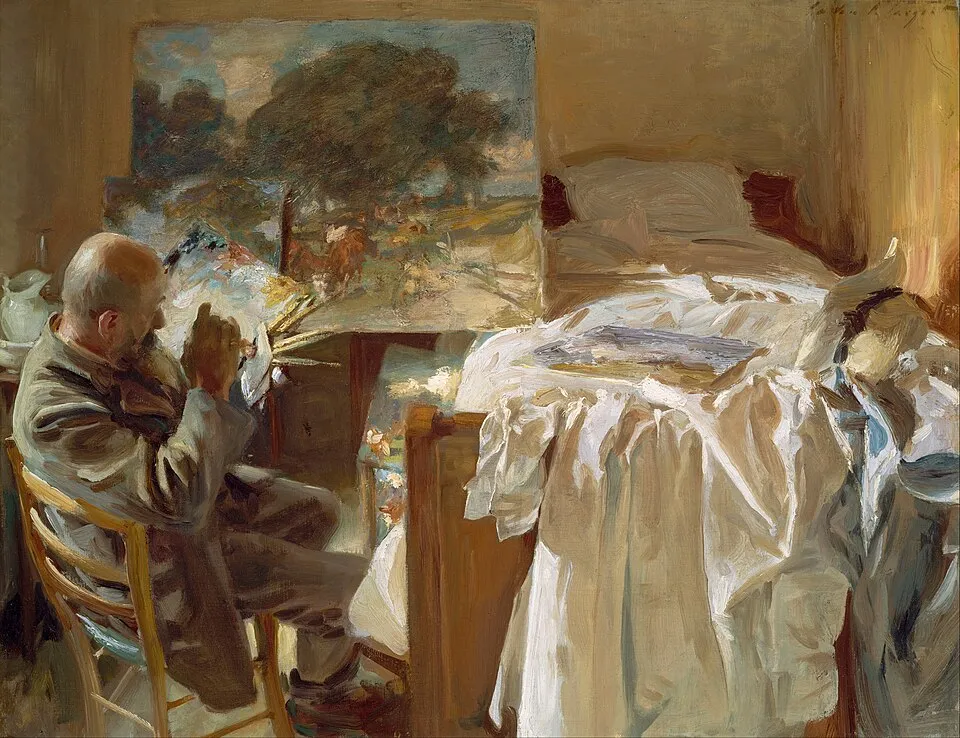
John Singer Sargent, "An Artist in His Studio" (1904). The painting illustrates the kind of focused, protected studio practice that grant funding is designed to enable. Image: Public domain, via Wikimedia Commons
Grants are the purest form of arts funding: money given to artists to make work, with no expectation of a product sale, a deliverable that pleases a client, or a teaching workload in return. In practice, they are competitive, time-consuming to apply for, and frequently misunderstood. Many artists who would be genuinely competitive applicants never apply because they assume grants are for more established artists, or for artists working in specific favored categories, or because they do not know where to look. Those assumptions are usually wrong. This guide covers where to find grants, how selection actually works, what applications need to contain, and how to approach the process as a long-term professional discipline rather than a lottery.
The Grant Landscape
Government Funding
In the United States, the National Endowment for the Arts (NEA) is the primary federal arts funding agency. For FY 2026, the NEA's appropriation was $207 million, supporting grants across all 50 states. The NEA does not fund individual artists directly for most programs; it primarily funds organizations that then support individual artists. However, the NEA's grants to state arts agencies flow through to individual artist grants at the state level. Every state arts council has an individual artist fellowship or grant program, and some of the larger state programs (California Arts Council, New York Foundation for the Arts, Illinois Arts Council) offer grants that are genuinely career-changing for working artists. The NEA grants page lists current funding opportunities and deadlines.
In the UK, Arts Council England, Creative Scotland, Arts Council Wales, and the Arts Council of Northern Ireland all offer direct grants to individual artists through programs including Developing Your Creative Practice and various project grants. These programs have clear criteria, transparent processes, and genuine commitment to supporting individual practitioners at multiple career stages.
In Canada, the Canada Council for the Arts offers direct grants to individual visual artists through several programs. Similar national arts councils operate across most European countries, Australia, and New Zealand.
Foundation Grants
Private foundations are the other major source of artist grants. These range from very large foundations with broad programs (the Pollock-Krasner Foundation, which provides grants specifically to visual artists; the Joan Mitchell Foundation, focused on painters and sculptors; the Foundation for Contemporary Arts) to smaller regionally or medium-specific foundations.
The Pollock-Krasner Foundation has distributed more than $90 million to individual artists since its founding in 1985, with grants ranging from a few thousand to $30,000 or more for artists facing financial hardship alongside serious professional practice. The Joan Mitchell Foundation supports mid-career and established painters and sculptors with grants that are among the most respected in the field. The Creative Capital Foundation supports interdisciplinary and experimental projects with both funding and professional development support.
One important note: the Pollock-Krasner Foundation explicitly states that it does not grant funds for projects, exhibitions, or residencies. It grants funds to individual artists who need financial support to continue their work. Read the criteria of each foundation carefully before applying. The difference between a project grant and an unrestricted support grant determines what you write in your application.
Residency Grants and Fellowships
Many residency programs (covered in detail in the guide on Artist Residencies: What They Are and How to Apply) provide stipends and living expenses that function as de facto grants. MacDowell, Yaddo, and Skowhegan are fully funded. The Rome Prize, administered by the American Academy in Rome, provides a year's fellowship in Rome for established artists and emerging practitioners with a track record. These fellowships are among the most prestigious in American art and include a significant stipend, studio, and living accommodation.
Emergency and Project-Specific Grants
The Artists' Fellowship Inc. in New York provides emergency financial assistance to professional fine artists facing unexpected hardship. The Foundation for Contemporary Arts provides emergency grants to artists whose work has been disrupted by circumstances beyond their control. These are not competitive grants in the conventional sense; they respond to specific circumstances and are assessed against need rather than career prestige.
Finding Grants: The Practical Tools
The most comprehensive databases for US artist grants include:
GrantStation. A subscription-based database of foundation and government grants, searchable by discipline, location, and career stage. Expensive for individual artists but often available through university libraries and arts organizations.
Foundation Search. Another subscription database with comprehensive foundation grant records.
New York Foundation for the Arts (NYFA) Source. A free database of artist opportunities including grants, residencies, and awards. Particularly strong for US-based programs.
Submittable. Many grants and residencies are now administered through the Submittable platform, which allows artists to manage multiple applications and find new opportunities through the platform's discovery features.
Your state arts council. The most accessible and often most practically useful grants for most working artists are administered at the state level. Your state arts council's website is always worth bookmarking and checking quarterly for new program announcements.
How Selection Actually Works
Understanding how selection panels operate demystifies the process considerably. Most grant selection panels are composed of working artists, curators, and art professionals who serve for a limited term, typically one or two years. They review applications in batches, often under significant time pressure, and assess them against the program's specific criteria.
The most important thing to understand is that grant selection is not purely about quality of work. It is about fit: whether the applicant's work, career stage, and proposed project match what the specific program is designed to support. An excellent application from a mid-career artist for a program designed to support emerging artists will not succeed, regardless of the quality of the work. An excellent application from an emerging artist for a program that prioritizes established practitioners will similarly fail on fit grounds.
Reading the program criteria carefully and honestly is the first step in any application process. If you don't genuinely meet the criteria, don't apply. This sounds obvious, but many artists waste significant effort on applications they were never going to receive.
What Applications Actually Need
Work Samples
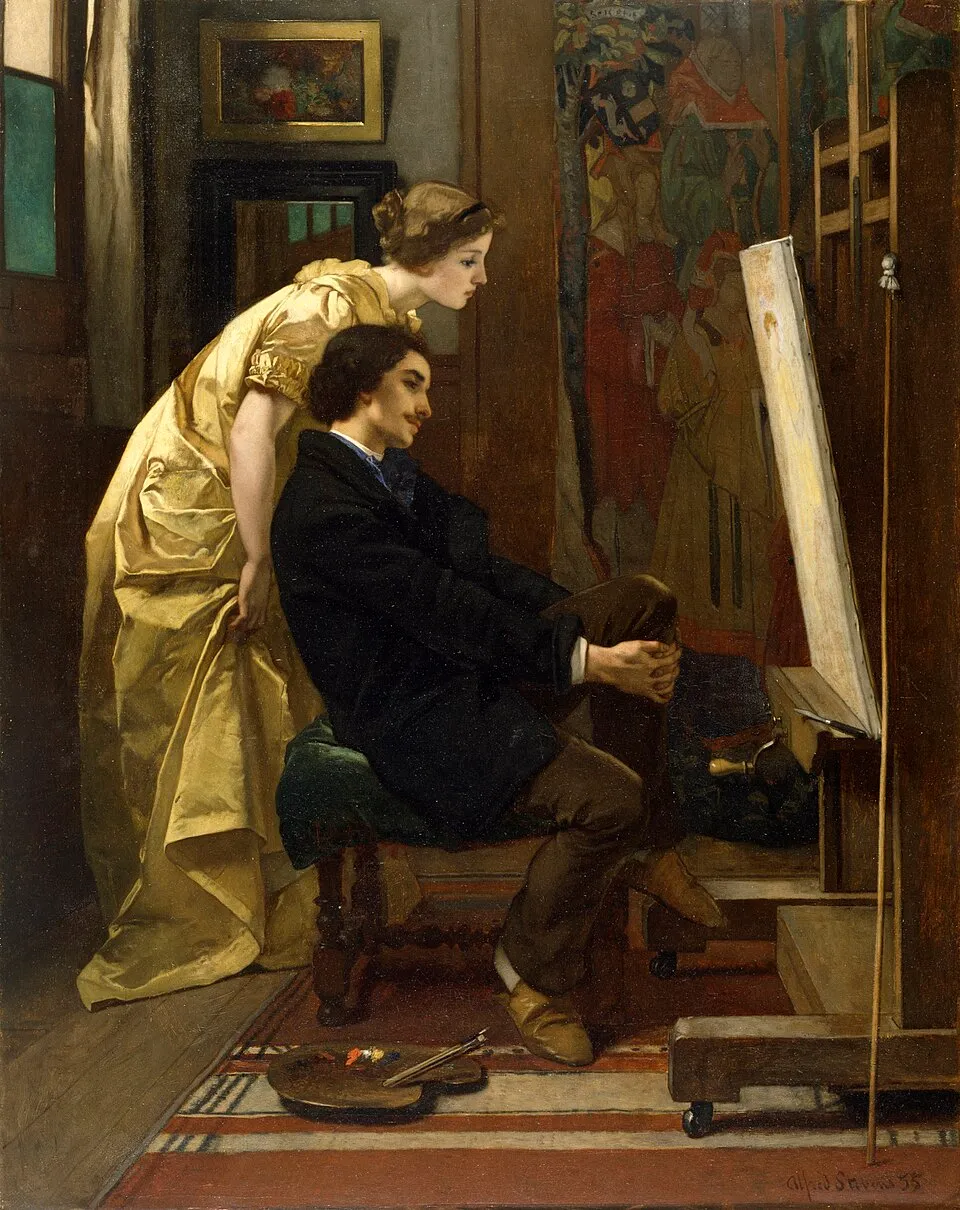
Alfred Stevens, "The Painter and His Model" (1855). The relationship between studio practice and professional development is central to what grant panels assess. Image: Public domain, via Wikimedia Commons
The work sample portfolio is assessed first. Documentation quality matters enormously, because panelists form their initial impression from images before reading anything else. See the detailed guidance in the guide to building an art portfolio for how to document work properly. For grant applications specifically, submit only work made within the last three years, document it professionally, and include accurate captions.
The Project Description or Artist Statement
Different programs ask for different written components. A project grant asks for a description of what you plan to make with the funding, including a timeline, a budget, and the specific ways the grant will enable work that couldn't happen otherwise. An artist fellowship asks for a statement about your practice broadly, demonstrating that you have a sustained body of work with a clear direction.
In both cases, the most common failure is vagueness. "I will use this grant to further develop my practice" says nothing. "I will use this grant to produce a series of twelve large-scale paintings over six months, drawing on archival research at the [specific institution], which will culminate in an exhibition at [confirmed venue]" is specific, credible, and assessable. The panel can imagine what the outcome will be. Panels fund outcomes they can imagine.
The techniques for clear, specific art writing covered in the guides on writing an artist bio and writing an artist statement apply equally to grant writing.
Budget
For project grants, a clear and realistic budget is required. Budgets that are obviously padded or that don't account for basic costs (materials, studio time, documentation, shipping) signal a lack of professional experience. Budgets that are unrealistically low for the scope of the proposed project signal the same. Research actual costs for the project you're proposing and present them honestly.
CV and Supporting Materials
A well-organized CV that demonstrates active professional engagement with the art world matters. Gaps in exhibition history, unverified credentials, and poorly formatted CVs all create friction in the assessment process. Many programs have page limits for CVs; respect them.
Thinking About Grants Strategically
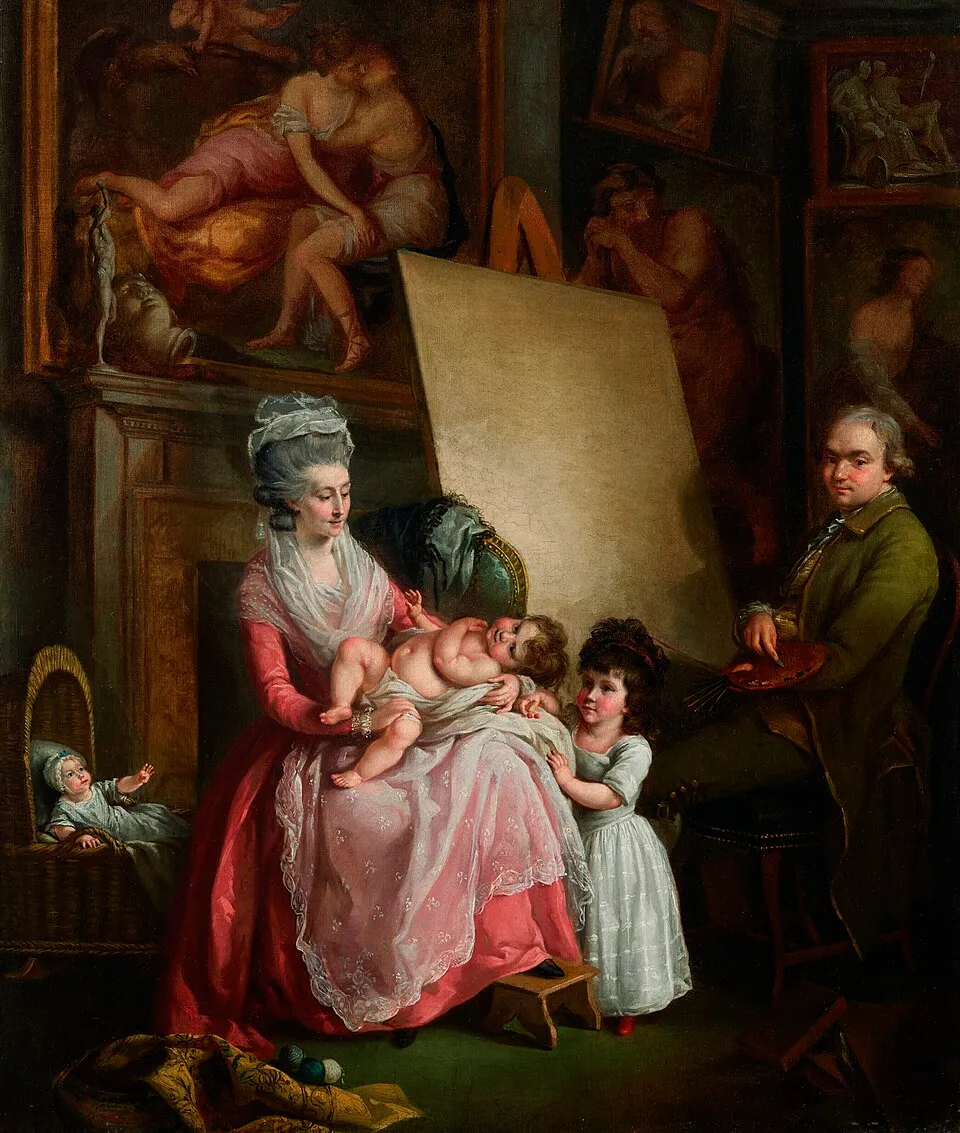
John Francis Rigaud, "Portrait of the Artist with His Wife and Children, in His Studio" (late 18th century). The artist's studio has always been the primary site of professional practice. Grants exist to sustain that practice. Image: Public domain, via Wikimedia Commons
Most artists who receive significant grants did not receive them on their first application. The grant application process is itself a discipline that improves with practice: each application forces you to articulate your practice with more precision, each rejection provides feedback (where programs offer it) that can sharpen the next attempt, and each successful application builds your record as a funded artist, which strengthens future applications.
A realistic grant strategy for a mid-career artist might involve applying for three to five grants per year, maintaining good records of applications, outcomes, and any feedback received, and treating the process as a long-term investment in professional development rather than a quick route to income. The artists who receive grants consistently are almost always those who apply consistently and who refine their approach over time based on outcomes.
For building the professional materials that grant applications require, see our guides on building an art portfolio from scratch, writing an artist bio, and writing an artist statement. For the other major source of non-commercial support for artists, see the guide to artist residencies. Have you received a grant that changed your practice? Share your experience in the comments.


