Cranbrook Academy of Art: The Graduate School Where Artists Teach Artists
Cranbrook Academy of Art operates on a principle so simple and so radical that no other art school has fully replicated it: each department is led by a single Artist-in-Residence, a practicing artist of significant achievement who takes full responsibility for the program and teaches all the students in it. There are no committees, no curriculum committees, no departmental bureaucracies. The Artist-in-Residence decides what the program is, how it is taught, and who is admitted. This model, which has been in place since the school's founding in 1932, produces an educational experience that is more like an extended apprenticeship than a conventional graduate program, and it has generated an extraordinary concentration of significant artists and designers over the past nine decades.
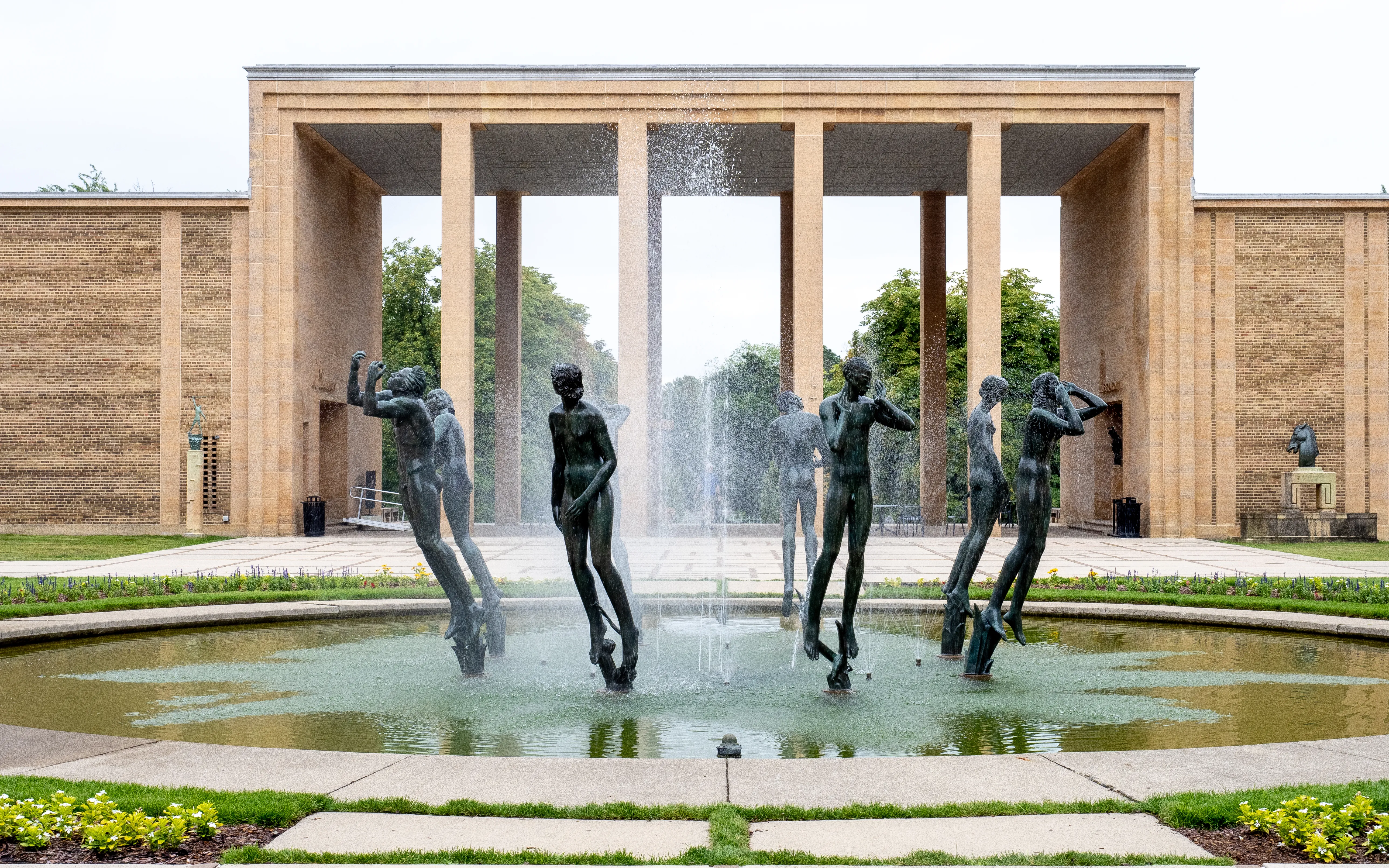
Located on the Cranbrook Educational Community campus in Bloomfield Hills, Michigan, a suburb of Detroit, Cranbrook is set on 319 acres of grounds designed by the Finnish architect Eliel Saarinen, who came to Cranbrook in 1925 and shaped its physical and intellectual character for decades. The campus includes the Cranbrook Art Museum, the Cranbrook Institute of Science, and several schools, all connected by gardens, sculpture, and architecture that make it one of the most beautiful educational environments in the United States. The buildings and grounds are themselves works of art, and living and working within them shapes how students think about the relationship between art, design, and the built environment.
The Artist-in-Residence Model
The Artist-in-Residence model is what makes Cranbrook genuinely different from every other graduate art school. When you study at Cranbrook, you are not studying in a program designed by a committee; you are studying with a specific artist whose work and thinking you have chosen because it resonates with your own practice and aspirations. The Artist-in-Residence is not a department chair who also teaches; they are the program, responsible for admissions, curriculum, critique, and the overall intellectual direction of their department.
This model creates departments with strong, distinctive characters. The Ceramics department under one Artist-in-Residence will have a completely different character from the same department under a different one, and students choose Cranbrook in part because of who is currently leading the department they want to study in. The model also creates an unusually close relationship between students and their primary teacher, with the Artist-in-Residence knowing each student's work intimately and providing the kind of sustained, individualized mentorship that larger programs cannot offer.
The current Artists-in-Residence as of 2026 represent a range of significant contemporary practitioners across the school's eleven departments: Ceramics, Fiber, Metalsmithing, Painting, Photography, Print Media, Sculpture, 2D Design, 3D Design, Architecture, and Digital Crafts. Each brings their own perspective, practice, and professional network to their teaching, which means that Cranbrook students graduate with connections to the specific corner of the art and design world that their Artist-in-Residence inhabits.
The Campus and Community
The Cranbrook campus is one of the most extraordinary educational environments in the world. The Cranbrook Art Museum, designed by Eliel Saarinen and completed in 1942, holds a significant collection of works by Cranbrook alumni and faculty, including furniture by Charles and Ray Eames, metalwork by Harry Bertoia, and ceramics by Maija Grotell. The museum's collection documents the school's history and provides students with direct access to the work of the artists and designers who defined Cranbrook's legacy.
The campus's gardens and public spaces, including the Triton Pools and the Orpheus Fountain by Carl Milles, create an environment that is genuinely inspiring rather than merely functional. Students live and work on the campus, which means that the boundaries between studio time, social time, and intellectual engagement are deliberately blurred. The conversations that happen over dinner or during walks through the gardens are as much a part of the education as the formal critiques and studio sessions.
With approximately 150 students across all departments, Cranbrook is one of the smallest serious graduate art schools in the world. This scale creates a community of exceptional intimacy, where students know each other's work across departments and where the cross-disciplinary conversations that happen naturally in a small community are a genuine part of the education. The school's size also means that each student receives a level of individual attention that is impossible in larger programs.
A Legacy of Transformative Alumni
Cranbrook's alumni list is one of the most remarkable in the history of art and design education. Charles and Ray Eames, who met at Cranbrook and went on to create some of the most iconic furniture and films of the twentieth century, are the school's most famous graduates. Florence Knoll, who transformed American office design through her work at Knoll Associates, studied at Cranbrook. Harry Bertoia, whose wire chairs and sound sculptures are among the most beautiful objects of the postwar period, was both a student and a faculty member at Cranbrook. Duane Hanson, whose hyperrealistic sculptures of ordinary Americans are among the most significant works of American realism, studied there. Kiki Smith, whose work engages with the body, nature, and mortality, is a Cranbrook alumna.
This concentration of significant alumni reflects something genuine about the Cranbrook model: the combination of exceptional Artists-in-Residence, a beautiful campus, a small and serious community, and the freedom to develop a practice without the constraints of a conventional curriculum produces artists and designers who go on to shape their fields.
Programs and Tuition
Cranbrook offers the MFA in ten studio disciplines and the MArch in Architecture. The MFA is a two-year program, and the MArch is a three-year program. Tuition for the 2025-26 academic year is approximately $40,500, and the school offers financial aid including merit scholarships and need-based grants. The relatively modest tuition compared to schools like RISD or SAIC, combined with the on-campus housing that is available to most students, makes Cranbrook a more affordable option than its prestige might suggest.
The admissions process is highly individualized, with each Artist-in-Residence making their own admissions decisions for their department. Applicants should research the current Artist-in-Residence carefully and make sure that their work and interests are genuinely aligned with that person's practice and approach. A strong portfolio is essential, but so is a clear sense of why you want to study with this specific artist in this specific department.
The Bottom Line
Cranbrook Academy of Art is one of the most distinctive graduate art schools in the world, offering an educational experience that is genuinely unlike anything available elsewhere. The Artist-in-Residence model, the extraordinary campus, the small and serious community, and the school's extraordinary alumni legacy make it a compelling choice for graduate students who want to develop their practice in close relationship with a significant practicing artist. For students who are drawn to the specific disciplines and Artists-in-Residence that Cranbrook offers, it provides one of the most intensive and transformative art educations available anywhere.