Pollock-Krasner Foundation Grant: Direct Financial Support for Working Artists
The Pollock-Krasner Foundation Grant is one of the most important and accessible major funding sources available to professional visual artists worldwide. Unlike most grants that fund specific projects with defined outcomes and reporting requirements, Pollock-Krasner provides direct financial support to individual artists—unrestricted funding that can be used for studio rent, art materials, living expenses, medical costs, or whatever the artist's practice and life require.
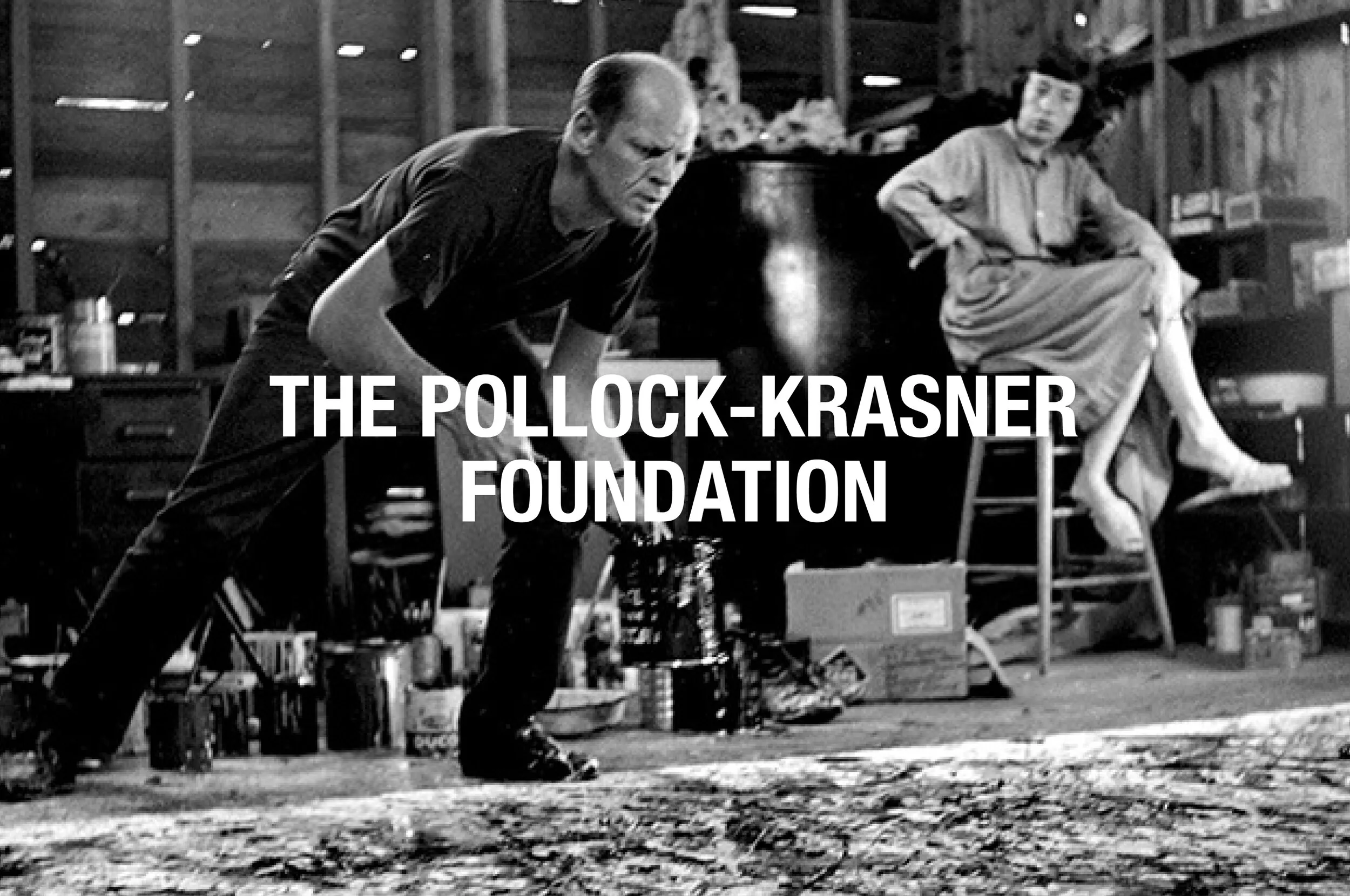
The foundation was established in 1985 through the estate of Lee Krasner, the painter and widow of Jackson Pollock. Both artists experienced the financial precarity that defines the lives of most working artists—Pollock famously struggled with poverty even as his work was gaining critical recognition, and Krasner spent decades advocating for artists' economic welfare. The foundation that bears their names was created to address this fundamental reality: that talented, committed artists often lack the financial resources to sustain their practice.
Since its founding, the Pollock-Krasner Foundation has awarded over $80 million to more than 5,000 artists in 77 countries, making it one of the largest and most geographically diverse sources of individual artist funding in the world.
What Makes Pollock-Krasner Different
The Pollock-Krasner Foundation's approach to artist support is distinguished by several characteristics that set it apart from most other funding programs.
No project proposal required. Most grants ask artists to describe a specific project they will undertake with the funding—a new body of work, an exhibition, a research trip. Pollock-Krasner does not. The foundation evaluates the quality of your existing work and the reality of your financial situation. If both criteria are met, you receive funding to use as you see fit. This approach reflects the foundation's understanding that artistic practice is ongoing and cannot always be reduced to discrete, fundable projects.
No reporting requirements. Once you receive a Pollock-Krasner grant, you are not required to submit progress reports, final reports, or documentation of how the money was spent. The foundation trusts that professional artists will use financial support in ways that serve their practice. This trust eliminates the administrative burden that accompanies many grants and allows artists to focus entirely on their work.
Rolling applications with no single deadline. Unlike most major grants that have annual deadlines creating intense competition at a single point in the year, Pollock-Krasner accepts applications on a rolling basis. Applications are reviewed quarterly, which means you can apply whenever your circumstances warrant it and receive a decision within a few months. This rolling structure is particularly valuable for artists facing urgent financial needs.
International eligibility. The foundation explicitly welcomes applications from artists worldwide. While many major grants are restricted to citizens or residents of specific countries, Pollock-Krasner's international scope ensures that talented artists in any country can access support. The foundation considers geographic diversity in its selections, directing resources to artists in regions where funding opportunities are scarce.
Award Amounts and Financial Need
Grants range from $5,000 to $30,000, with the specific amount determined by the foundation based on the applicant's financial situation and the assessment of their work. While these amounts may seem modest compared to some fellowships, for working artists—many of whom earn below the median income—a Pollock-Krasner grant can be genuinely transformative.
A $15,000 grant might cover six months of studio rent, allowing an artist to maintain the workspace needed to produce large-scale work. A $25,000 grant might fund a year of reduced hours at a day job, creating the time needed to develop a new body of work. A $10,000 grant might purchase materials for an ambitious project that the artist could not otherwise afford to undertake.
Financial need is a genuine criterion, not a formality. The foundation was created specifically to address the economic challenges that working artists face. Applicants are asked to provide financial documentation—tax returns, income statements, and a description of their financial circumstances. The foundation is not looking for artists in extreme poverty; it is looking for professional artists whose financial situations limit their ability to sustain and advance their creative practice.
This dual criterion—artistic quality and financial need—means that Pollock-Krasner funding reaches artists who are genuinely talented and genuinely in need of support. It is not a prize for the most famous or most commercially successful artists; it is a lifeline for working artists whose commitment to their practice exceeds their financial resources.
The Application Process
The Pollock-Krasner application is straightforward compared to many major grants. Applicants submit:
A portfolio of 10-20 digital images showing recent work. The portfolio should represent the applicant's current practice and demonstrate the quality and seriousness of their artistic output. Work should be well-documented with clear, high-resolution images.
An artist statement describing the applicant's practice—what they make, why they make it, how their work has evolved, and what direction it is moving. The statement should be clear, honest, and specific rather than filled with theoretical jargon or vague aspirations.
A professional resume documenting exhibition history, education, awards, residencies, and other professional achievements. The resume should demonstrate sustained engagement with the art world and commitment to professional practice.
Financial documentation including recent tax returns and a description of the applicant's financial situation. Honesty is essential—the foundation has extensive experience evaluating artists' financial circumstances and can identify inconsistencies.
Two professional references from art professionals—curators, critics, gallery directors, fellow artists, or educators—who can speak to the applicant's artistic merit and professional commitment. References should come from individuals who know the work well enough to provide substantive assessment.
Who Gets Funded
Pollock-Krasner supports professional visual artists working across a wide range of media: painting, sculpture, drawing, printmaking, mixed media, photography, video, installation, and other visual art forms. The foundation does not support commercial art, craft, or design—the focus is on fine art practice.
The foundation looks for artists with established recognition—a track record of exhibitions, professional engagement, and demonstrated commitment to their practice over time. This does not mean that only famous or widely exhibited artists are eligible; it means that applicants should have evidence of sustained, serious artistic work rather than casual or occasional creative activity.
Both emerging and established artists are eligible, though the foundation's emphasis on demonstrated achievement means that artists with longer track records and more substantial bodies of work tend to be more competitive. There is no age restriction, no educational requirement, and no requirement for institutional affiliation.
The Impact of the Grant
Recipients consistently report that Pollock-Krasner grants enabled them to make decisions that would have been impossible without financial support. Some used the funding to secure or maintain studio space that allowed them to work at a scale their practice required. Others used it to reduce hours at survival jobs, creating the time needed for sustained creative work. Some invested in materials and equipment that expanded their technical capabilities. Others used it to travel for research or exhibitions that advanced their careers.
The absence of reporting requirements means that artists can respond to their actual needs rather than conforming to a predetermined plan. If circumstances change during the grant period—if a new opportunity arises, if a different direction becomes compelling—the artist is free to adapt without seeking permission or filing amendments.
The Pollock-Krasner credential also carries professional weight. While it is not as widely recognized as a Guggenheim Fellowship, it is respected within the art world as evidence of both artistic quality and the foundation's confidence in the recipient's practice.
The Bottom Line
The Pollock-Krasner Foundation Grant addresses the most fundamental challenge facing working artists: the gap between the financial demands of sustaining a serious creative practice and the income that most artists actually earn. By providing unrestricted funding based on artistic merit and financial need, with no project proposals, no reporting requirements, and rolling deadlines, the foundation has created one of the most artist-friendly major funding programs in existence. For professional visual artists with demonstrated achievement and genuine financial need, Pollock-Krasner is one of the most important grants to apply for.