Center for Contemporary Printmaking: A Solo Residency for Serious Printmakers
Most artist residencies accept painters, sculptors, photographers, and printmakers into the same cohort. The Center for Contemporary Printmaking (CCP) in Norwalk, Connecticut does not. It is a printmaking-only residency, and the single rule on their eligibility page is blunt: "You must be a printmaker." Painters and sculptors who have never explored printmaking need not apply. This specificity is what makes CCP valuable. Every aspect of the facility, the staff expertise, and the residency structure is built around print processes, not adapted to accommodate them as an afterthought.
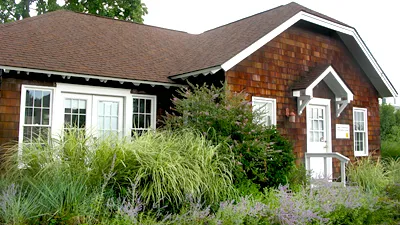
The residency takes place in the Helen Frankenthaler Printmaking Cottage, a dedicated live-work space named after the abstract expressionist painter and printmaker who was instrumental in advancing print as a serious artistic medium. The cottage has been remodeled to combine a professional printmaking studio on the ground floor with living quarters upstairs. One artist at a time gets 24/7 access to both. There are no cohort mates, no shared kitchens, no competing for press time. It is a solo experience.
The Application Timeline
CCP accepts applications on a semi-annual basis, not rolling as some older listings suggest. The current cycle:
- Summer Session (mid-May through early September 2026): Application deadline was January 1, 2026. This is the competitive round.
- Winter Session (November 2026 through February 2027): Application deadline is July 1, 2026. This is the round currently open.
If you are reading this in mid-2026, the Winter Session is your next opportunity. If you want the Summer Session, you need to apply by January 1, 2027 for the 2027 season.
What It Costs: The Funding Split
This is where CCP differs from most residencies that either charge everyone or fund everyone. CCP has a three-tier system:
Fully funded (Summer Session only): CCP underwrites up to $5,000 for accepted resident artists. This covers the cottage stay, production costs, and materials. Only 2-3 fully funded spots are available per summer, making this the most competitive option. Artists with their own funding are not excluded from applying for the summer, but they should indicate whether they are requesting full or partial funding.
Half-funded (Professional Development): For artists who have secured funding from another source, typically teaching artists with faculty development funds from their academic employer. CCP matches 50% of residency costs up to $2,500 through the Ross Shanley Fund and other internal funds.
Self-funded: For the Winter Session and for summer applicants who have their own funding. Costs are:
- Cottage stay: $1,500 for 1 week, $1,000 for each additional week (2-week maximum)
- Production: $200/day of printing, covering standard studio supplies including cleaning solutions, paper, newsprint, black proofing ink, and modifiers
- Total budget should not exceed $5,000
The $35 application fee applies to all categories.
The Facilities
The Helen Frankenthaler Printmaking Cottage studio includes:
- Takach 39" x 73" motorized etching press (the primary press for large-format intaglio)
- American French Tool 24" x 48" etching press (for smaller intaglio work)
- Paper bath, overhead ventilation, light table, hotplate, print drying rack
- Relief printing equipment for woodcut, linocut, and wood engraving
- Lithography capabilities (stones, plates, and press)
- Screen printing setup with exposure equipment
- Letterpress equipment for book arts and typographic work
- Digital printmaking capabilities for hybrid processes
The residence floor includes a bedroom with full-size bed, living area with pull-out sofa bed, full kitchen (range, oven, coffeemaker, microwave, toaster, refrigerator), bathroom with shower, washer/dryer, WiFi, and air conditioning throughout.
If your home studio lacks a large-format etching press or a lithography setup, this is the primary practical reason to apply. These are expensive, space-intensive pieces of equipment that most individual printmakers cannot justify owning.
Technical Support
CCP staff includes master printmakers with experience across multiple print processes. The residency is self-directed (you set your own schedule and work on your own projects), but technical assistance is available when needed. This matters most if you are experimenting with a process you have not used before, or if you run into chemistry or press issues that require expert troubleshooting.
The staff's knowledge of materials, press operation, and the technical variables that affect print quality can save you significant time. Print processes like lithography and aquatint have steep learning curves and narrow margins for error. Having a master printer on call is not a luxury; it is a practical necessity for processes you do not do daily.
The Location: Norwalk, Connecticut
Norwalk is not an arts destination. It is a small city with walkable sidewalks, a bus system, and a Metro North station (South Norwalk, about a 25-minute walk from the cottage) that connects to Grand Central Terminal in about an hour. That proximity to New York City is the main geographic advantage. You can spend the morning printing in Norwalk and the evening at gallery openings in Chelsea.
CCP is located in a residential neighborhood with restaurants, convenience stores, and shopping within walking distance. It is not isolated or rural. If you want a residency in a remote landscape where you commune with nature, this is not it. If you want focused studio time with the option to pop into New York for exhibitions, meetings, or supplies, the location works well.
Community Engagement Requirement
One thing that distinguishes CCP from purely self-directed residencies: artists in any residency category are expected to conduct a studio talk or teach a workshop for the Norwalk community and greater New York metropolitan area. CCP works with the artist to schedule and promote this programming through social media and other outreach.
If you want a residency where you show up, work in silence, and leave without interacting with anyone, this requirement may be a drawback. If you see value in presenting your work to an engaged community, it is a built-in opportunity.
How CCP Compares to Other Printmaking Residencies
Dedicated printmaking residencies are rare. Most general residencies (like Vermont Studio Center or Yaddo) accept printmakers but do not offer specialized equipment or master printer support. CCP fills the gap between general residencies and high-end collaborative print studios like ULAE or Tandem Press, which typically work with established artists on specific editioning projects rather than offering open residency time.
Compared to Kala Art Institute in Berkeley, California, which also offers printmaking facilities and residency programs, CCP is smaller, more intimate (solo rather than cohort), and shorter (1-2 weeks versus Kala's month-long minimums). CCP's solo format means no competing for press time, but it also means no peer interaction with other resident artists.
Insider Tips for Applicants
- Apply for the Summer Session if you need funding: Fully funded spots are only available in summer. If you can self-fund, the Winter Session is less competitive (1-2 accepted artists per season versus 2-3 in summer).
- Your project proposal should be specific: The selection committee evaluates the clarity and ambition of your proposed project. "I want to experiment with etching" is not a proposal. "I will complete a series of six large-format copperplate etchings exploring [specific subject], using aquatint and hard-ground techniques" is.
- Budget for $5,000 maximum: If you are applying for CCP funding, your proposed budget should not exceed $5,000. Include cottage stay, production costs, and any specialized materials.
- The 15-20 image portfolio must be print-based work: Do not include paintings or drawings unless they directly relate to your printmaking practice. The committee wants to see that you can handle print processes.
- Plan your Metro North trips: The South Norwalk station is a 25-minute walk. If you are bringing heavy materials back from New York art supply stores, budget for a taxi or rideshare for that leg.
Who This Is For (and Who It Is Not For)
This is for: Dedicated printmakers who need focused time with professional equipment and technical support. Both emerging and established printmakers are welcome. If you work in etching, lithography, relief, screen printing, letterpress, or book arts and want 1-2 weeks of uninterrupted production, this is designed for you.
This is not for: Painters, sculptors, or digital artists who have never done printmaking. The one hard rule is that you must be a printmaker. It is also not for artists seeking a long-term residency (the maximum is 2 weeks) or a cohort-based experience (this is solo only).
Final Verdict: Who Is This Actually For?
CCP offers something specific: a short, intensive, solo residency in a well-equipped printmaking studio with living quarters attached. The fully funded summer spots are highly competitive (2-3 per season from dozens of applications), but the self-funded winter option is more accessible if you can cover $1,500-$5,000. The Helen Frankenthaler Cottage is not a luxury residency. It is a working studio with a bed upstairs and a press downstairs, designed for printmakers who want to get things made. If that fits your needs, apply. If you want a month-long cohort residency in a scenic rural location, look elsewhere.
Visit the CCP residency application page for current deadlines and guidelines.