DeviantArt: The 25-Year-Old Platform That Bet on Creators and Won
In 2025, artists on DeviantArt sold $23 million worth of art. That figure is 11 times the platform's 2022 total and exceeds the combined sales of the previous five years. Buyers placed orders from more than 260,000 unique accounts. The platform now has 108 million registered members, up from roughly 36 million when Wix acquired it for $36 million in February 2017. According to a January 2026 company update, 120 million people visit the site each month.
This is not the story most people expected. For years, DeviantArt was written off as a relic of the early internet. Users had migrated to Instagram, Twitter, and TikTok. The Eclipse redesign alienated longtime users. Then the platform launched an AI image generator called DreamUp in November 2022, and the community revolted. Within 12 hours of launch, DeviantArt reversed its default opt-in policy for AI training after an open rebellion from artists. The platform was a named defendant in Andersen v. Stability AI, a class-action copyright lawsuit scheduled for trial on September 8, 2026.
And yet, here we are. DeviantArt is growing.
The Ad-Free Gamble
In 2023, DeviantArt did something that sounded reckless for a site of its scale: it switched off all third-party display advertising. The rollout continued through 2025. CEO Moti Levy framed the decision as a deliberate bet on the creator economy. "DeviantArt only makes money when our artists make money," he wrote in an anniversary post.
The revenue model now runs on Core subscriptions, marketplace fees on prints and commissions, the new Originals custom art system, and premium seller programmes like Launchpad for high-volume sellers. No third-party ads. No renting user attention to advertisers.
Insider tip: The Originals feature, launched in May 2026, lets artists set up custom order forms with pricing tiers, add-ons, and structured buyer requests. Buyers pay before work begins, and artists have 72 hours to accept or decline. If you sell commissions, Originals is a better system than DM-based negotiation because it handles payment, order management, and delivery in one dashboard.
The AI Question
DeviantArt's relationship with AI-generated art remains complicated. The platform accepts AI-generated work but requires every submission to carry an "AI Generated" tag. The in-house DreamUp tool, built on Stable Diffusion, is opt-in for using member art as training reference. In late 2022, DeviantArt published a noai HTTP header that members can use to block external AI crawlers from scraping their work. Several other platforms, including ArtStation, have since implemented similar noai tag solutions.
The federal copyright trial in Andersen v. Stability AI, set to begin September 8, 2026, still hangs over the platform. A plaintiff win could force retraining or licensing changes for DreamUp. A defence win would clear the largest legal cloud over DeviantArt's AI strategy. Either outcome lands in the same fiscal year the company wants to push creator earnings past $30 million.
The Platform Experience
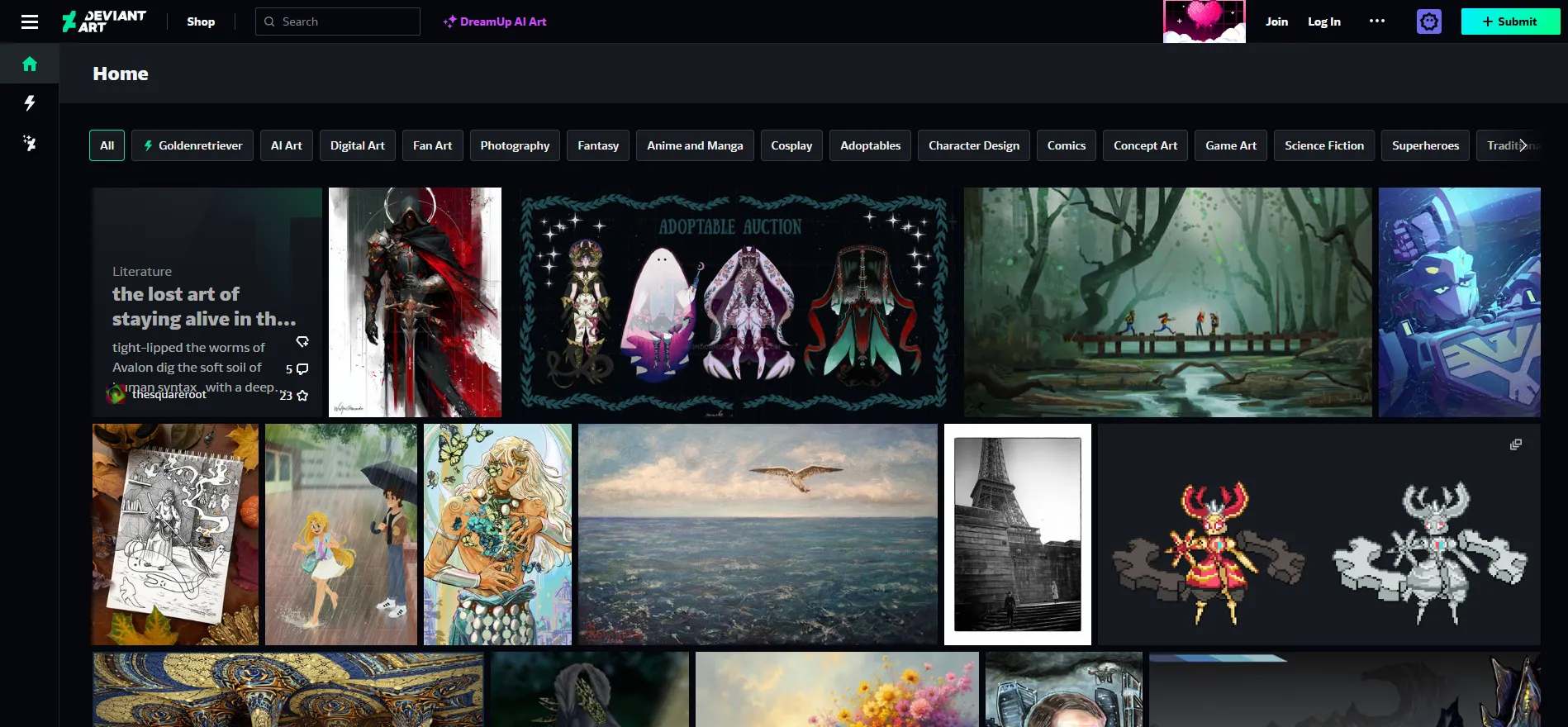
DeviantArt functions as a portfolio host, commission marketplace, community forum, and discovery engine. Each user profile works as a customisable portfolio with gallery folders for organising work by medium, subject, or project. The gallery system supports high-resolution uploads and preserves image quality better than Instagram, which aggressively compresses images.
The group system organises the community into thousands of interest-based collectives. Groups exist for watercolour painters, anime fan artists, fantasy illustrators, pixel artists, photographers, and every other conceivable niche. Active groups host their own contests, challenges, and critique sessions. For artists seeking feedback within a specific area, joining relevant groups is the single most valuable thing you can do on the platform.
The favourites and collections system lets users curate galleries of work by other artists, functioning as both a bookmarking tool and a form of social engagement. Organised collections can serve as mood boards, reference libraries, or curated exhibitions.
How It Compares
Against ArtStation, DeviantArt is less curated and more inclusive. ArtStation filters for professional-quality work in entertainment art, game art, and concept art. DeviantArt welcomes everything from a teenager's first anime sketch to a professional illustrator's studio work. This breadth means the average quality varies enormously, but it also means DeviantArt captures a spectrum of creative expression that curated platforms cannot.
Against Behance, DeviantArt has a more active community and a built-in commission marketplace. Behance is better for presenting polished portfolio pieces to art directors. DeviantArt is better for building community, getting feedback, and selling work directly to fans.
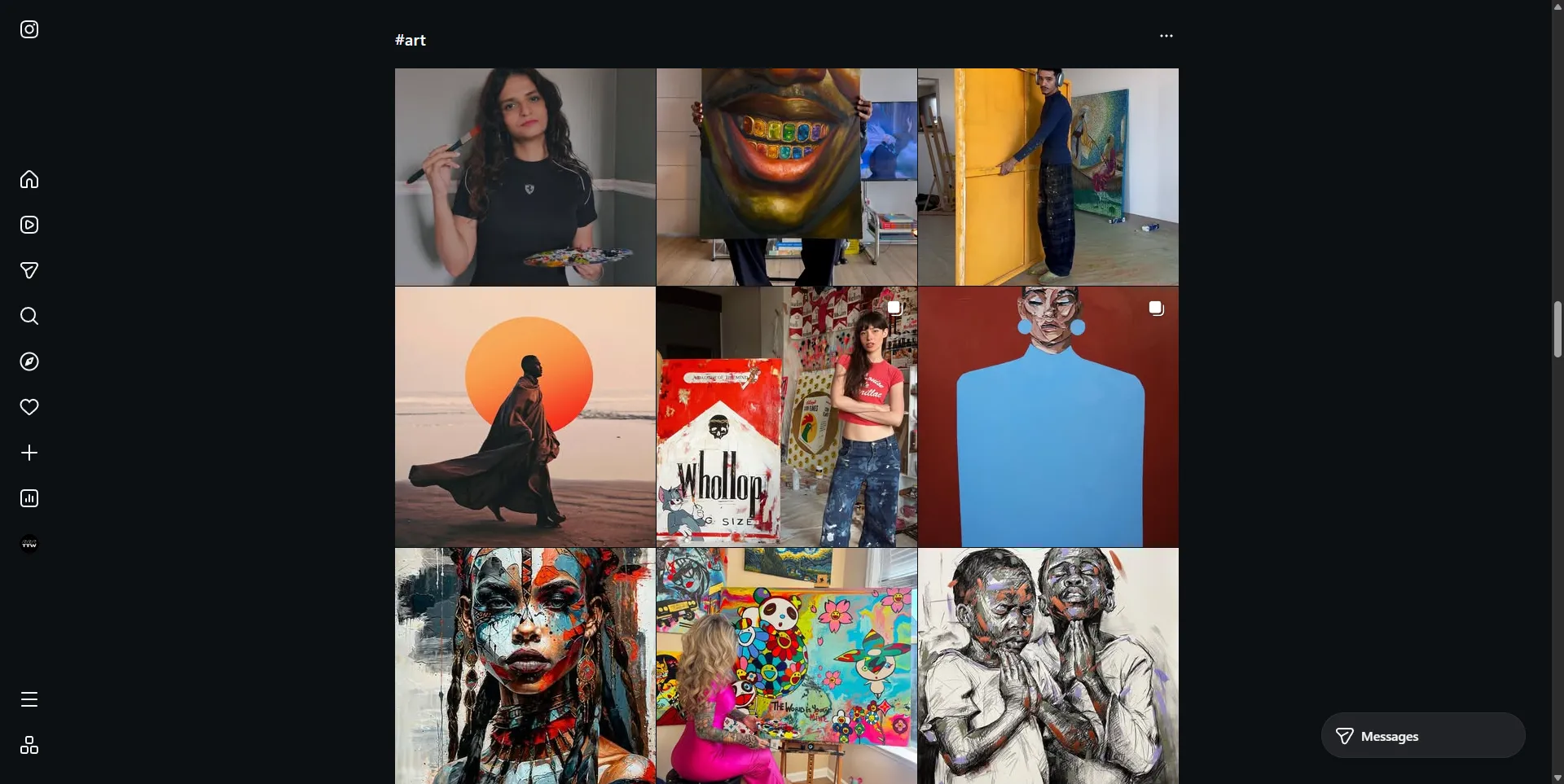
Against Instagram, DeviantArt offers better image quality, no algorithmic suppression of still images, and actual commerce tools. Instagram has far more reach and cultural relevance but actively punishes artists who post still images instead of video.
Against Cara, the newer anti-AI art platform that gained massive traction in 2024, DeviantArt has a 25-year archive and a mature monetisation ecosystem. Cara has momentum and a clear anti-AI stance but lacks the commerce infrastructure DeviantArt has built.
The Limitations
The interface, despite the Eclipse redesign, still feels cluttered and dated compared to modern platforms. Navigation is not intuitive. Some features are buried in menus that new users will not discover without guidance. The recommendation algorithms have improved but still struggle to consistently surface the most relevant content.
The platform's reputation has shifted. Many professional artists have migrated their primary presence to ArtStation, Instagram, or personal portfolio websites, using DeviantArt as a secondary or archival platform. The fan art and character design communities remain the most active commission marketplaces, but the platform is less effective for artists targeting gallery representation or high-end commercial clients.
In April 2026, DeviantArt shipped a Spanish-language interface, its first major localisation push. Latin American and Spanish art communities are large, fragmented, and largely served by Instagram and ArtStation today. Whether this expansion accelerates growth remains to be seen.
Who Should Use DeviantArt?
Hobbyist and fan artists will find the most welcoming environment on the internet. The inclusive, low-pressure culture is ideal for sharing work without the performance anxiety of more professional platforms.
Freelance illustrators selling commissions, especially in character design and fan art, should use the Originals system and commission marketplace. The built-in audience of potential buyers is unmatched for this type of work.
Emerging artists building their first online presence get a free portfolio platform with community engagement and discovery features. No paywalls, no premium-only visibility.
Professional concept artists and entertainment industry illustrators should prioritise ArtStation instead. DeviantArt's broad audience is less targeted for industry networking and job opportunities.
Final Verdict: Who Is This Actually For?
DeviantArt has pulled off something genuinely surprising. By removing ads, building real commerce tools, and navigating the AI controversy without alienating its core user base, the platform has reversed its decline and is growing again. It is not the coolest platform. It is not where art directors scout talent. But for hobbyist artists, fan art communities, and freelance illustrators selling commissions, DeviantArt in 2026 is a more viable income platform than it has been at any point in its 25-year history.
Visit deviantart.com to set up a profile, browse the commission marketplace, or explore the group system. For related resources, check out our profiles on ArtStation, Behance, and Cara.