Harpo Foundation: The Grant for Artists the Art World Keeps Ignoring
The art world runs on a self-reinforcing loop: past recognition gets you future recognition. If you went to a top MFA program, got picked up by a good gallery, and built relationships with the right curators, you become visible to funders. If you did not do those things, you stay invisible, no matter how good your work is. The Harpo Foundation exists to break that loop.
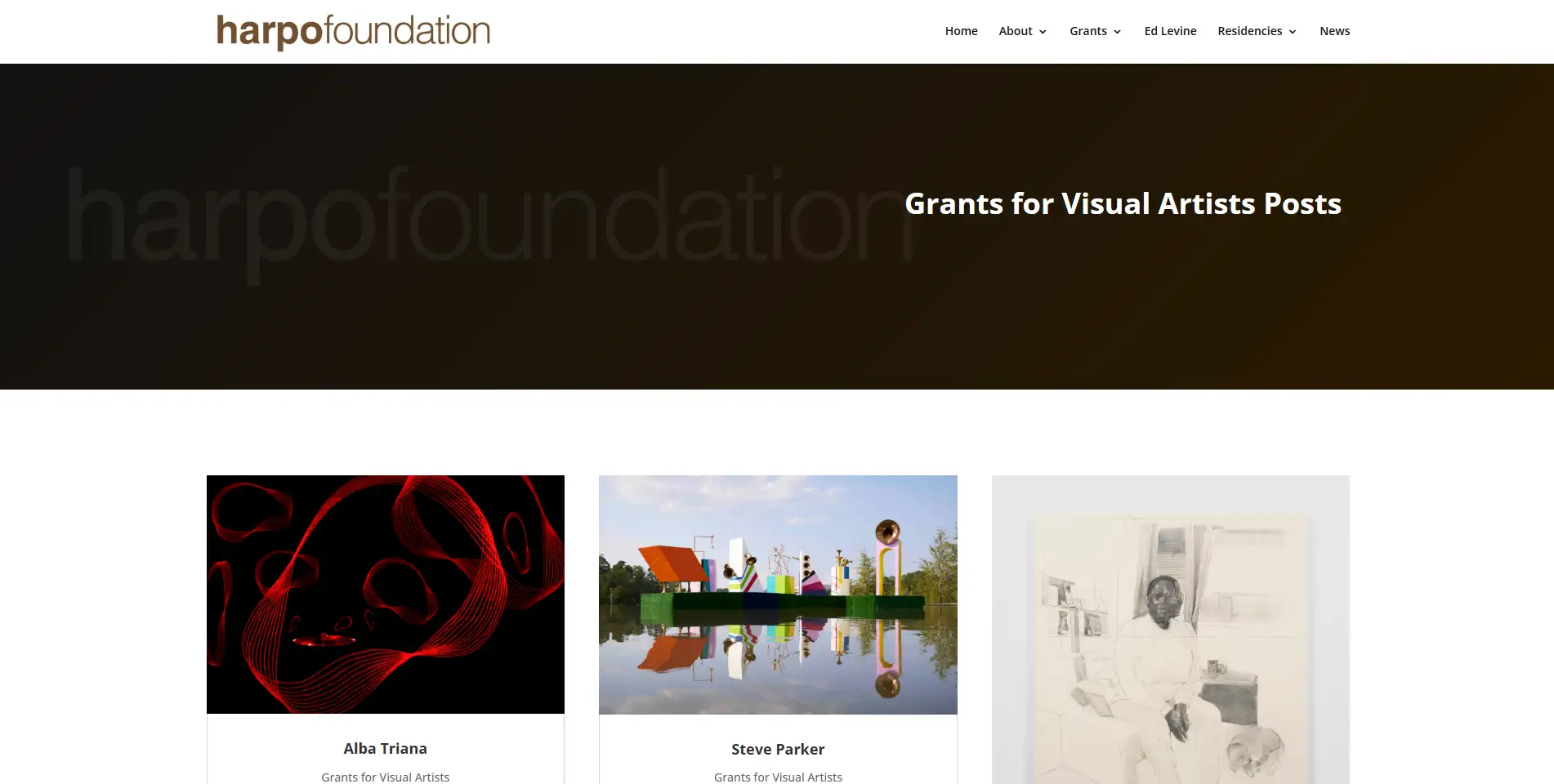
Founded in 2006 by artist Ed Levine, Harpo specifically targets under-recognized visual artists who are doing serious work but lack the institutional credentials, gallery connections, or geographic proximity to major art centers that most grants implicitly require. The foundation awards grants up to $10,000 (averaging about $8,000) to 7 to 10 artists each year. The Impact Award provides $25,000 to under-recognized Native American contemporary visual artists.
The 2026 application cycle closed on April 27, 2026. The next cycle will open in approximately February 2027. Applicants are typically notified by December 15.
What "Under-Recognized" Actually Means
This is the core eligibility criterion, and the foundation means it literally. "Under-recognized" does not mean "bad." It means artists whose work has not received the institutional attention it deserves. You self-define as under-recognized in your application. The foundation evaluates whether your work and career trajectory support that self-assessment.
Factors that contribute to under-recognition include: geographic isolation from major art centers (New York, LA, Chicago), lack of MFA credentials in a system that privileges them, absence of gallery representation, limited access to professional networks, and systemic biases affecting artists from marginalized communities. A self-taught painter working in rural Alabama, a community-trained sculptor in the Midwest, or an artist who chose to develop their practice outside the academic system all fit the foundation's target profile.
The foundation makes no educational requirement. Self-taught artists, community-trained artists, and artists who developed their practice outside traditional academic pathways are equally eligible. As of 2025, Legal Permanent Residents of the US are also eligible to apply, in addition to US citizens.
What Disqualifies You
The exclusions are specific. You are not eligible if:
- You are currently enrolled in an art-related degree program, were enrolled within the last 12 months, or are planning to attend one in the coming year
- You are under 21 years old
- You are not a US citizen or Legal Permanent Resident
- You have previously received a direct artist grant from Harpo
Students are the biggest exclusion. If you are in an MFA program right now, wait until you have been out for 12 months before applying. The foundation is firm on this point.
The Application and the $15 Fee
The application requires work samples, an artist statement, a resume or CV, and a brief bio. There is now a $15 application fee, which is a change from the foundation's earlier no-fee policy. The fee supports the online application platform and the review process involving a diverse group of professional advisors.
If the $15 fee represents a financial hardship, you can request a waiver by emailing mwest@harpofoundation.org before submitting your application. The foundation will not refund the fee after you have already submitted. Request the waiver first, then apply.
The application portal opens approximately two months before the deadline each year. Applications are submitted through Submittable.
The Impact Award for Native American Artists
Separate from the general Grants for Visual Artists program, the Impact Award focuses on amplifying the contributions of under-recognized Native American contemporary visual artists. Impact Award grantees receive $25,000, more than double the standard grant amount.
To be eligible for the Impact Award, you must be an enrolled member or citizen of a state or federally recognized American Indian tribe, an Alaska Native corporation, or of Native Hawaiian ancestry. The foundation recognizes that Indigenous artists face unique barriers to recognition and funding within mainstream arts institutions, and this program is designed to address that gap directly.
How Harpo Compares to Other Grants
The Gottlieb Foundation Individual Support Grant offers $25,000 to painters, sculptors, and printmakers with 20+ years of practice and financial need. Harpo offers less money ($10,000 max) but has no minimum career length and no financial need requirement. If you are a younger, under-recognized artist, Harpo is more accessible. If you are a mature artist in financial need, Gottlieb offers more money.
The Joan Mitchell Foundation offers $60,000 but is now nomination-only. You cannot apply directly. Harpo is open-application, which makes it accessible to artists who do not have nominator connections.
The FCA Emergency Grants program provides $500 to $3,000 for time-sensitive presentation opportunities. Harpo provides larger awards for general artistic development, not tied to a specific opportunity. If you need $2,000 to ship work to a show next month, apply to FCA. If you need $8,000 to fund a year of studio practice, apply to Harpo.
The Guggenheim Fellowship offers $40,000 to $55,000 but has a 5% acceptance rate and targets mid-career artists with established track records. Harpo targets artists who have not yet achieved that level of recognition, making it more accessible to artists earlier in their careers or outside major art centers.
Why Harpo Matters
The contemporary art world's gatekeeping mechanisms (MFA programs, gallery representation, museum exhibitions, critical attention) tend to reinforce existing hierarchies rather than discover new voices. Artists who enter the system through prestigious schools and build relationships with established galleries accumulate recognition that makes them visible to funders. Artists who work outside this system remain invisible regardless of their work's quality.
Harpo inverts this dynamic. The review panels look for artistic quality and authentic commitment to creative practice, not institutional credentials or professional connections. This means a self-taught painter in rural Alabama has genuine access to meaningful funding that most other grant programs would never award them.
For many recipients, the Harpo grant is their first significant institutional recognition. This initial validation often catalyzes further opportunities: other funders take notice, galleries become interested, and the self-reinforcing cycle of recognition that had previously excluded the artist begins to work in their favor. The foundation's alumni include artists who have gone on to museum exhibitions, gallery representation, and broader critical attention.
Insider Tips for Applicants
- Be authentic, not strategic. The foundation values genuine artistic commitment and original vision over polished professional presentation or art world jargon. Write your artist statement in your own voice. Submit work that represents who you actually are, not what you think funders want to see.
- Self-define as under-recognized honestly. The foundation trusts your self-assessment but evaluates it against your career trajectory. If you have a major museum retrospective coming up, you are not under-recognized. If you have been making work for 15 years with limited exhibition opportunities, you are.
- Request the fee waiver before applying if needed. Email mwest@harpofoundation.org before you submit. The foundation will not refund the fee after submission.
- Check the next cycle opening in February 2027. The application portal opens approximately two months before the deadline. Do not wait until the last week to start your application.
- Previous recipients of direct artist grants from Harpo are not eligible. This is a one-time award per artist. If you have already received a Harpo grant, you cannot apply again.
Who Should Apply
Under-recognized visual artists 21 or older who are US citizens or Legal Permanent Residents, who are not currently enrolled in a degree program, and who have not previously received a Harpo direct artist grant. The foundation funds painting, drawing, sculpture, photography, printmaking, mixed media, and installation.
Self-taught artists and artists without MFA degrees are specifically welcomed. The foundation does not privilege academic credentials.
Artists outside major art centers are particularly encouraged. The foundation deliberately seeks applicants from beyond the New York/LA/Chicago axis. If you are making serious work in a smaller city or rural area with limited gallery infrastructure, Harpo is designed for you.
Native American visual artists who meet the eligibility criteria should consider the Impact Award, which offers $25,000 specifically for Indigenous artists.
Final Verdict: Who Is This Actually For?
Harpo is for artists who are making strong work but have been locked out of the institutional grant system because they lack the MFA, the gallery, the connections, or the geographic proximity that most grants implicitly reward. The $10,000 award is meaningful. The $15 application fee is modest (and waivable). The open-application process is straightforward. If you have been making work for years and keep getting passed over by grants that seem to go to the same people, Harpo is the foundation that was built for you. Visit the Harpo Foundation website to check the next application cycle and download guidelines.